
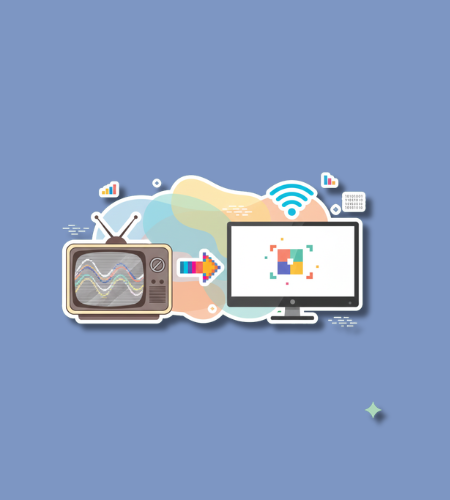
Analog to Digital TV Day is a specialized holiday observed on February 17. In 2026, it falls on February 17. This date commemorates the original deadline set by the United States federal government for the mandatory transition from analog television broadcasts to digital signals. While the final nationwide shutdown of full-power analog transmitters was later moved to June, this February date remains a significant marker for the technological shift that redefined modern home entertainment.
Table of Contents
History of Analog to Digital TV Day
The history of this day began with the Digital Television Transition and Public Safety Act of 2005. Congress initially mandated that all full-power television stations in the United States cease analog broadcasting by February 17, 2009. The primary goal was to reclaim valuable radio frequency spectrum for emergency responders and wireless broadband services. Digital signals are more efficient than analog, allowing more data to be transmitted using less space on the airwaves.
As the February 2009 deadline approached, the federal government realized that millions of households were not yet prepared for the switch. Many viewers still relied on older television sets that could not interpret digital signals without a converter box. To prevent a massive loss of local news and emergency information for these citizens, the government eventually extended the final transition date to June 12, 2009. However, February 17 is still recognized by technology enthusiasts as the “original” transition day when the first wave of stations successfully powered down their analog equipment.
Why is Analog to Digital TV Day important?
Analog to Digital TV Day marks a pivotal moment in the evolution of mass communication and public safety. The transition allowed television stations to provide high-definition (HD) programming for free over the air, offering viewers crystal-clear images and improved sound quality compared to the “snowy” or “ghosting” interference of the analog era. It also enabled multicasting, which lets a single station broadcast several different channels simultaneously on the same frequency.
The shift was equally important for national infrastructure and emergency services. By moving television to a more compact digital format, a large portion of the 700 MHz broadcast band was vacated. This spectrum was then reallocated to police, fire, and ambulance services, ensuring they have dedicated channels for communication during crises. Furthermore, the freed-up frequencies laid the groundwork for the rapid expansion of 4G and 5G cellular networks used by smartphones today.
- The transition provided high-definition television to everyone with an antenna.
- It eliminated traditional signal interference like static and double images.
- Multicasting increased the variety of free local programming available to viewers.
- Emergency responders gained more reliable radio channels for public safety.
- The freed-up spectrum accelerated the development of high-speed mobile internet.
How to Observe Analog to Digital TV Day
Observing Analog to Digital TV Day involves recognizing the accessibility of modern broadcast technology. Many people use the day to perform a “channel rescan” on their digital televisions or converter boxes to find new local sub-channels. It is an excellent time to troubleshoot antenna placement to ensure the strongest possible signal for local news and weather alerts. Households can also take the opportunity to verify that their emergency weather radios are functioning correctly.
For those interested in media history, the day can be spent exploring the technical differences between analog waves and digital data packets. Some communities host electronic recycling events on this day to help residents dispose of old, non-functional analog televisions and cathode-ray tube (CRT) monitors. This ensures that the heavy metals found in older electronics do not end up in landfills, promoting environmental responsibility alongside technological appreciation.
- Perform a digital channel rescan to discover new local broadcast stations.
- Check your television antenna connections for optimal signal strength.
- Donate or recycle old analog hardware at a certified electronics waste facility.
- Learn about the history of the NTSC analog standard versus the modern ATSC digital standard.
- Help a neighbor or elderly family member set up their digital television equipment.
Analog to Digital TV Day Dates Table
| Year | Date | Day |
|---|---|---|
| 2026 | February 17 | Tuesday |
| 2027 | February 17 | Wednesday |
| 2028 | February 17 | Thursday |
| 2029 | February 17 | Saturday |
| 2030 | February 17 | Sunday |
Subscribe to our newsletter and never miss a holiday again!