
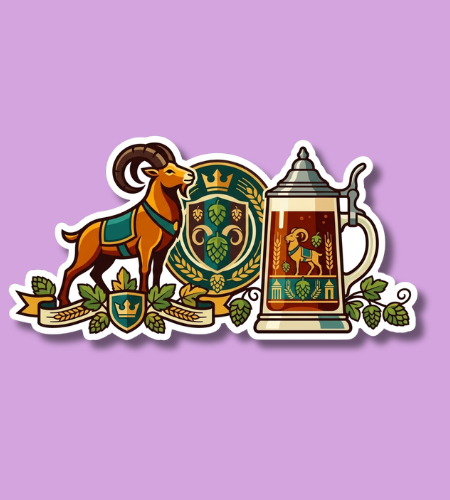
Bock Beer Day is observed on March 20. This holiday celebrates a robust, malt-forward German lager known for its strength and deep historical roots. It serves as an annual invitation for beer enthusiasts to explore the various styles of bock, from the pale and hoppy Maibock to the concentrated and powerful Eisbock.
Read also about National American Beer Day
Table of Contents
History of Bock Beer Day
The origins of bock beer date back to the 14th century in the northern German town of Einbeck. During the medieval period, Einbeck was a major brewing center and a member of the Hanseatic League, producing a strong, dark ale that was exported across Europe. When the style traveled south to Munich in the 17th century, Bavarian brewers adapted it into a bottom-fermenting lager. Due to linguistic differences, the people of Munich mispronounced “Einbeck” as “ein Bock,” which literally translates to “a billy goat” in German. This linguistic quirk led to the goat becoming the permanent mascot of the style.
Bock Beer Day as a formalized holiday emerged more recently, gaining traction in the early 2000s alongside the global craft beer movement. While traditional bocks were historically associated with special religious occasions and fasts—monks famously brewed “liquid bread” to sustain themselves during Lent—the modern holiday provides a dedicated secular moment for appreciation. It highlights the specific brewing process of lagering, where the beer is stored at cool temperatures for long periods to smooth out its intense malt profile and achieve its signature clean finish.
Why is Bock Beer Day important?
This day is significant because it preserves a classic brewing tradition that prioritizes patience and malt complexity over the rapid production of lighter lagers. Bock beer represents a bridge between the ancient brewing techniques of monks and modern quality standards. By focusing on this specific category, the holiday educates consumers on the diversity within the lager family, showcasing that bottom-fermented beers can be rich, sweet, and high in alcohol. It honors the technical skill required to balance heavy toasted nut and caramel notes without making the beverage overly syrupy.
The observance also supports the global brewing community by encouraging the preservation of historical recipes. Many small breweries use Bock Beer Day to debut seasonal releases that might not otherwise fit into their year-round lineup. It fosters a sense of international connection as drinkers across different continents participate in the same cultural ritual. For the enthusiast, the day is a reminder of the historical role beer played as a source of nutrition and community bonding in European history, elevating the drink from a simple commodity to a cultural artifact.
- It commemorates the 14th-century brewing heritage of Einbeck, Germany.
- The day explains the historical reason why goats appear on bock labels.
- It highlights the nutritional history of “liquid bread” used by fasting monks.
- The holiday promotes awareness of different bock variants like Doppelbock and Maibock.
- It encourages beer lovers to appreciate the slow process of traditional lagering.
How to Celebrate Bock Beer Day
Celebrating this day is best done by sampling a variety of bock styles to understand their unique profiles. You can start with a traditional bock to taste the classic toasted malt flavors, then move to a Doppelbock if you prefer something darker and more potent. Many people host “goat-themed” gatherings or visit local breweries that specialize in German-style lagers to enjoy a fresh pour from the tap. It is a popular day for homebrewers to share their own bock creations and discuss the intricacies of decoction mashing and yeast selection.
Using proper glassware is another way to enhance the celebration, as serving a bock in a seidel or a tulip glass helps concentrate its rich aroma. You can pair your beer with hearty German cuisine, such as pretzels, sausages, or roasted meats, which complement the sweetness of the malt. Sharing your experience on social media or using specialized beer apps to log your tastings helps build the digital community around the holiday. If you prefer a more educational approach, reading about the specific history of the Paulaner monks and their influence on the style provides a deeper context for every sip.
- Order a flight of different bocks at a local craft brewery or tavern.
- Pair a dark Doppelbock with a rich dessert or aged cheese.
- Learn to identify the differences between a Helles Bock and a Dunkel Bock.
- Host a small tasting event featuring beers with goat imagery on the labels.
- Check into your favorite bock on social media to share the holiday with others.
Bock Beer Day Dates Table
| Year | Date | Day |
|---|---|---|
| 2026 | March 20 | Friday |
| 2027 | March 20 | Saturday |
| 2028 | March 20 | Monday |
| 2029 | March 20 | Tuesday |
| 2030 | March 20 | Wednesday |
Subscribe to our newsletter and never miss a holiday again!