
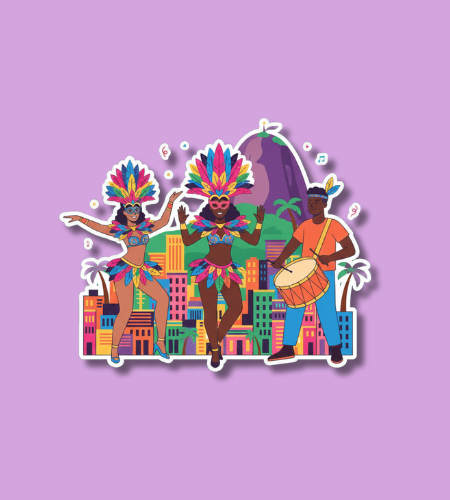
Brazil Carnival is an annual festival observed from the Friday afternoon before Ash Wednesday through the following Tuesday. In 2026, the core celebration takes place from February 13 to February 17. This nationwide event serves as the final period of indulgence and revelry before the Catholic season of Lent, characterized by 40 days of fasting and abstinence. 1
Table of Contents
History of Brazil Carnival
The roots of the festival trace back to the 18th century when Portuguese settlers introduced “Entrudo.” This early celebration was a chaotic street game where participants threw water, flour, and mud at one another. Over time, these rowdy traditions merged with the cultural practices of Indigenous peoples and enslaved Africans. By the 19th century, the elite began hosting masked balls inspired by European masquerades, while the general public formed “cordões” or “ranchos”—organized groups that paraded through the streets with music and percussion.
Samba, now the definitive soundtrack of the holiday, was introduced in the early 20th century. It originated in the Afro-Brazilian communities of Rio de Janeiro and quickly became the central element of the festivities. The first official samba school, “Deixa Falar,” was founded in 1928, leading to the competitive parade structure seen today. In 1984, the construction of the Sambadrome in Rio provided a permanent, stadium-like home for these massive competitions, cementing the transition from a local street party into a global media spectacle.
Why is Brazil Carnival important?
This celebration is a vital expression of Brazilian identity and cultural synthesis. It provides a platform for various regions to showcase their distinct heritage, from the samba schools of the Southeast to the “frevo” and “maracatu” rhythms of the Northeast. The festival is also a massive economic engine, generating billions of dollars in revenue and providing thousands of jobs in costume design, float construction, and tourism. It represents a period where social barriers are temporarily lowered, allowing people from all backgrounds to participate in a shared experience of joy.
Beyond the entertainment, Carnival serves as a form of social commentary. Samba schools often choose themes that address Brazilian history, environmental issues, or political critiques, using their floats and songs to educate the public. It is a time for artistic innovation, where craftsmanship in textiles and engineering is displayed on a grand scale. For many Brazilians, particularly those in lower-income communities or favelas, the year-round preparation for the parade is a source of immense pride and communal solidarity.
- The festival marks the beginning of the liturgical season of Lent.
- Millions of foreign tourists visit Brazil specifically for these events.
- Samba schools function as year-round social and community centers.
- Regional variations include the giant dolls of Olinda and the electric trucks of Salvador.
- The holiday is considered a peak time for the expression of Afro-Brazilian art.
How to Celebrate Brazil Carnival
Participation varies significantly depending on the city. In Rio de Janeiro or São Paulo, the highlight is watching the top-tier samba schools compete in the Sambadrome, which requires purchasing tickets months in advance. For a more spontaneous experience, you can join “blocos,” which are free street parties led by bands that move through different neighborhoods. To fully immerse yourself, wear a costume or “fantasia,” use plenty of glitter, and learn the basic steps of samba to keep up with the crowd.
In the northeastern city of Salvador, the celebration revolves around “Trios Elétricos”—massive trucks equipped with sound systems and live bands. Revelers pay for an “abadá” (a themed t-shirt) that grants them access to the guarded area around the truck. Regardless of the location, it is important to stay hydrated and wear comfortable shoes, as the festivities often last from early morning until the following dawn. Sampling traditional foods like feijoada—a hearty black bean and pork stew—is also a customary way to maintain energy throughout the week.
- Purchase tickets early for the Sambadrome parades to see the elite schools.
- Join local neighborhood blocos for a free and informal street party.
- Wear lightweight and colorful costumes suitable for the summer heat.
- Follow the Trios Elétricos in Salvador for a high-energy musical experience.
- Eat a bowl of feijoada on Saturday to fuel up for the peak celebrations.
Subscribe to our newsletter and never miss a holiday again!