
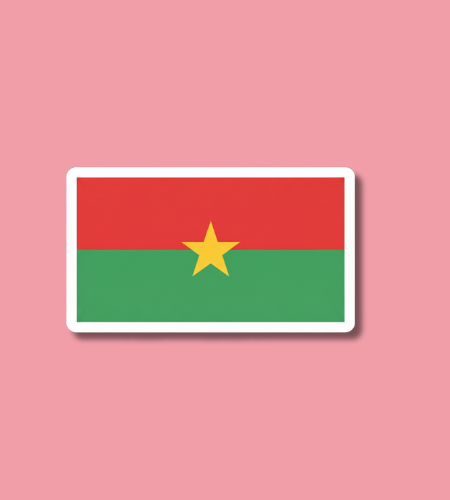
Burkina Faso Republic Day is observed annually on December 11. This national holiday commemorates the day in 1958 when the colony of Upper Volta became an autonomous republic within the French Community, a crucial step toward full independence.
Table of Contents
History of Burkina Faso Republic Day
The path to this holiday began during the decolonization period of West Africa. Following the referendum of 1958 across French territories, the Territorial Assembly of Upper Volta met and voted to proclaim the country a self-governing republic on December 11, 1958. While the nation did not achieve full independence from France until August 5, 1960, the December date marks the foundational moment when the state’s political structure was established. The country was originally known as Upper Volta (Haute-Volta) due to its location on the upper courses of the Volta River.
In 1984, under the leadership of President Thomas Sankara, the nation was renamed Burkina Faso, which translates to “Land of Incorruptible People” using words from the Moore and Dioula languages. Despite the name change and various political shifts over the decades, December 11 remains the primary day for national festivities. This is partly due to practical reasons; August is the peak of the rainy season, making outdoor parades difficult, while December offers dry, cooler weather suitable for large-scale public gatherings and military processions.
Why is Burkina Faso Republic Day important?
This day serves as the most significant expression of national unity for the Burkinabè people. It brings together over 60 distinct ethnic groups to celebrate a shared identity and the sovereignty of their state. The government utilizes this day to promote cohesion and development through a unique policy of rotating the official independence celebrations among different regions each year. This rotation strategy directs funding for new infrastructure—such as roads, stadiums, and housing—to a specific host city, spreading economic benefits across the country.
Beyond infrastructure, the holiday is a vibrant showcase of cultural heritage. It is a time when traditional masks, music, and dance take center stage alongside modern military displays. The day reinforces the values of integrity and hard work that are embedded in the country’s name. It offers a moment for citizens to reflect on their history of resilience, from the anti-colonial struggle to navigating modern political challenges in the Sahel region.
- It marks the legal birth of the republic in 1958.
- It fosters unity among diverse ethnic and religious groups.
- It drives regional development through rotating celebrations.
- It celebrates the cultural richness of the Burkinabè people.
- It honors the ancestors who fought for self-determination.
How to Observe Burkina Faso Republic Day
Observing this day in Burkina Faso typically involves attending or watching the grand military and civilian parade. These parades are colorful events featuring marching bands, floats representing different trade unions and regions, and displays of traditional dress. In the capital, Ouagadougou, and the designated host city for the year, streets are decorated with the red, green, and gold of the national flag. Families often gather for large communal meals, sharing dishes like Riz Gras (fatty rice) or To (millet or corn dough) with sauce.
For those outside the country, observing the day can be an educational experience regarding West African history. You might listen to traditional Burkinabè music, which often features the balafon and djembe, or read about the revolutionary ideas of Thomas Sankara. It is also a fitting time to support humanitarian organizations working in the region, acknowledging the ongoing resilience of the people amidst regional instability.
- Watch news coverage of the parades in the host city.
- Prepare a West African dish like Riz Gras.
- Listen to music by Burkinabè artists.
- Read a biography of Thomas Sankara.
- Wear the colors of the Burkina Faso flag (red, green, gold).
Burkina Faso Republic Day Dates Table
| Year | Date | Day |
|---|---|---|
| 2026 | December 11 | Friday |
| 2027 | December 11 | Saturday |
| 2028 | December 11 | Monday |
| 2029 | December 11 | Tuesday |
| 2030 | December 11 | Wednesday |
Subscribe to our newsletter and never miss a holiday again!