
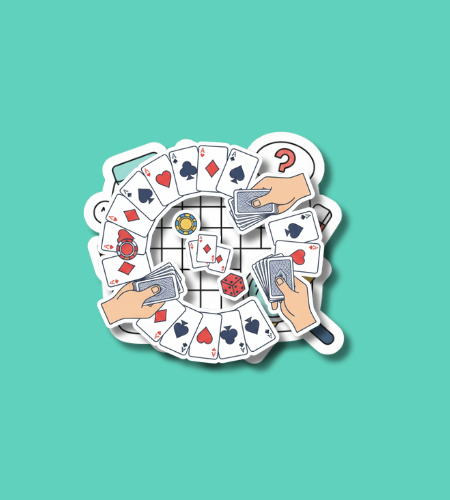
Card Playing Day is observed annually on December 28. This holiday celebrates the versatility of the standard 52-card deck and the diverse range of games that provide entertainment and mental challenges for people of all ages.
Table of Contents
History of Card Playing Day
Historians trace the origins of playing cards to 9th-century China during the Tang Dynasty. These early cards were created using woodblock printing technology and likely doubled as a form of paper currency used in gambling. As trade routes expanded, the cards moved into India and Persia before reaching the Mamluk Sultanate in Egypt. The Mamluk decks were remarkably similar to modern versions, featuring 52 cards and four distinct suits: cups, coins, swords, and polo sticks.
By the late 14th century, playing cards arrived in European cities like Florence and Paris, where they quickly gained popularity despite frequent bans by religious and government authorities concerned about gambling. In the 15th century, French card makers revolutionized the industry by introducing the suits recognized today: hearts, diamonds, spades, and clubs. This simplified design allowed for faster production using stencils and established the French deck as the global standard for countless games, including poker and bridge.
Why is Card Playing Day important?
Engaging in card games offers significant cognitive benefits that support brain health at every stage of life. Studies have shown that regular play can improve short-term memory, enhance concentration, and sharpen problem-solving abilities. For older adults, these mental exercises are particularly valuable for maintaining cognitive function and potentially delaying the onset of memory-related conditions. The strategic nature of many games requires players to anticipate opponents’ moves and calculate probabilities, providing a rigorous workout for the mind.
Beyond the mental aspect, card games serve as a powerful tool for social cohesion. They provide a structured way for family and friends to interact without the distractions of digital technology. For children, card games offer a practical way to learn basic mathematics, turn-taking, and the importance of following rules. Whether played competitively in a tournament or casually during a quiet evening, the activity fosters a sense of community and shared experience that transcends cultural and generational barriers.
- Participants develop better strategic thinking and analytical skills
- Playing cards helps children practice basic counting and probability
- The activity provides a low-cost form of entertainment for any group size
- Social interaction during gameplay helps reduce feelings of isolation
- Research suggests that regular mental stimulation supports long-term brain health
How to Celebrate Card Playing Day
The most straightforward way to observe the day is to gather a group of friends or family for a game night. You can stick to classics like Rummy, Hearts, or Spades, or use the occasion to teach a younger generation games like Go Fish or War. If you are celebrating alone, Solitaire or various online card tournaments offer a way to participate and test your skills. Many people use this day to host small tournaments with modest prizes, adding a layer of friendly competition to the festivities.
Expanding your repertoire is another rewarding way to celebrate. Take the time to learn a new game from a different culture, such as the Japanese Hanafuda or the Italian Scopa, to appreciate how different regions use card decks. If your current deck is worn or incomplete, this is an ideal time to invest in a high-quality set made of durable plastic or premium cardstock. Sharing your favorite game rules or photos of a winning hand on social media can also help promote the hobby and connect you with other enthusiasts.
- Organize a home tournament with multiple tables for different games
- Teach a child how to shuffle and deal a deck of cards properly
- Research the rules for a lesser-known game to try with friends
- Spend an hour playing a challenging version of Solitaire
- Donate new decks of cards to local senior centers or youth clubs
Card Playing Day Dates Table
| Year | Date | Day |
|---|---|---|
| 2026 | December 28 | Monday |
| 2027 | December 28 | Tuesday |
| 2028 | December 28 | Thursday |
| 2029 | December 28 | Friday |
| 2030 | December 28 | Saturday |
Subscribe to our newsletter and never miss a holiday again!