
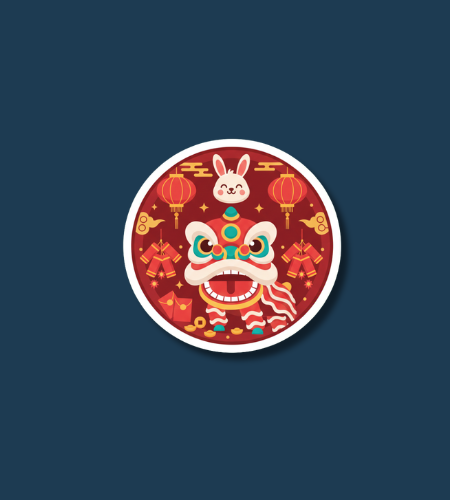
The Chinese New Year is traditionally observed on the second new moon after the winter solstice. In 2026, it falls on February 17. Also widely known as the Spring Festival or Lunar New Year, this festival marks the beginning of the traditional lunisolar calendar. It is the most significant holiday in Chinese culture, characterized by a 15-day celebration that begins with New Year’s Eve and concludes with the Lantern Festival. Each year is associated with one of twelve zodiac animals, with 2026 being the Year of the Horse.
Table of Contents
History of Chinese New Year
The origins of the festival are believed to date back approximately 3,500 years to the Shang Dynasty. It began as a series of sacrificial ceremonies held at the beginning or end of each year to honor gods and ancestors and to pray for a successful harvest. During the Zhou Dynasty, the term “Nian,” meaning year, was established. According to popular legend, the festival’s customs were born from the need to ward off a mythical beast called Nian, which surfaced every New Year’s Eve to attack villagers. A wise man discovered the creature was terrified of the color red, loud noises, and bright lights, leading to the tradition of red decorations and firecrackers.
By the Han Dynasty, the date of the festival was officially fixed to the first day of the first lunar month. As the centuries progressed through the Tang and Song Dynasties, the holiday evolved from a purely religious and agrarian event into a more social and entertaining celebration. Activities like dragon dances, lion dances, and the lighting of elaborate lanterns became standard. In the modern era, despite the official adoption of the Gregorian calendar in 1912, the Spring Festival remains the primary cultural event for Chinese communities globally, serving as a vital link to ancient heritage and familial continuity.
Why is Chinese New Year important?
This holiday is essential because it facilitates the world’s largest annual human migration, known as “Chunyun.” Hundreds of millions of people travel across China and from abroad to return to their hometowns, emphasizing the deep importance of family reunions and filial piety. The “reunion dinner” on New Year’s Eve is considered the most important meal of the year, where multiple generations gather to share symbolic foods and offer gratitude for the safety and prosperity of the previous twelve months.
The festival also serves as a critical “reset” for personal and communal energy. The practice of “sweeping the dust” before the New Year begins is a symbolic clearing of bad luck and misfortune to make room for new blessings. Throughout the two-week period, every action and food item is chosen for its auspicious meaning, from dumplings representing wealth to fish representing abundance. By observing these traditions, participants reinforce their cultural identity and manifest their hopes for health, wealth, and happiness in the coming year.
- It marks the transition between the signs of the Chinese zodiac.
- The festival celebrates the return of spring and the renewal of nature.
- Family ties are strengthened through ancestral worship and communal feasting.
- It provides a platform for traditional arts like calligraphy and paper cutting.
- The holiday promotes the transfer of fortune through the gifting of red envelopes.
How to Celebrate Chinese New Year
Preparation begins weeks in advance with a thorough “spring cleaning” of the home to remove any lingering negative energy. Once the house is clean, it is decorated with red lanterns, spring couplets, and paper cutouts that display themes of luck and longevity. On New Year’s Eve, families gather for a lavish banquet that must include a whole fish, as the word for fish sounds like “surplus.” After dinner, it is customary to stay up until midnight—a practice called shousui—to welcome the new year with a cacophony of firecrackers and fireworks meant to drive away evil spirits.
The days following the new year are spent visiting relatives and friends to exchange seasonal greetings and good luck wishes. Children and elders receive hongbao, or red envelopes containing “lucky money,” which is believed to protect the recipient and grant them a long life. Traditional performances, such as the dragon and lion dances, are held in public squares to bring prosperity to the community. The celebration concludes on the 15th day with the Lantern Festival, where families walk through streets filled with glowing lanterns and enjoy sweet glutinous rice balls called tangyuan.
- Decorate your doors and windows with red paper and auspicious couplets.
- Host a reunion dinner with family featuring traditional dumplings and fish.
- Give red envelopes with new, crisp bills to children and younger relatives.
- Wear new red clothing to attract good luck and a fresh start.
- Watch a traditional lion dance or launch fireworks at the stroke of midnight.
Subscribe to our newsletter and never miss a holiday again!