
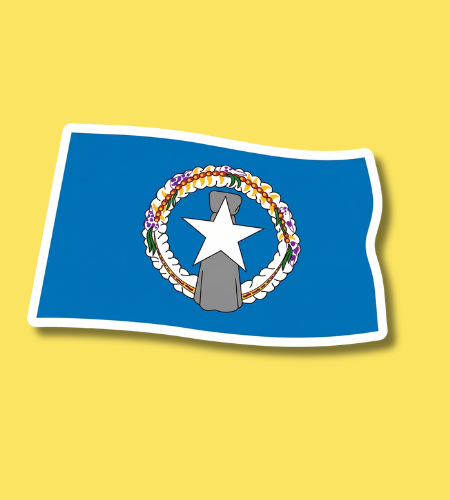
Commonwealth Covenant Day is observed on March 24. The day commemorates the formal agreement that established a permanent political union between the Northern Mariana Islands and the United States. It serves as a public holiday in the Commonwealth of the Northern Mariana Islands (CNMI), where government offices, schools, and many businesses close to honor the legal and social foundation of the islands’ modern governance and their status as a self-governing commonwealth under U.S. sovereignty.
Table of Contents
History of Commonwealth Covenant Day
The origins of this observance date back to the post-World War II era when the Northern Mariana Islands were part of the Trust Territory of the Pacific Islands, administered by the United States under a United Nations mandate. Seeking a more stable and permanent political status, the people of the islands entered into negotiations with the U.S. government in the early 1970s. These discussions culminated in the “Covenant to Establish a Commonwealth of the Northern Mariana Islands in Political Union with the United States of America,” which was approved by a local plebiscite in 1975 with nearly 79% voter support.
On March 24, 1976, President Gerald Ford signed the Covenant into law, officially marking the date now celebrated as Commonwealth Covenant Day. This agreement was unique because it allowed the islands to maintain a high degree of internal self-government while granting residents U.S. citizenship and access to federal programs and defense. While the full transition to commonwealth status and U.S. citizenship took several more years to finalize, the signing of the document remains the pivotal moment of self-determination for the island nation.
Why is Commonwealth Covenant Day important?
The holiday represents the successful transition from a history of colonial rule by various foreign powers to a stable, democratic system of self-rule. It is an acknowledgment of the foresight of the local leaders who negotiated a path that preserved the indigenous culture and land rights of the Chamorro and Carolinian peoples while gaining the benefits of a partnership with a global superpower. The Covenant provides the legal framework for the islands’ constitution, ensuring that residents have the right to govern their own internal affairs.
Beyond the legalities, the day fosters a sense of national identity and unity among the residents of Saipan, Tinian, and Rota. It highlights the shared values of democracy and the specific protections guaranteed by the U.S. Constitution. For the local community, it is a time to reflect on the progress made in education, healthcare, and infrastructure since the union was formed, as well as the ongoing commitment to maintaining a distinct political and cultural presence within the American family.
- The agreement grants U.S. citizenship to the people of the Northern Mariana Islands.
- It allows for a locally elected governor and legislature to manage internal laws.
- The Covenant ensures that land ownership is largely restricted to people of Northern Marianas descent.
- It provides a permanent relationship with the United States for national defense and security.
- The document serves as the supreme law of the islands, superior to inconsistent state laws.
How to Observe Commonwealth Covenant Day
Observance of the holiday often begins with official ceremonies led by government officials, including speeches that recount the history of the negotiations and the signing of the document. Public gatherings and community festivals are common, featuring traditional food, music, and dance that showcase the unique heritage of the islands. Many residents participate in roadside waving events, where participants gather along main thoroughfares to wave the flags of both the Northern Mariana Islands and the United States as a display of patriotism and community pride.
Families frequently use the public holiday to spend time at local beaches or parks, holding large barbecues and social gatherings. Educational programs in schools often take place in the days leading up to the holiday, teaching students about the specific articles of the Covenant and the importance of civic participation. It is also a day for quiet reflection on the responsibilities of self-government and the future of the commonwealth’s relationship with the federal government.
- Attend a public flag-waving event along major coastal roads.
- Listen to local radio broadcasts or speeches from government leaders regarding the Covenant.
- Host a family barbecue featuring local Chamorro and Carolinian dishes.
- Fly the flags of the CNMI and the United States at homes or businesses.
- Visit historical landmarks related to the signing of the political agreement.
Commonwealth Covenant Day Dates Table
| Year | Date | Day |
|---|---|---|
| 2026 | March 24 | Tuesday |
| 2027 | March 24 | Wednesday |
| 2028 | March 24 | Friday |
| 2029 | March 24 | Saturday |
| 2030 | March 24 | Sunday |
Subscribe to our newsletter and never miss a holiday again!