
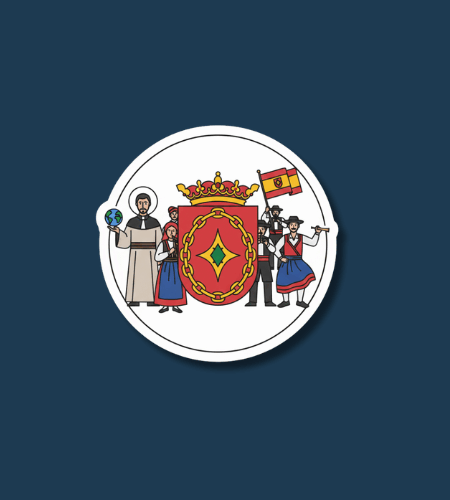
The Day of Navarre, also known as the Feast of St. Francis Xavier, is observed each year on December 3, the date that commemorates the death of St. Francis Xavier in 1552. This day combines respect for faith, history, and regional identity: St. Francis Xavier was born in the castle of Javier, in the historic region of Navarre (in present-day Spain), and he later became co-patron saint of Navarre. Day of Navarre serves as a moment for the people of the region, and others who venerate the saint, to remember his life, missionary work, and the faith-rooted heritage of Navarre.
Table of Contents
History of Day of Navarre
St. Francis Xavier was born April 7, 1506, at the castle of Javier in Navarre. He studied in Paris, met Ignatius of Loyola and became one of the first members of Society of Jesus (the Jesuits), taking vows in 1534. After ordination, he set out on extensive missionary journeys across Asia — to India, the East Indies, Japan and beyond — becoming one of the most important Catholic missionaries of the 16th century.
He died December 3, 1552, on the island of Shangchuan (Sancian), China, while on a mission to bring the faith to new lands. Over time, December 3 became his feast day in the Catholic liturgical calendar. In Navarre, the anniversary is celebrated as the Day of Navarre, a holiday that honors both the saint and the cultural-spiritual identity of the region.
Why Day of Navarre is important
Day of Navarre carries deep significance on several levels. First, it honors a figure whose life embodied devotion, sacrifice, and intercultural mission: St. Francis Xavier dedicated himself to spreading his faith across Asia, enduring hardship and danger for his convictions. Remembering him invites reflection on values such as service, commitment, and compassion.
Second, for people from Navarre or with ties to the region, the day reinforces a sense of identity, cultural and spiritual, linked to their history and heritage. It reminds communities of their roots, traditions and shared legacy. Celebrating Day of Navarre also offers a moment of unity and remembrance, connecting believers across generations and geographies.
- It commemorates a major historical figure associated with Navarre and global missionary work.
- It reinforces regional identity and shared heritage for people of Navarre.
- It honors values of faith, devotion and sacrifice embodied by St. Francis Xavier.
- It provides an opportunity for reflection on service, compassion, and intercultural understanding.
- It connects local traditions with global faith heritage.
How to Observe Day of Navarre
Observing Day of Navarre can take various forms depending on one’s background, religious, cultural or simply respectful of history. For believers, attending a mass or service in honor of St. Francis Xavier is the traditional way to mark his feast. For others, learning about his life and legacy, through reading, storytelling or watching documentaries, helps understand the historical and cultural importance of the day.
In Navarre and among its diaspora, it may also be a time for regional gatherings: visiting historical sites like the Castle of Xavier, reflecting on the region’s heritage, or participating in cultural events that highlight Navarrese identity. Regardless of tradition, the day can be used to reflect on universal themes: dedication, compassion, and the value of bridging cultures.
- Attend a religious service or mass commemorating St. Francis Xavier.
- Read about his life, missions and contributions to world history.
- Visit historical sites related to him or his birthplace (if possible).
- Share his story with others — friends, family or community — to spread awareness.
- Reflect on themes he embodied: commitment, compassion, cross-cultural respect, and service.
Day of Navarre Dates Table
| Year | Date | Day |
|---|---|---|
| 2026 | December 3 | Thursday |
| 2027 | December 3 | Friday |
| 2028 | December 3 | Sunday |
| 2029 | December 3 | Monday |
| 2030 | December 3 | Tuesday |
Subscribe to our newsletter and never miss a holiday again!