
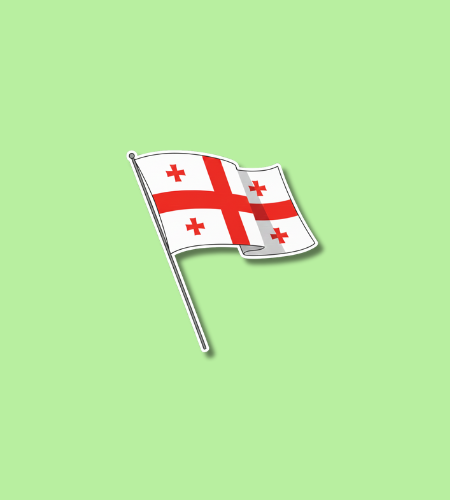
Day of the State Flag in Georgia is observed annually on January 14. This national celebration honors the adoption of the current five-cross flag as the primary symbol of Georgian statehood. While the design was officially legalized by the Parliament of Georgia in 2004, it represents a deep historical connection to the country’s ancient Christian heritage and its long-standing identity as a sovereign nation. The day emphasizes the unity, independence, and personal freedom of every citizen, serving as a visual reminder of the country’s path toward a modern, democratic future.
Table of Contents
History of Day of the State Flag in Georgia
The modern observance of this day began after the Parliament of Georgia passed the Law on the State Flag of Georgia on January 14, 2004. This legislation replaced the previous maroon and black banner of the First Republic with the “five-cross” design that had gained immense popularity during the peaceful Rose Revolution. Although the official holiday was not formally established until 2012, the date commemorates the 2004 legal restoration of the flag, which marked a new chapter in the nation’s post-Soviet history.
The design itself is rooted in medieval history, appearing on maps as early as the 14th century to represent the Kingdom of Georgia and its capital, Tbilisi. Vexillologists have traced the white field and red crosses back to the reign of King David the Builder and Queen Tamar, symbolizing the extreme eastern reach of European Christian civilization. The large central cross is the Cross of St. George, while the four smaller Bolnisi crosses in the corners represent Jesus Christ and the four evangelists. By choosing this design, Georgia reclaimed a historical identity that predates its periods of imperial and Soviet rule.
Why is Day of the State Flag in Georgia important?
The importance of this day lies in its role as a unifying force for Georgians both at home and abroad. The flag is viewed as more than a government emblem; it is a symbol of the individual dignity of every citizen and the collective resilience of the people. In a region with a complex geopolitical landscape, the state flag serves as a beacon of independence and a statement of the country’s aspiration to integrate further into the European community. It provides a common visual language for celebrating national achievements in sports, science, and diplomacy.
Furthermore, the day encourages a sense of ownership over national symbols among the general public. Government officials and the State Council of Heraldry emphasize that the flag does not belong exclusively to state institutions or political groups but to every family. Celebrating the flag fosters a deeper understanding of Georgian heraldry and the specific principles—freedom, unity, and strength—that the colors and crosses represent. This focus helps maintain a strong national identity across generations, ensuring that the history of the struggle for sovereignty is never forgotten.
- The flag serves as a visible symbol of Georgia’s 1,500-year-old Christian heritage.
- It unites the Georgian diaspora across the globe under a single national identity.
- The observance marks the peaceful transition of power and the birth of modern statehood.
- Displaying the flag promotes a sense of pride in national and individual freedoms.
- The day provides an opportunity to educate the youth about the evolution of Georgian symbols.
How to Celebrate Day of the State Flag in Georgia
The most prominent way to celebrate is by displaying the national flag in visible locations beyond government buildings. The State Council of Heraldry encourages citizens to fly the flag from their balconies, windows, roofs, and cars. In the capital city of Tbilisi, special ceremonies often take place where the flag is festively raised at the Presidential Palace and other major landmarks. These events are frequently accompanied by military salutes and the singing of the national anthem, “Tavisupleba,” creating a solemn yet celebratory atmosphere.
Educational institutions and cultural centers often host lectures or exhibitions detailing the history of the five-cross flag and its appearance on ancient nautical charts. Many families take the time to explain the meaning of the Bolnisi crosses to children, often visiting museums that house historical artifacts related to the flag’s origins. While it remains a working day in Georgia, the landscape is transformed by the widespread appearance of red and white, as businesses and private individuals participate in the visual display of national solidarity.
- Display a Georgian flag on your balcony or window to show national pride.
- Watch the official flag-raising ceremonies held at major government buildings.
- Visit a local museum to learn about the medieval origins of the five-cross design.
- Share images of the flag on social media to connect with the Georgian community.
- Use the day to study the specific rules for the respectful handling of the state flag.
Day of the State Flag in Georgia Dates Table
| Year | Date | Day |
|---|---|---|
| 2026 | January 14 | Wednesday |
| 2027 | January 14 | Thursday |
| 2028 | January 14 | Friday |
| 2029 | January 14 | Sunday |
| 2030 | January 14 | Monday |
Subscribe to our newsletter and never miss a holiday again!