
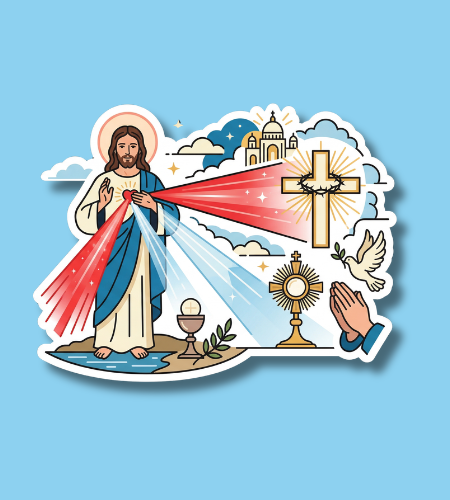
Divine Mercy Sunday is a prominent feast day in the Catholic Church observed on the second Sunday of Easter. This day concludes the Octave of Easter and focuses on the concept of God’s forgiveness and love, offering a dedicated time for the faithful to seek spiritual renewal and a clean slate through specific acts of devotion.
Read also about The Baptism of the Lord, Easter
Table of Contents
History of Divine Mercy Sunday
The origins of this observance are tied to the visions of Saint Maria Faustina Kowalska, a Polish nun who lived in the 1930s. Sister Faustina recorded several encounters with Jesus Christ in her diary, noting that he requested a special feast day dedicated to his mercy be established on the Sunday following Easter. During these revelations, the iconic image of Divine Mercy was described, featuring Christ with one hand raised in blessing and the other touching his chest, from which red and pale rays of light emerge.
The feast remained a local Polish tradition for several decades before gaining global recognition. In the year 2000, Pope John Paul II canonized Sister Faustina, making her the first saint of the new millennium. During the canonization ceremony, the Pope officially designated the Second Sunday of Easter as Divine Mercy Sunday for the entire Roman Catholic Church. This formal decree fulfilled the requests found in Faustina’s writings and integrated the devotion into the official liturgical calendar.
Why is Divine Mercy Sunday important?
This day provides a specific liturgical focus on the intersection of the Resurrection and the forgiveness of sins. It serves as a reminder that the joy of Easter is not just a historical commemoration but a personal opportunity for reconciliation. The feast emphasizes that no human failing is too great for divine pardon, encouraging individuals to return to their faith without fear of judgment. It acts as a bridge between the solemnity of Holy Week and the ongoing celebration of the Easter season.
Beyond individual spiritual health, the day promotes a culture of compassion and empathy toward others. The teachings associated with the feast remind participants that receiving mercy carries a responsibility to act mercifully toward neighbors and the vulnerable. By focusing on these themes, the observance strengthens community bonds and motivates people to engage in charitable works. It highlights the idea that peace in the world is achievable only when individuals embrace a spirit of forgiveness and trust.
- It offers a formal opportunity for the total forgiveness of sins and punishment.
- The feast day validates the mystical experiences and writings of Saint Faustina.
- It highlights the central role of mercy in the message of the Gospel.
- Communities gather to pray for global peace and the well-being of all people.
- The observance helps the faithful transition from the penance of Lent to Easter joy.
How to Observe Divine Mercy Sunday
Observing this day often begins with a novena, a nine-day period of prayer that starts on Good Friday and leads up to the feast. Many people attend a special Mass where the Image of Divine Mercy is solemnly blessed and displayed for public veneration. Participants are encouraged to receive the Holy Eucharist and go to Confession, as these are the primary requirements for receiving the special graces promised for the day. In many parishes, the Chaplet of Divine Mercy is recited communally, often at 3:00 p.m., which is recognized as the Hour of Mercy.
Practical observance also involves performing “deeds of mercy,” which can be physical or spiritual in nature. This might include donating to a local food pantry, visiting the sick, or offering forgiveness to someone from whom one has been estranged. Many families display the Divine Mercy image in their homes and use the day to reflect on the ways they can be more patient and kind in their daily lives. The goal is to make the experience of mercy tangible through direct service and personal transformation.
- Attend a local Mass and participate in the veneration of the Divine Mercy image.
- Recite the Chaplet of Divine Mercy using a standard set of rosary beads.
- Make a sincere confession to a priest during the weeks surrounding the feast.
- Perform a specific act of kindness for a neighbor or community member.
- Spend time in quiet reflection or adoration to focus on personal spiritual growth.
Divine Mercy Sunday Dates Table
| Year | Date | Day |
|---|---|---|
| 2026 | April 12 | Sunday |
| 2027 | April 11 | Sunday |
| 2028 | April 9 | Sunday |
| 2029 | April 8 | Sunday |
| 2030 | April 14 | Sunday |
Subscribe to our newsletter and never miss a holiday again!