
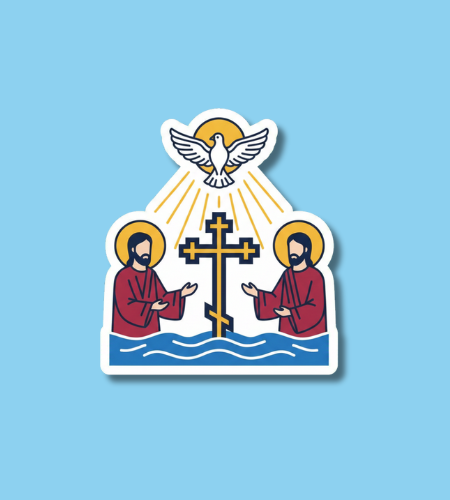
Epiphany in Eastern Christianity is celebrated on January 19 by many Orthodox churches following the Julian calendar. This feast, often called Theophany, commemorates the baptism of Jesus Christ in the River Jordan and the revelation of the Holy Trinity.
Table of Contents
History of Epiphany in Eastern Christianity
The feast of Theophany is one of the oldest in the Christian tradition, dating back to the late second or early third century. Before the birth of Jesus was celebrated separately on December 25, the early Eastern Church observed a single “manifestation” feast on January 6 that included the Nativity, the visit of the Magi, and Christ’s baptism. By the fourth century, these events began to be celebrated as distinct holidays. While the Western Church focused on the arrival of the Three Wise Men, the Eastern Church prioritized the baptism as the primary moment of divine revelation.
The term Theophany literally translates to “manifestation of God.” This refers to the biblical account where, as Jesus was baptized by John the Baptist, the voice of the Father was heard from heaven and the Holy Spirit descended in the form of a dove. This event marked the first time in the New Testament that all three persons of the Trinity were revealed simultaneously to humanity. Historically, this day became the preferred date for new converts to be baptized into the faith, a practice that continues in many parishes today.
Why is Epiphany in Eastern Christianity important?
The holiday is considered one of the Twelve Great Feasts of the Orthodox Church because it marks the beginning of Christ’s public ministry. It is not merely a historical commemoration but a theological celebration of the sanctification of the physical world. By entering the waters of the Jordan, Jesus is seen as purifying the element of water and, by extension, all of nature. This “cosmic” aspect of the holiday emphasizes that the entire material universe is redeemed and made good through the Incarnation.
This feast also serves as a profound revelation of the nature of God as a Trinity. The liturgy and hymns of the day focus on the “shining forth” of light and truth, symbolizing the end of spiritual darkness. For many Eastern Christians, the holiday is a time for personal and communal renewal. The blessing of homes and water sources during this season is a practical application of the belief that divine grace can permeate every aspect of daily life, offering protection and spiritual healing to the faithful.
- The feast commemorates the first public revelation of the Holy Trinity.
- It signifies the sanctification of all creation through Christ’s immersion in water.
- The day marks the official end of the festive Christmas season.
- It emphasizes the role of John the Baptist as the “Forerunner” of Christ.
- The observance promotes a sense of spiritual cleansing and new beginnings.
How to Celebrate Epiphany in Eastern Christianity
The central ritual of the holiday is the Great Blessing of Water, which occurs both on the eve of the feast and on the day itself. In many regions, the local community gathers at a river, lake, or sea for this ceremony. A priest leads a procession to the water’s edge and casts a wooden cross into the depths. This act is often followed by a spirited competition where young people dive into the cold water to retrieve the cross, a feat believed to bring health and blessings to the winner for the coming year.
Following the church services, it is traditional for priests to visit the homes of their parishioners to sprinkle them with holy water. Families prepare by cleaning their houses and setting up a small table with a candle and an icon. This “house blessing” is meant to bring the grace of the Theophany into the domestic sphere, protecting the household from spiritual and physical harm. Many people also bring small bottles to church to fill with the blessed water, which they keep in their homes to use throughout the year during times of illness or distress.
- Attend the Divine Liturgy and participate in the Great Blessing of Water.
- Take a dip in a local body of water to symbolize spiritual purification.
- Invite a priest to bless your home with newly consecrated holy water.
- Bring a bottle of the blessed “Theophany water” home for use during the year.
- Enjoy a festive family meal featuring traditional dishes like wheat-based kutia.
Epiphany in Eastern Christianity Dates Table
| Year | Date | Day |
|---|---|---|
| 2026 | January 19 | Monday |
| 2027 | January 19 | Tuesday |
| 2028 | January 19 | Wednesday |
| 2029 | January 19 | Friday |
| 2030 | January 19 | Saturday |
Subscribe to our newsletter and never miss a holiday again!