
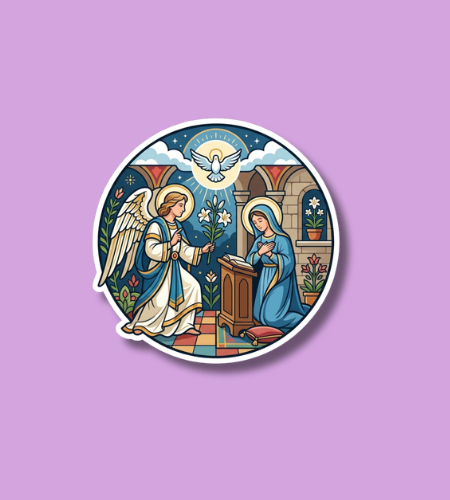
The Feast of the Annunciation is a Christian holiday that is observed on March 25. This day marks the moment the Archangel Gabriel visited the Virgin Mary to announce that she would conceive and become the mother of Jesus. Because it occurs exactly nine months before Christmas, it serves as a celebration of the Incarnation, or the belief that God became human. In many traditions, if the date falls during Holy Week or Easter Week, the observation is moved to the Monday after the second Sunday of Easter to ensure it receives proper liturgical focus.
Table of Contents
History of Feast of the Annunciation
The origins of this feast date back to at least the 4th or 5th century. Early Christian writers like Tertullian and Origen discussed the concept of the Annunciation, and by the middle of the 6th century, the Eastern Church had established a formal feast day. Records indicate that by the 7th century, Rome had also adopted the celebration. Historically, March 25 was viewed as a significant date in the ancient world, often linked to the spring equinox and the traditional date of the creation of the world in some early Christian chronologies.
Throughout the Middle Ages, the Feast of the Annunciation was known as “Lady Day” and served as the start of the new year in England and other parts of Europe. This secular significance tied the religious event to the legal and financial calendar, as it was one of the four “quarter days” when rents were due and school terms began. This connection between the sacred and the everyday helped cement the holiday’s importance in Western culture, blending the theological mystery of the Incarnation with the practical rhythms of the spring season.
Why is Feast of the Annunciation important?
This holiday is central to Christian theology because it represents the “fiat,” or the voluntary consent of Mary to participate in the divine plan. It emphasizes the belief that the redemption of humanity began not at the birth of Jesus, but at the moment of his conception. The day highlights the intersection of the divine and the human, marking the point where eternity entered into time. It is a day of hope that focuses on the themes of obedience, humility, and the high value placed on human life from its earliest beginnings.
In various cultures, the day also signals a transition in the natural world. Since it falls near the vernal equinox, it has long been associated with the return of light and the planting of new crops. In the Greek Orthodox tradition, the day carries double significance as it coincides with Greek Independence Day, linking religious liberation with national sovereignty. Whether viewed through a spiritual or a historical lens, the day serves as a reminder of the power of a single “yes” to change the course of history.
- It commemorates the Archangel Gabriel’s message to Mary
- It marks the beginning of the nine-month period leading to Christmas
- It celebrates the doctrine of the Incarnation
- It highlights the importance of free will and cooperation with God
- It serves as a traditional marker for the beginning of the legal year
How to Celebrate Feast of the Annunciation
Celebrating this feast often involves attending a special church service or Mass where the story from the Gospel of Luke is read. Since the day frequently falls during the fasting season of Lent, many traditions allow for a temporary lifting of Lenten restrictions to mark the solemnity. Families might gather for a festive meal that includes specific symbolic foods. In Sweden, for example, it is traditional to eat waffles, a custom born from a linguistic similarity between the Swedish words for “Our Lady” and “waffle.”
Practical ways to observe the day include incorporating the color blue, which is traditionally associated with Mary, into home decor or clothing. Some people choose to plant a “Mary Garden” or buy Madonna lilies, which represent purity. It is also a common time for personal reflection or the recitation of the Angelus, a prayer that specifically honors the mystery of the Annunciation. Small gestures, like sharing a seed cake to represent the “seed” of the Incarnation, help connect the abstract theological concepts to physical, everyday life.
- Attend a liturgical service to hear the Annunciation narrative
- Prepare and eat waffles with lingonberries or cream
- Display blue flowers or linens in the home
- Recite the Angelus prayer at noon
- Plant seeds or start a flower garden to represent new life
HOLIDAY Dates Table
| Year | Date | Day |
|---|---|---|
| 2026 | March 25 | Wednesday |
| 2027 | March 25 | Thursday |
| 2028 | March 25 | Saturday |
| 2029 | March 25 | Sunday |
| 2030 | March 25 | Monday |
Subscribe to our newsletter and never miss a holiday again!