
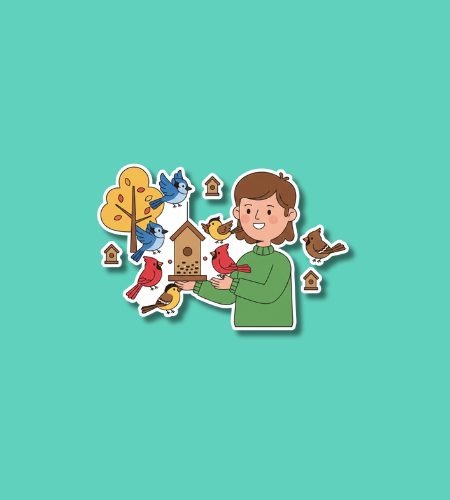
Feed the Birds Day is observed on February 3 each year. This day highlights the importance of supporting wild bird populations during the coldest months of winter when natural food sources are often frozen or buried under snow. It is a central event within National Bird-Feeding Month, encouraging people to provide consistent nutrition to avian species that remain in northern climates throughout the season.
RSPB Feed the Birds Day is in October.
Table of Contents
History of Feed the Birds Day
The origins of this observance are closely tied to the establishment of National Bird-Feeding Month in 1994. Congressman John Porter of Illinois read a resolution into the Congressional Record, officially designating February as a time to focus on wild bird welfare. He noted that February is one of the most difficult months for birds to survive due to extreme temperatures and a lack of access to weed seeds and insects. The goal was to promote bird feeding as both a conservation effort and a healthy, stress-relieving hobby for citizens.
In 2016, Bob Matthews, a dedicated bird watcher from Rochester, New York, specifically designated February 3 as Feed the Birds Day. Matthews created the day to provide a specific focal point early in the month to ensure birds receive help before their winter energy stores are completely exhausted. While humans have fed birds for centuries—ranging from 6th-century monks to 19th-century naturalists like John James Audubon—this modern holiday formalizes the practice as a coordinated environmental effort.
Why is Feed the Birds Day important?
This day is important because it directly impacts the survival rates of local bird species during the “hungry gap” of late winter. By February, most berries and seeds from the previous autumn have been consumed or destroyed by the elements. Birds require a massive amount of calories relative to their body weight just to maintain their core temperature overnight. Providing high-energy fats and proteins helps them survive until the first buds of spring appear and insect life returns.
Beyond the biological necessity, the observance fosters a connection between people and the natural world. It encourages citizen science, as many participants track the species that visit their yards and report findings to conservation groups. This data helps scientists understand shifts in bird populations and migration patterns. For the individual, the practice offers a peaceful interaction with nature that has been shown to reduce anxiety and improve mental well-being during the long winter months.
- It helps birds maintain the body fat necessary to survive freezing nights.
- The day raises awareness about the specific nutritional needs of different species.
- It supports the conservation of songbirds and other common backyard visitors.
- The event provides a way for people to engage in wildlife observation at home.
- It encourages the maintenance of clean, safe habitats for local wildlife.
How to Celebrate Feed the Birds Day
The primary way to celebrate is to set up or refill bird feeders with high-quality, energy-dense food. Traditional bread is discouraged as it lacks the necessary nutrients and can even be harmful; instead, use black-oil sunflower seeds, suet blocks, or nyjer seeds. Placing feeders near shrubs or trees provides birds with a quick escape from predators and protection from the wind while they eat. If you already have a feeder, take time to clean it with a weak bleach solution to prevent the spread of avian diseases.
Another vital way to observe the day is to provide a reliable source of liquid water. Since most ponds and puddles are frozen in February, a heated birdbath or a simple shallow dish refilled daily can be just as important as food for a bird’s survival. Enthusiasts also use this day to start a bird-watching journal, noting the dates and types of visitors to their gardens. Many people share photos of their backyard guests on social media to encourage others to take part in this seasonal act of kindness.
- Fill feeders with high-calorie seeds like sunflower or safflower.
- Hang suet cages to provide essential fats for woodpeckers and nuthatches.
- Put out a shallow bowl of fresh, unfrozen water for drinking and bathing.
- Identify the different species that visit your yard using a field guide.
- Clean existing feeders to ensure the health and safety of the birds.
Feed the Birds Day Dates Table
| Year | Date | Day |
|---|---|---|
| 2026 | February 3 | Tuesday |
| 2027 | February 3 | Wednesday |
| 2028 | February 3 | Thursday |
| 2029 | February 3 | Saturday |
| 2030 | February 3 | Sunday |
Subscribe to our newsletter and never miss a holiday again!