
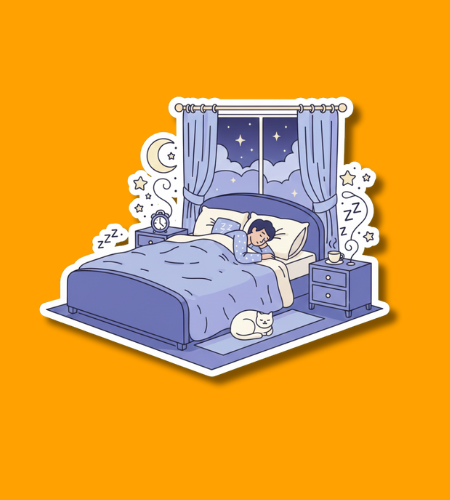
Festival of Sleep Day is observed on January 3. This unofficial holiday provides a designated time for individuals to recover from the exhaustion often associated with the end-of-year festivities. Coming immediately after the social demands of Christmas and New Year’s Eve, the day serves as a practical break before the full return to work and school routines. It encourages people to prioritize their physiological need for rest and to acknowledge that adequate sleep is a fundamental requirement for health rather than an optional luxury.
Table of Contents
History of Festival of Sleep Day
The exact origin of this holiday remains unknown, as there is no single person or organization credited with its creation. It emerged as a grassroots tradition in the late 20th century, likely as a response to the “holiday burnout” that many people experience. The timing was intentionally set for early January when the excitement of the winter season fades and the reality of winter weather sets in. It began as a humorous “fun holiday” but has since gained more serious attention from health advocates who use the date to discuss sleep hygiene.
Throughout history, human sleep patterns have undergone significant shifts. Before the Industrial Revolution and the widespread use of artificial lighting, many cultures practiced “segmented sleep,” which involved two distinct periods of rest separated by a few hours of quiet activity at night. The modern concept of a single eight-hour block is a relatively recent development. Festival of Sleep Day acknowledges the modern struggle to maintain these consistent blocks of rest in an era defined by 24-hour connectivity and digital blue light.
Why is Festival of Sleep Day important?
This day is important because it highlights the critical link between restorative sleep and immune system performance. During deep sleep, the body produces and releases cytokines, which are proteins that help the immune system respond to threats like infections and inflammation. Chronic sleep deprivation reduces the production of these protective cells, making individuals more susceptible to seasonal illnesses. By dedicating a day to sleep, people can provide their bodies with the necessary window to perform vital cellular repair and maintenance.
Mental health and cognitive function are also significantly influenced by the amount of rest a person receives. Sleep plays a major role in memory consolidation, the process by which the brain turns short-term experiences into long-term memories. A lack of rest impairs decision-making skills, increases irritability, and reduces the ability to focus on complex tasks. The holiday brings awareness to these psychological benefits, encouraging a cultural shift away from the idea that “grinding” through exhaustion is a badge of honor.
- It offers a chance to catch up on “sleep debt” after the holiday season
- Proper rest helps regulate hormones that control appetite and metabolism
- High-quality sleep is linked to a lower risk of heart disease and stroke
- The day promotes awareness of sleep disorders like insomnia and apnea
- Resting improves emotional regulation and decreases daily stress levels
How to Observe Festival of Sleep Day
The most effective way to celebrate is by removing all time-based obligations for the day. If your schedule allows, turn off all alarms and let your body wake up naturally. This helps reset the circadian rhythm, which is the internal clock that regulates the sleep-wake cycle. For those who cannot spend the entire day in bed, taking a “power nap” of 20 to 30 minutes in the early afternoon can provide a significant boost in alertness and mood without interfering with nighttime rest.
Another way to observe the day is by auditing your sleeping environment to create a “sleep sanctuary.” This involves ensuring the bedroom is dark, quiet, and kept at a cool temperature, ideally around 65 degrees Fahrenheit. Replacing old pillows, washing bed linens, or investing in blackout curtains are practical steps that improve sleep quality long after the holiday ends. Many people also use this time to establish a new bedtime routine that excludes electronic screens at least one hour before bed to allow melatonin levels to rise naturally.
- Sleep in as late as possible without using a traditional alarm clock
- Take a midday nap to recharge your energy levels
- Switch your mobile devices to “Do Not Disturb” mode for the day
- Replace worn-out bedding or pillows to improve physical comfort
- Practice deep breathing exercises to relax your mind before napping
Festival of Sleep Day Dates Table
| Year | Date | Day |
|---|---|---|
| 2026 | January 3 | Saturday |
| 2027 | January 3 | Sunday |
| 2028 | January 3 | Monday |
| 2029 | January 3 | Wednesday |
| 2030 | January 3 | Thursday |
Subscribe to our newsletter and never miss a holiday again!