
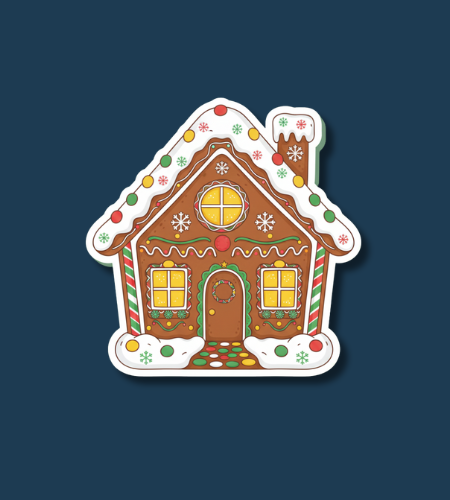
Gingerbread House Day is observed annually on December 12. This festive holiday is dedicated to the creative and sugary tradition of building edible homes, bringing families and friends together to construct everything from simple cottages to elaborate mansions.
Table of Contents
History of Gingerbread House Day
The roots of the gingerbread house stretch back to the Middle Ages when crusaders brought ginger from the Middle East to Europe. Monks began baking gingerbread, often shaping it into religious symbols or saints. However, the specific tradition of building houses out of this sturdy, spiced dough originated in Germany during the 16th century. These early creations, known as Lebkuchenhaus, were intricate displays of baking skill, often decorated with gold leaf and foil.
The popularity of these edible structures skyrocketed in the early 19th century, following the publication of the Brothers Grimm fairy tale, Hansel and Gretel. In the story, two children discover a house made entirely of bread and cake with windows of clear sugar. The tale captured the public’s imagination, inspiring German bakers to craft miniature versions that customers could take home. German immigrants eventually brought this sweet custom to the Americas, where it evolved into the candy-covered holiday staple celebrated today.
Why is Gingerbread House Day important?
This day serves as a catalyst for creativity and hands-on fun in an increasingly digital world. Building a gingerbread house requires a unique blend of engineering and artistry; builders must figure out how to keep walls standing with icing “cement” while simultaneously designing a visually appealing exterior. It provides a tactile outlet for imagination, allowing children and adults alike to act as architects of their own sugary worlds.
Furthermore, the holiday fosters connection and tradition. Whether using a store-bought kit or baking dough from scratch, the process is often collaborative. It is a time when families gather around a kitchen table, sharing stories and candy while working toward a shared goal. The resulting houses often become centerpieces for holiday decorations, symbolizing the warmth and sweetness of the season.
- It encourages family bonding through a shared activity.
- It keeps the centuries-old tradition of German baking alive.
- It allows for edible artistic expression.
- It supports local bakeries and craft stores.
- It marks a festive milestone in the countdown to Christmas.
How to Celebrate Gingerbread House Day
The most obvious way to observe this day is to build a gingerbread house. You can purchase a pre-baked kit if you are short on time, which usually includes walls, roof panels, and a bag of candy. For a more authentic experience, try baking the gingerbread from scratch using a recipe that produces a firm, structural cookie. The key to success is the “glue”—royal icing made from egg whites and powdered sugar—which dries hard and keeps the structure intact.
If you are feeling competitive, host a decorating party. Invite friends over and set up stations with different types of candy, such as gumdrops, peppermint swirls, and pretzel sticks for “logs.” Set a timer and see who can create the most innovative design, or assign themes like “Log Cabin,” “Haunted House,” or “Modern Mansion.” Once the houses are complete, display them together to create a gingerbread village, or donate them to a local nursing home or hospital to spread cheer.
- Bake structural gingerbread and cut out wall shapes.
- Use royal icing to secure the walls and roof.
- Decorate the roof with shingles made of cereal or chocolate.
- Create a winter scene using shredded coconut as snow.
- Host a competition with categories for “Best Design” or “Most Creative.”
Gingerbread House Day Dates Table
| Year | Date | Day |
|---|---|---|
| 2026 | December 12 | Saturday |
| 2027 | December 12 | Sunday |
| 2028 | December 12 | Tuesday |
| 2029 | December 12 | Wednesday |
| 2030 | December 12 | Thursday |
Subscribe to our newsletter and never miss a holiday again!