
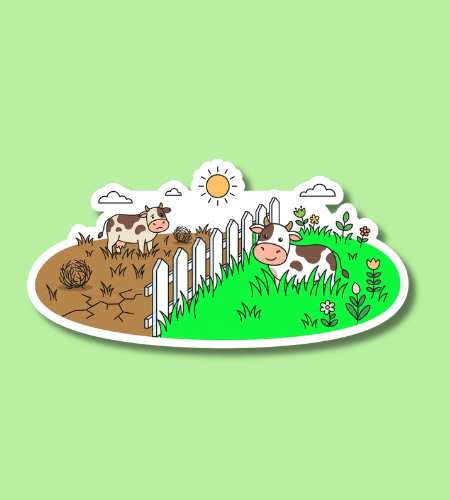
Grass is Always Browner on the Other Side of the Fence Day is observed every year on March 30. This lighthearted and philosophical holiday is the cynical, yet oddly comforting, inverse of the common proverb “the grass is always greener on the other side.” It encourages people to stop pining for what others have and to realize that everyone—no matter how perfect their life looks from the outside—deals with their own set of “brown patches” or struggles.
Table of Contents
History of Grass is Always Browner on the Other Side of the Fence Day
The origins of this day are rooted in the modern movement toward mindfulness and the rejection of “comparison culture.” While the exact creator of this specific holiday is not recorded in official legislative archives, it emerged in the early 2000s as a reaction to the rising pressure of social media, where people often curate only the “greenest” parts of their lives. The holiday was designed as a humorous mental health intervention, reminding us that the neighbor’s yard only looks better because we aren’t close enough to see the weeds.
Historically, the phrase “the grass is greener” dates back to the poetry of Ovid (roughly 17 B.C.), who noted that “the harvest is always more fruitful in another man’s fields.” By flipping this ancient sentiment on its head, Grass is Always Browner Day aligns with modern psychological findings that suggest “social comparison” is one of the leading causes of unhappiness. By celebrating the “brown grass” of others, the holiday isn’t promoting spite, but rather a realistic understanding of the human condition: everyone is fighting a battle you know nothing about.
Why is this day important?
This day is important because it acts as a much-needed antidote to envy and “FOMO” (Fear Of Missing Out). In an era of filtered photos and “success theater,” it is easy to fall into the trap of believing that your life is subpar compared to your peers. This holiday reminds us that the “other side of the fence” often comes with its own hidden costs—higher stress, less time, or personal challenges that aren’t visible from the sidewalk. It validates the idea that being “average” or having a “brown lawn” sometimes is a normal, healthy part of life.
The observance also fosters a sense of community and empathy. When we realize that everyone has “brown grass,” we become less judgmental of others and more forgiving of ourselves. It encourages authenticity over perfection. By acknowledging that no one has it all figured out, the holiday lowers social anxiety and promotes a culture where people feel safe sharing their struggles rather than hiding them. It’s a day to embrace the beautiful messiness of reality over the sterile illusion of perfection.
- It helps reduce the psychological drain of constant social comparison.
- The holiday promotes “JOMO” (Joy Of Missing Out) and contentment.
- It highlights that high-status lives often come with high-stress trade-offs.
- The day encourages people to appreciate the “green” parts of their own lives.
- It serves as a reminder that perfection is an unattainable and boring goal.
How to Celebrate Grass is Always Browner on the Other Side of the Fence Day
To celebrate, take a “comparison fast” for the day by staying off social media platforms that make you feel inadequate. Instead of looking at what you lack, make a list of three things in your “yard” that you are genuinely happy about—even if they aren’t perfect. You can also celebrate by having an honest conversation with a friend about a struggle you’re facing; you’ll likely find that their “grass” isn’t as green as you thought, either.
Another fun way to observe the day is to look for the “weeds” in your own life and find a way to laugh at them. Did you burn dinner? Is your car a mess? Embrace it! Sharing a “fail” or an unedited photo of your real life online is a great way to participate in the spirit of the holiday. By being vulnerable and real, you give others permission to stop pretending as well. It’s a day to stop watering the plastic grass of your public persona and start appreciating the wild, uneven, and authentic turf of your real life.
- Unfollow accounts that trigger feelings of envy or “not being enough.”
- Write down three “hidden blessings” that exist in your current life.
- Share a “real-life” photo of a messy room or a failed DIY project.
- Give a genuine compliment to someone who seems to “have it all” to humanize them.
- Spend time practicing “radical self-acceptance” for your own flaws.
Grass is Always Browner Day Dates Table
| Year | Date | Day |
|---|---|---|
| 2026 | March 30 | Monday |
| 2027 | March 30 | Tuesday |
| 2028 | March 30 | Thursday |
| 2029 | March 30 | Friday |
| 2030 | March 30 | Saturday |
Subscribe to our newsletter and never miss a holiday again!