
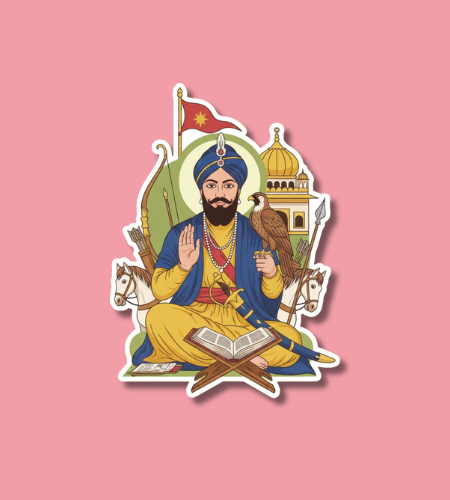
Guru Gobind Singh Jayanti is observed on the Saptami day of the Shukla Paksha in the Hindu month of Paush. This significant Sikh festival commemorates the birth of the tenth and final human Guru, who was a spiritual leader, philosopher, warrior, and poet. In 2026, it falls on January 20.
History of Guru Gobind Singh Jayanti
Guru Gobind Singh was born as Gobind Rai in Patna, Bihar, in 1666. He was the only son of the ninth Sikh Guru, Guru Tegh Bahadur, and Mata Gujri. His father was executed by the Mughal Emperor Aurangzeb in 1675 for defending religious freedom and refusing to convert to Islam. Following this martyrdom, Gobind Singh was formally installed as the tenth Sikh Guru at the age of nine. He spent much of his life in the Shivalik foothills, where he received education in various languages and was trained in martial arts, including archery and swordsmanship.
In 1699, Guru Gobind Singh took a historic step by founding the Khalsa Panth, a community of initiated Sikhs committed to justice and equality. He introduced the “Five Ks”—Kesh (uncut hair), Kangha (comb), Kara (steel bracelet), Kachera (shorts), and Kirpan (sword)—as articles of faith for his followers. Before his death in 1708, he declared that the lineage of human Gurus would end with him and designated the Guru Granth Sahib, the holy scripture, as the eternal living Guru for all Sikhs.
Why is Guru Gobind Singh Jayanti important?
This day serves as a powerful reminder of the values of courage and self-sacrifice. Guru Gobind Singh’s life was defined by his unwavering resistance against tyranny and oppression, even at the cost of his family. All four of his sons, the Chaar Sahibzaade, were martyred while defending their faith and the principles of righteousness. By honoring his birth, devotees reflect on the strength required to stand up for the vulnerable and the importance of maintaining integrity in the face of immense personal loss.
The celebration also emphasizes the principle of universal equality. The creation of the Khalsa was a direct challenge to the rigid caste system of the time, as the first five initiates, the Panj Pyare, came from diverse social backgrounds. Guru Gobind Singh taught that the whole human race is one and encouraged his followers to serve society selflessly. This message of inclusivity remains a core tenet of Sikhism, guiding millions to live with humility, discipline, and a commitment to the welfare of all people.
- The holiday honors the Guru’s role in giving the Sikh community a distinct identity.
- It highlights the spiritual authority of the Guru Granth Sahib as the final guide.
- The day recognizes the Guru’s extensive contributions to Punjabi and Persian literature.
- It celebrates the military legacy of a leader who fought numerous defensive battles.
- The observance reinforces the Sikh tradition of seva or selfless community service.
How to Celebrate Guru Gobind Singh Jayanti
The festivities begin early in the morning with visits to Gurudwaras, which are often decorated with lights and flowers for the occasion. Devotees participate in the Akhand Path, a continuous 48-hour reading of the Guru Granth Sahib that concludes on the morning of the festival. This is accompanied by the singing of Gurbani Kirtan and special prayers known as Ardas. Many communities organize a Nagar Kirtan, a grand procession through the streets led by the Panj Pyare, where the holy scripture is carried on a decorated float.
A central part of the celebration is the organization of Langar, the free community kitchen where meals are served to everyone regardless of their religion or status. Families often prepare special dishes at home and share them with neighbors as a gesture of goodwill. In many places, the day is also marked by Gatka performances, a traditional Sikh martial art that demonstrates the defensive skills taught by the Guru. These activities combine deep spiritual reflection with a vibrant display of community unity and cultural pride.
- Attend the early morning prayers and kirtan sessions at your local Gurudwara.
- Volunteer at a community kitchen to help prepare and serve free meals to others.
- Watch or participate in a Nagar Kirtan procession to see the traditional Gatka displays.
- Read a translation of the Jaap Sahib to understand the Guru’s philosophical teachings.
- Decorate your home with candles or lamps to mark the “Prakash Parv” or festival of light.
Subscribe to our newsletter and never miss a holiday again!