
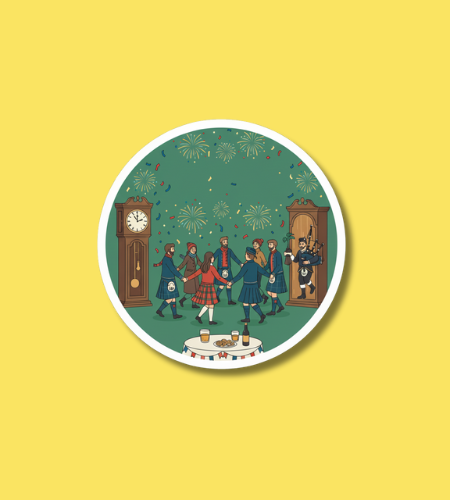
Hogmanay is observed annually on December 31. This traditional Scottish celebration marks the arrival of the New Year with ancient fire rituals, communal singing, and hospitality that lasts through the night.
Table of Contents
History of Hogmanay
This celebration originated during the Viking invasions of the 8th and 9th centuries. Norse invaders brought winter solstice traditions to Scotland, focusing on the return of the sun and the use of fire to ward off dark spirits. These pagan customs eventually combined with local Gaelic rituals to create a distinct national identity for the New Year. The holiday became the primary winter event in Scotland after the Protestant Reformation in the 16th century when the Church of Scotland virtually banned Christmas celebrations.
For nearly 400 years, Christmas remained a regular working day for many Scots, which led them to save their festive energy for the New Year. This historical shift established Hogmanay as the most significant social event on the Scottish calendar, a status it maintained even after Christmas became a public holiday in 1958. Today, the festival includes multi-day events in cities like Edinburgh and Stonehaven, drawing hundreds of thousands of participants to witness historic ceremonies and modern street parties.
Why is Hogmanay important?
The holiday serves as a vital expression of Scottish culture and reinforces community bonds through shared hospitality. It provides a structured way for people to reflect on the past year while looking toward the future with a collective sense of hope. The event preserves national heritage through the singing of “Auld Lang Syne,” a poem by Robert Burns that has become a global anthem for New Year’s transitions. By maintaining these customs, the holiday connects modern residents with their ancestral roots.
The celebration supports the regional economy and sustains traditional skills, such as the construction of ceremonial fireballs and the production of specialty foods. It encourages a spirit of inclusion by welcoming strangers into homes and public spaces for festive gatherings. For many, the transition rituals provide a psychological reset, allowing individuals to clear old debts and prepare their environment for a fresh start. This emphasis on renewal and friendship helps maintain social cohesion across different generations and backgrounds.
- The holiday maintains a connection to Norse and Gaelic ancestry
- It fosters a spirit of universal friendship and inclusion for visitors
- Communal singing strengthens the cultural identity of the people
- Fire festivals symbolize the purification of the community for the new year
- The extra public holiday on January 2 allows for extended recovery and visiting
How to Celebrate Hogmanay
Traditional celebrations often begin with a practice called “redding the house,” which involves a thorough cleaning to ensure the new year starts in an organized environment. As midnight approaches, groups gather to sing “Auld Lang Syne” while fireworks illuminate the sky. A central custom is “first-footing,” where the first person to enter a home after midnight determines the household’s luck. To bring good fortune, the visitor should be a dark-haired male carrying symbolic gifts such as coal for heat, shortbread for food, and whisky for prosperity.
In many coastal regions, the festivities involve dramatic fire displays, such as swinging flaming cages or parading with torches. Modern urban celebrations include large street parties with live music, traditional folk dancing known as ceilidhs, and outdoor concerts. On New Year’s Day, participants often take part in the “Loony Dook,” an invigorating swim in icy waters to signify a fresh beginning. Whether through a quiet family gathering or a massive public event, the focus remains on welcoming the new year with warmth and social connection.
- Clean your home and clear any outstanding debts before midnight
- Prepare a traditional black bun fruitcake to offer to holiday guests
- Participate in a local ceilidh to learn traditional group dances
- Carry a piece of coal when visiting friends to symbolize a warm hearth
- Join a torchlight procession to mark the start of the festivities
Hogmanay Dates Table
| Year | Date | Day |
|---|---|---|
| 2026 | December 31 | Thursday |
| 2027 | December 31 | Friday |
| 2028 | December 31 | Sunday |
| 2029 | December 31 | Monday |
| 2030 | December 31 | Tuesday |
Subscribe to our newsletter and never miss a holiday again!