
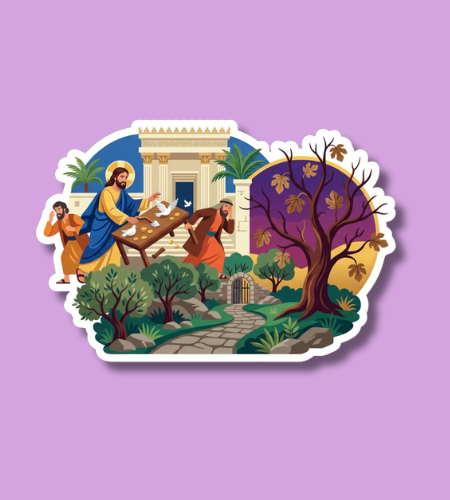
Holy Monday (also known as Great and Holy Monday) is the second day of Holy Week, the final week of Lent leading up to Easter. In 2026, the observance falls on March 30 for Western Christianity and April 6 for Eastern Orthodox traditions. It commemorates the events in the life of Jesus Christ between his triumphant entry into Jerusalem on Palm Sunday and his eventual crucifixion.
Table of Contents
History and Biblical Significance
Holy Monday marks the beginning of the “tension” in the Passion story. While Palm Sunday was a day of celebration, the events of Monday show Jesus asserting his divine authority and challenging the religious status quo of the time. According to the Gospels (primarily Matthew, Mark, and Luke), three key events are traditionally associated with this day:
- The Cursing of the Fig Tree: On his way from Bethany to Jerusalem, Jesus saw a fig tree with leaves but no fruit. He cursed the tree, which withered away. This act is seen as a symbolic judgment on a faith that has the “foliage” of religious ritual but lacks the “fruit” of true repentance and spiritual life.
- The Cleansing of the Temple: Upon entering the Temple in Jerusalem, Jesus found it filled with money changers and merchants. In a rare display of righteous anger, he overturned their tables and drove them out, famously declaring, “My house shall be called a house of prayer, but you have made it a den of thieves.”
- The Authority of Jesus Questioned: Following the temple incident, Jesus returned to teach, where the chief priests and elders challenged his right to act and speak as he did. Jesus responded with parables that further highlighted their spiritual failures.
Why Holy Monday is Important
This day is vital because it sets the stage for the sacrifice of Good Friday. It reveals the humanity of Jesus—through his hunger and his anger—as well as his uncompromising commitment to the purity of worship. For believers, Holy Monday is a call to “spiritual housecleaning.” Just as Jesus cleared the temple of corruption, the day invites individuals to examine their own lives and remove the “clutter” of sin, distractions, and hypocrisy that prevents a deep connection with God.
- It emphasizes that true faith must produce visible “fruit” in a person’s life.
- The holiday marks the transition from Jesus as a “Triumphant King” to a “Sufferer.”
- It highlights the importance of keeping sacred spaces and the “temple of the heart” pure.
- The day serves as a reminder of Christ’s authority over both nature and religion.
How to Observe Holy Monday
Because it is a day of reflection and preparation, many Christians observe Holy Monday with quiet devotion. Unlike the major celebrations of Palm Sunday or Easter, this is a day for slowing down.
- Scripture Reading: Many people read the accounts of the Temple cleansing in Matthew 21:12–22 or Mark 11:15–19.
- Spring Cleaning: An ancient tradition involves “spring cleaning” the home during the first three days of Holy Week. This physical cleaning is meant to mirror the spiritual cleansing of the soul in preparation for the Resurrection.
- Fasting and Simple Meals: To maintain the austerity of Holy Week, families often eat simpler, less expensive meals, donating the savings to those in need.
- Confession and Reflection: In the Catholic tradition, it is a popular day to go to Confession, seeking forgiveness for the “anger and resentment” Jesus addressed during his time in the Temple.
- Digital Fasting: Many modern observers choose to stay off social media on Holy Monday to create a “house of prayer” within their own minds, free from the noise of the digital world.
Subscribe to our newsletter and never miss a holiday again!