


Independence Day in Romania
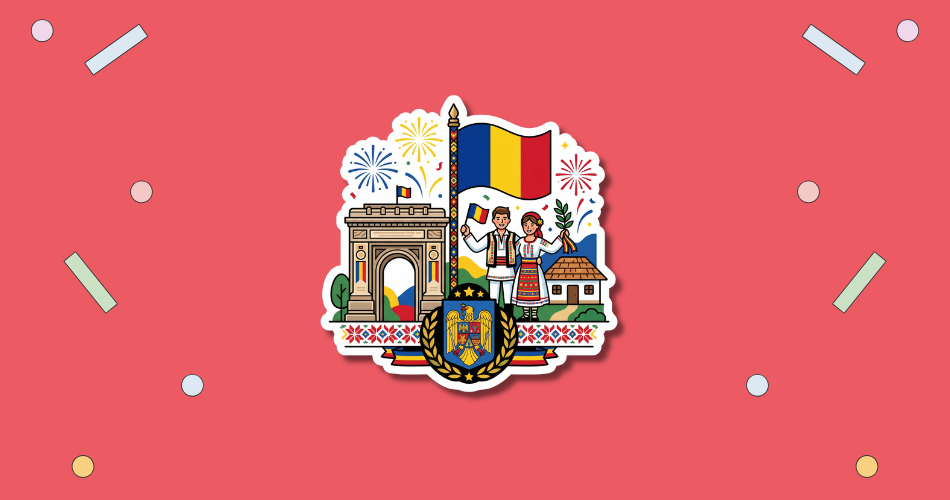
Independence Day in Romania is celebrated annually on May 10. This holiday commemorates the official declaration of the nation’s sovereignty from the Ottoman Empire in 1877. It is a day of national reflection that honors the military struggle for autonomy and the political transition of the country into a modern, independent state. In 2027, this date falls on a Monday.
Contents
See also: Romanian Great Union Day, Martisor, Unification Day
HT Meter
Does this day matter to you?
Tap the meter if it does, and say whether you will be celebrating — that is what opens the wishes from everybody else who will be.
This day matters to me
0 Be the first to say so
Just getting started
0 Let others know you’re in.
Wishes, greetings and stories
Join the celebration to share a wish, a greeting, or how this day goes in your house.
These are kept for the people celebrating this day. Say you will be celebrating to read them and to add your own.
You have already shared something here recently.
Nothing here yet. Yours would be the first.
History of Independence Day in Romania
The origins of this holiday are found in the Russo-Turkish War of 1877–1878, where Romania fought to break free from centuries of Ottoman suzerainty. On May 9, 1877, the politician Mihail Kogălniceanu read the Declaration of Independence in front of the Chamber of Deputies. The following day, May 10, 1877, Prince Carol I signed the document, making the declaration legally binding. This date was chosen specifically to coincide with the anniversary of Carol I’s arrival in Bucharest in 1866 to become the ruling prince.
Flag Day of Romania
For nearly a century, May 10 served as the primary National Day of Romania, representing three major milestones: the beginning of Carol I’s reign, the state’s independence, and the proclamation of the Kingdom in 1881. However, the communist regime banned the holiday in 1947 after King Michael I was forced to abdicate. It remained suppressed for decades until Law 189 of July 8, 2021, officially reinstated May 10 as the National Independence Day, separating it from the Great Union Day held in December.
Why is Independence Day in Romania important?
This day is vital as it marks the birth of Romania as a fully sovereign player on the European political stage. The successful defense of the Danube and the Siege of Plevna during the 1877 war demonstrated the effectiveness of the Romanian military and secured the nation’s right to self-governance. By achieving independence, the country was able to establish its own diplomatic relations and economic policies without foreign oversight.
The holiday also serves as a tribute to the consolidation of the Romanian monarchy under King Carol I, which brought stability and modernization to the region. It reinforces a sense of national identity by reminding citizens of the collaborative efforts between political leaders and the general population to achieve a common goal. Recognizing this day helps preserve the historical truth and reconnects modern Romanians with their pre-communist cultural traditions.
- It commemorates the official end of Ottoman rule over Romanian territories.
- The holiday honors the bravery of soldiers who fought in the 1877 war.
- It recognizes the political foresight of early Romanian reformers and leaders.
- The day marks the transformation of the country into a modern kingdom.
- It provides a dedicated time to reflect on the value of national sovereignty.
How to Celebrate Independence Day in Romania
Make it yours
How would you like to spend Independence Day in Romania?
Tick what fits you, and we will put together ideas made for this day — not for any day.
Unification Day
The most prominent way to observe the day is through military and religious ceremonies held at monuments dedicated to national heroes. In Bucharest and other major cities like Sibiu, military units participate in parades and wreath-laying ceremonies at the “Soldier of All Times” monuments. These events often include a 21-gun salute and the performance of the national anthem by military brass bands to show respect for the fallen.
Cultural institutions and museums organize special exhibitions and lectures that detail the military strategies and diplomatic efforts of the late 19th century. Many citizens fly the national tricolor flag from their homes and public buildings as a sign of patriotism. Local communities may also host concerts and folk festivals that showcase traditional Romanian music, celebrating the enduring spirit and heritage of the nation.
- Attend a military parade or a public wreath-laying ceremony.
- Visit a history museum to see artifacts from the War of Independence.
- Display the Romanian flag on your balcony or outside your home.
- Watch a documentary about the reign of King Carol I and his legacy.
- Participate in a community event featuring traditional music and dance.
Independence Day in Romania Dates Table
| Year | Date | Day of the week |
|---|---|---|
| 2026 | May 10 | Sunday |
| 2027 next | May 10 | Monday |
| 2028 | May 10 | Wednesday |
| 2029 | May 10 | Thursday |
| 2030 | May 10 | Friday |