
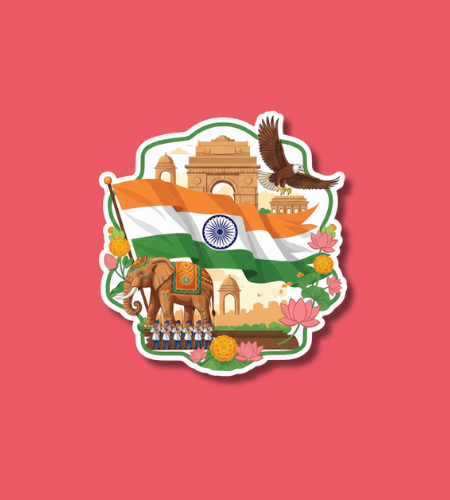
Indian Republic Day is celebrated annually on January 26. This national holiday honors the date in 1950 when the Constitution of India came into effect, completing the country’s transition to a sovereign republic. While Independence Day marks the end of British rule, this day commemorates the establishment of the democratic framework that governs the nation. It is a day of immense civic pride that highlights the values of justice, liberty, equality, and fraternity as enshrined in the supreme law of the land.
Table of Contents
History of Indian Republic Day
The selection of January 26 as Republic Day is rooted in a pivotal moment of the independence movement. In 1930, the Indian National Congress officially promulgated the Purna Swaraj, or the Declaration of Indian Independence, on this date. For twenty years, this day was observed as a symbolic independence day until the country gained actual freedom in 1947. When the new constitution was ready for implementation, the drafting committee chose January 26 to align the modern republic with the historical struggle for self-governance.
Following independence, the Constituent Assembly, chaired by Dr. B.R. Ambedkar, spent nearly three years drafting the permanent constitution. The document was adopted on November 26, 1949, but lawmakers waited until the following January to bring it into full force. On the morning of January 26, 1950, Dr. Rajendra Prasad took the oath as the first President of India at the Durbar Hall, and the national flag was unfurled at the Irwin Stadium. This transformation replaced the British-era Government of India Act of 1935 with a system that gave all citizens the power to elect their own leaders.
Why is Indian Republic Day important?
The primary importance of this holiday lies in its celebration of democratic sovereignty and the rule of law. It marks the shift from being a British dominion to an independent republic with a head of state chosen by the people. The day serves as a reminder of the fundamental rights guaranteed to every citizen, regardless of their background, religion, or gender. It reinforces the commitment of the nation to uphold the constitutional principles that bind its diverse population together into a single, unified entity.
Republic Day also serves as a showcase of the country’s military progress and cultural heritage. The annual celebrations in the capital demonstrate the strength and readiness of the armed forces while highlighting the distinct traditions of different states. It is a time for the government to recognize citizens for their bravery and service through prestigious awards like the Bharat Ratna and the Padma Awards. This collective acknowledgment of achievement and sacrifice fosters a sense of national identity and inspires future generations to contribute to the country’s growth.
- Commemorates the enforcement of the world’s longest written constitution.
- Highlights the transition of India into a fully independent democratic republic.
- Honors the contributions and vision of the founding fathers and freedom fighters.
- Provides a platform to showcase India’s military might and technological advancement.
- Celebrates the concept of “Unity in Diversity” through regional cultural displays.
How to Celebrate Indian Republic Day
The center of the celebration is the grand parade held at Kartavya Path in New Delhi. This event features a march-past by various regiments of the Army, Navy, and Air Force, followed by a display of missiles, tanks, and aircraft. Elaborate tableaux from different states and government departments move through the streets, displaying regional art and success stories. The day concludes with a fly-past by fighter jets that leave trails of saffron, white, and green smoke in the sky.
In local communities and schools, the day begins with the hoisting of the national flag and the singing of the national anthem. Many people dress in traditional attire or wear tricolor accessories to show their patriotic spirit. Families often watch the live broadcast of the parade and prepare traditional sweets or tricolor-themed dishes at home. Cultural programs, including patriotic songs and folk dances, are organized across cities to keep the spirit of the revolution alive. The festivities officially end three days later on January 29 with the Beating Retreat ceremony, featuring military bands and a traditional lowering of the flags.
- Watch the live broadcast of the New Delhi parade with family.
- Attend a flag-hoisting ceremony at a local school or community center.
- Wear traditional Indian clothing in the colors of the national flag.
- Participate in a neighborhood cleanliness drive or community service project.
- Share historical stories about the drafting of the constitution with children.
Indian Republic Day Dates Table
| Year | Date | Day |
|---|---|---|
| 2026 | January 26 | Monday |
| 2027 | January 26 | Tuesday |
| 2028 | January 26 | Wednesday |
| 2029 | January 26 | Friday |
| 2030 | January 26 | Saturday |
Subscribe to our newsletter and never miss a holiday again!