



Interesting facts about the Boston Marathon
Historical Origins
The Boston Marathon is the world’s oldest annual marathon, having been established in 1897. Following the successful revival of the marathon at the 1896 Summer Olympics in Athens, the Boston Athletic Association (B.A.A.) felt compelled to create a similar challenge in Massachusetts. This long-standing tradition has turned the race into a historic landmark for the sport, as it has been held every single year since its inception, with the only exceptions being a change in format during World War I and the virtual shift in 2020.
Contents
The inspiration for the race came directly from the 1896 Summer Olympics in Athens. B.A.A. member and inaugural U.S. Olympic Team Manager John Graham was so moved by the spirit of the Olympic marathon that he worked to organize a similar long-distance run in the Boston area. This link to ancient Greece is still celebrated today, connecting the Athenian struggle for liberty to the American revolutionary history found along the course.

It is currently recognized as one of the seven World Marathon Majors. For many years, the “Big Six” included Tokyo, London, Berlin, Chicago, New York City, and Boston, representing the most prestigious races in the world. However, the series expanded in 2025 to include the Sydney Marathon, and organizers continue to evaluate other global cities for inclusion, such as Cape Town and Shanghai, to enhance the international prestige of elite competition.

Boston Marathon
The marathon is traditionally held on Patriots’ Day, a civic holiday in Massachusetts and Maine. Originally, the race was always held on the fixed date of April 19 to commemorate the first battles of the Revolutionary War. However, starting in 1969, the holiday was moved to be observed on the third Monday in April, leading to the beloved local tradition known as “Marathon Monday.”
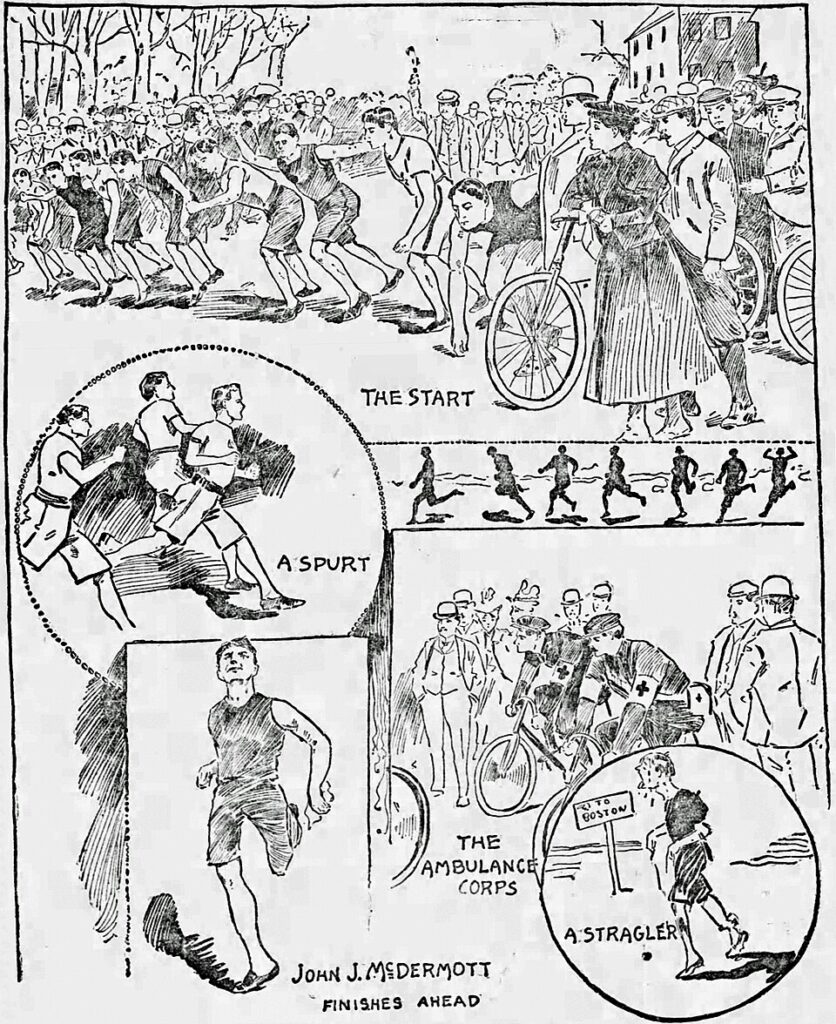
John J. McDermott of New York won the inaugural race in 1897 with a finishing time of 2:55:10. On that historic April day, McDermott led a small field of 15 to 18 participants along a original 24.5-mile route. Despite the small scale of the first event compared to today’s thousands of entrants, it successfully launched a century-long legacy of endurance sports in America.
In 1918, due to American involvement in World War I, the race was held as a 10-man military relay race. Rather than a traditional individual marathon, teams from various military branches, such as Camp Devens, competed along the course. This change in format allowed the B.A.A. to maintain the perennial nature of the event during the height of the war while honoring those in service.

London Marathon
For the first time in its 124-year history, the in-person race was cancelled in 2020 due to the COVID-19 pandemic. After an initial attempt to postpone the race from April to September, city officials determined it was not responsible to hold a large-scale event. Consequently, the race was replaced with a “virtual alternative” where over 16,000 finishers completed the distance in their own neighborhoods to earn their unicorn medals.
The race is a global phenomenon, with “Boston Marathon” being searched on Google an average of 4.6 million times per year. This level of digital interest translates to roughly 385,000 searches a month or 534 searches every hour. The massive search volume reflects the event’s status as the most famous marathon in the world, drawing attention from runners and fans in all 50 states and over 120 countries.
The Course and Geography
Originally measuring 24.5 miles, the course was lengthened to the Olympic standard of 26.2 miles in 1924. This change, which added the specific “385 yards” to the distance, was made to conform to the standards established during the 1908 London Olympics. The adjustment required moving the starting line further west to ensure runners completed a certified International Association of Athletics Federation distance.
One Boston Day
The route passes through eight Massachusetts municipalities, including Hopkinton, Ashland, Framingham, Natick, Wellesley, Newton, Brookline, and Boston. This journey through the eastern Massachusetts terrain takes runners through historic town centers and suburban neighborhoods before they reach the city. The diverse landscape offers a mix of flat stretches, rolling hills, and urban streets that test every aspect of a runner’s training.
Since 1924, the start has been located in the town of Hopkinton at One Ash Street. Before this move, the race famously began at Metcalf’s Mill in Ashland. The current starting line is adjacent to a building that serves as the registration headquarters for the B.A.A., where a unicorn symbol—the organization’s emblem—looks down on the runners as they begin their journey toward Boston.
The official finish line is located on Boylston Street, near Copley Square and the Boston Public Library. While the finish has moved slightly over the decades—having once ended at Irvington Oval and later on Ring Road—the current Boylston Street location is iconic. It is marked by a permanent finish line painted on the pavement and sits near the Boston Marathon Memorial, which features a granite medallion tracing the race route.
The starting line in Hopkinton is the highest point on the course at 463 feet above sea level. While the race is known for its difficult hills, it is technically a “downhill” course with a total elevation drop of 459 feet from start to finish. This significant drop can be hard on a runner’s quadriceps, as the first six miles descend through Ashland and Framingham before the more famous hills begin.
Heartbreak Hill is a famous 0.4-mile ascent located between miles 20 and 21 that rises 88 feet vertically. Though the elevation gain is modest compared to mountain races, it is situated near Boston College at a point where runners’ glycogen stores are typically depleted. This location makes Heartbreak Hill the final and most psychological challenge of the “Newton hills,” often causing runners to “hit the wall.”
Despite the overall elevation drop, the course is considered extremely difficult due to the “Newton hills.” The series of four climbs culminates in Heartbreak Hill, forcing even well-trained athletes to slow their pace. Furthermore, the course’s elevation drop and the distance between the start and finish lines mean it does not satisfy IAAF criteria for world record ratification, as runners can benefit from a significant tailwind.
Participation and Qualifications
The race typically draws approximately 30,000 runners, making it one of the largest marathons in the United States. While the field size is smaller than the New York City Marathon’s 50,000 entrants, the competition for spots is much fiercer. The record for the largest field was set during the Centennial running in 1996, which saw 38,708 entrants and 35,868 official finishers.
To enter, most runners must meet strict “BQ” (Boston Qualifying) time standards based on their specific age and gender. A runner must complete a certified marathon within a specific qualifying window—usually 18 months—prior to the race date. This requirement has made qualifying for Boston a primary bucket-list goal for amateur marathoners, providing an intrinsic motivation to train for a difficult, time-based standard.
For the 2026 race, the B.A.A. has lowered the qualifying times by five minutes for most age groups. Under these new, more difficult standards, men aged 18–34 must run a sub-2:55 marathon, while women and non-binary runners in the same age group must finish in under 3:25. This change was prompted by the record-setting speed at which spots have been filled in recent years.
Charity runners make up approximately 20% of the field and raised a record $50.4 million in 2025. These participants are exempt from the strict time-based qualifying standards but must raise significant funds for official B.A.A. or partner nonprofits. The program supports over 200 organizations and has surpassed hundreds of millions of dollars in total impact since its inception.
The minimum age to participate in the marathon is 18, but there is no upper age limit for runners. In 2023, the oldest finishers were both 81 years old, and historically, individuals as old as 85 have completed the 26.2-mile course. This range demonstrates that the marathon is a lifelong pursuit, with veterans like John A. Kelley finishing the race 58 times over his long career.
The average male runner finishes the Boston Marathon in 55,374 steps, while the average female runner takes 62,926 steps. These statistics highlight the sheer physical repetition required to cover the distance from Hopkinton to Boston. These thousands of steps are tracked by modern fitness devices, but for the runners, each one represents a step closer to the prestigious finish line on Boylston Street.
Inclusion and Diversity
Bobbi Gibb became the first woman to run the entire course in 1966, despite being unregistered. At the time, women were told they were physiologically incapable of running 26 miles, and Gibb’s application was flatly refused. To prove them wrong, she hid in the bushes near the start line and jumped into the race after the gun fired, finishing in 3:21:40 and beating two-thirds of the men.
In 1967, Kathrine Switzer became the first woman to run with an official bib by registering as “K.V. Switzer.” During the race, official Jock Semple realized a woman was running and famously tried to physically remove her and rip off her bib number. Switzer’s boyfriend and other runners fended him off, allowing her to finish and creating some of the most dramatic photos in sports history.
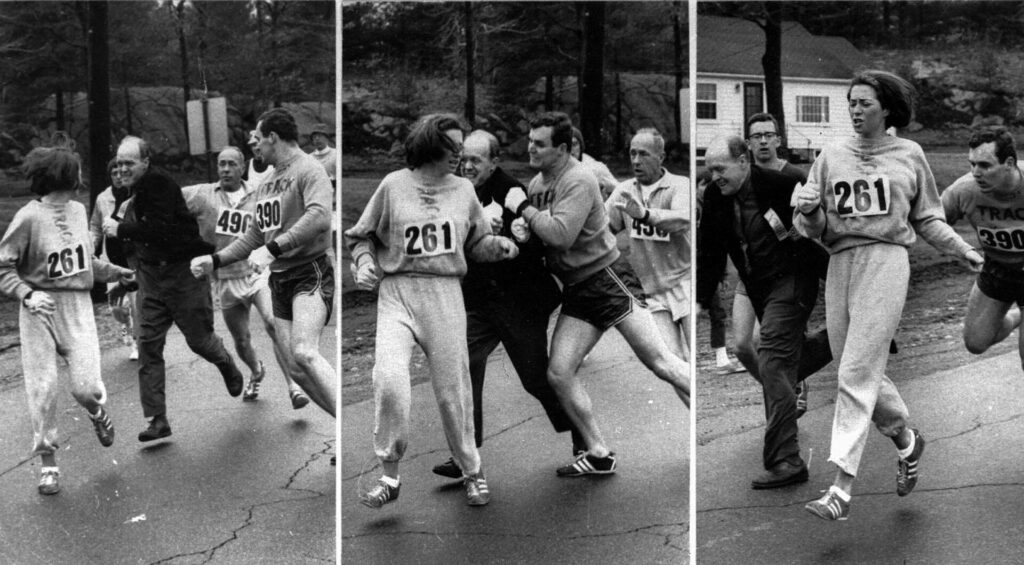
Women were finally allowed to enter the Boston Marathon officially in 1972. In that inaugural year for women, Nina Kuscsik emerged from an eight-member field to become the first official female winner with a time of 3:10:26. Today, the demographics have shifted significantly, with women making up approximately 43% of the total field of entrants.
In 1975, Boston became the first major marathon to include a wheelchair division for competitors. The division was established after Bob Hall made a bet with the race director: if he finished in under 3 hours and 30 minutes, his race would be officially certified. Hall finished in 2:58:00, paving the way for a division that now features the richest prize purse in the sport for wheelchair athletes.
A handcycle division was officially added to the race program in 2017. While handcyclists had participated in previous years, this change meant they were now honored the same way as runners and wheelchair racers, including prize money, wreaths, and the playing of national anthems. This addition further solidified the marathon’s commitment to being an inclusive event for athletes of all abilities.
The marathon introduced a non-binary division in 2023, which was won by Kae Ravichandran. The winner finished with an impressive time of 2:38:57, marking a new chapter in the race’s history of inclusion. This division allows athletes to compete as their authentic selves, ensuring the Boston Marathon remains a modern and welcoming event for the global running community.
In 1951, Korean runners were controversially denied entry by B.A.A. President Walter Brown. At the height of the Korean War, Brown stated that Koreans should be at home fighting for their country rather than training for marathons. This ban prevented top athletes from a country with a strong marathon tradition—including previous world-record holders—from participating for that year.
Traditions and Spectators
Approximately 500,000 spectators line the course annually, which is about 80% of the city of Boston’s total population. This massive turnout makes the marathon the most-viewed sporting event in New England. Fans from all over the world gather to cheer, hold signs, and offer everything from orange slices to water to the thousands of athletes passing by.
The “Scream Tunnel” is a beloved tradition at Wellesley College where students line the road to cheer loudly. Located near the halfway mark of the course, the students at this historically women’s college create a wall of noise that can be heard from a mile away. They famously hold signs that say “Kiss Me,” and many runners stop briefly to accept a kiss or a high-five before continuing their journey.
Fenway Park hosts a Red Sox home game every Marathon Monday with an early 11:05 AM start time. This tradition, which began in 1903, allows fans to exit the stadium just as the runners enter Kenmore Square for the final mile. The atmosphere is electric as baseball fans and runners converge, with the players often wearing special yellow and blue uniforms to match the marathon’s colors.
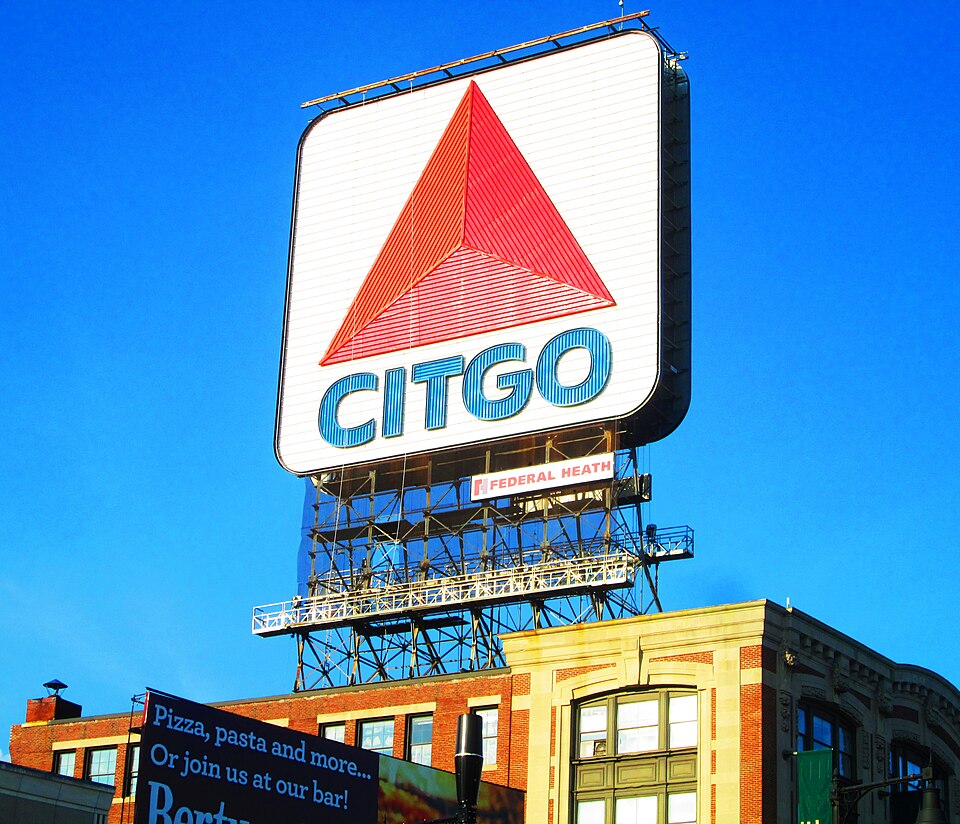
The 73-year-old Citgo Sign in Kenmore Square serves as a landmark signaling there is only one mile left. For exhausted runners, the sight of the giant red triangle is a beacon of hope that the finish line is near. Seeing the sign helps many find the “kick” they need to make the final turns—right onto Hereford and left onto Boylston—to complete their journey.
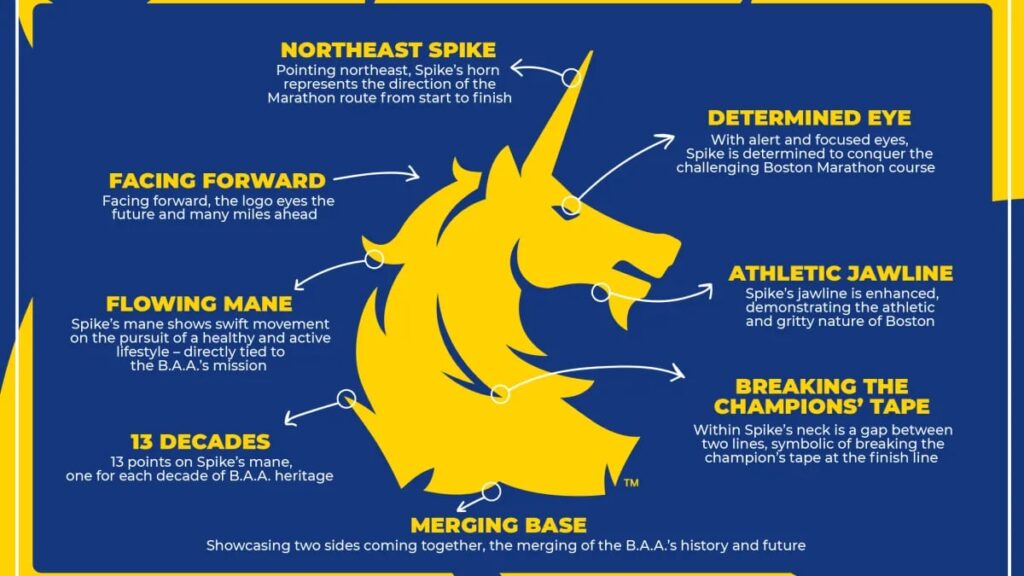
The unicorn is the official symbol of the B.A.A. and is prominently featured on all marathon medals and apparel. As the organization’s emblem, the unicorn represents the pursuit of something that is nearly impossible to catch—much like a world-class marathon time. In 2024, the logo was updated to a more athletic, forward-facing unicorn to symbolize the B.A.A.’s future and the spirit of moving forward.
Volunteers order and distribute approximately 35,000 shiny Mylar thermal blankets each year. These blankets are wrapped around runners as they cross the finish line to prevent post-race chills and hypothermia by reflecting body heat. The sight of thousands of runners walking through the post-race corral in these metallic sheets has become a staple image of Marathon Monday.
Records and Prizes
The men’s open course record was set in 2011 by Geoffrey Mutai of Kenya with a time of 2:03:02. At the time, it was the fastest marathon ever run in history, though it was not ratified as a world record due to the course’s elevation drop and point-to-point layout. Mutai’s performance led a field where the top four men all finished under the previous record.
Sharon Lokedi of Kenya set a new women’s course record in 2025 with a finishing time of 2:17:22. This performance significantly lowered the previous record of 2:19:59, which had been held by Ethiopia’s Buzunesh Deba since 2014. Deba herself had been named the 2014 winner retroactively following the disqualification of a different athlete for a doping violation.
The first-place winners in the men’s and women’s open divisions each receive a prize of $150,000. In addition to the top prize, there are cash awards for the top ten finishers, as well as masters and wheelchair divisions. The prize structure is one of the most lucrative in the sport, ensuring that the world’s elite athletes continue to compete on the hilly Boston course.
Wheelchair division winners receive $50,000 for first place, and all open/wheelchair athletes are eligible for a record bonus. If a runner or wheelchair athlete sets a new course record, they receive an additional $50,000 payment. This incentive ensures high-intensity competition every year, as seen in recent editions where record-breaking times have been achieved across multiple divisions.
Winners receive a gilded trophy and a traditional olive wreath made from leaves hand-picked in Greece. This practice maintains the link to the race’s Athenian roots and the ancient history of marathon running. In 2016, women’s winner Atsede Baysa famously gifted her winner’s trophy to Bobbi Gibb to honor her as a pioneer for women in the sport.
Clarence DeMar holds the record for the most men’s open wins with seven titles achieved between 1911 and 1930. DeMar, known as “Mr. DeMarathon,” won his final title at age 41. Other notable multi-time winners include Bill Rodgers and Robert Kipkoech Cheruiyot, who both secured four titles during their respective eras of dominance in the elite field.
Ernst Van Dyk of South Africa holds the record for the most wheelchair wins with 10 titles. His dominance in the push-rim wheelchair division spanned over a decade, and he was the first person in his division to break the 1:20:00 barrier. Van Dyk’s legacy is matched on the women’s side by Jean Driscoll, who won the wheelchair division eight times.
Notable Incidents and Trivia
In 2013, two homemade bombs exploded near the finish line, killing three people and injuring over 260 others. The tragedy halted the race for many and led to a massive security overhaul in subsequent years. The city responded with the “Boston Strong” movement, and those who were unable to finish in 2013 were granted automatic entry for the 2014 race to complete their journey. 🎗️
Rosie Ruiz became the most famous “impostor” in race history after being disqualified for cheating in 1980. She was the first woman to cross the finish line with a record-shattering time, but officials became suspicious because she didn’t seem sufficiently exhausted. An investigation revealed she had skipped most of the course and blended into the crowd just half a mile from the finish.
“Heartbreak Hill” was named in 1936 after a competitive moment between Johnny Kelley and Ellison “Tarzan” Brown. Kelley caught up to Brown on the hill and gave him a consolatory pat on the shoulder. This gesture accidentally sparked Brown’s competitive drive, causing him to rally and win the race, effectively “breaking Kelley’s heart” as he watched the lead slip away.
Members of the Japanese group Ondekoza traditionally ran the marathon and immediately played taiko drums at the finish. Starting in the 1970s, these “demon drummers” would complete the 26.2 miles and then perform on 700-pound drums to encourage other finishers.
In 2007, astronaut Sunita Williams became the first person to run a marathon in space. While aboard the International Space Station, she ran the 26.2-mile distance on a treadmill to coincide with the Boston Marathon on Earth. The B.A.A. sent her a specialty bib and a medal via a Space Shuttle flight so she could participate in the tradition from orbit.
Team Hoyt, consisting of Dick and Rick Hoyt, completed the Boston Marathon 32 times together. Dick pushed his son Rick, who had cerebral palsy, in a specialized chair, becoming symbols of unconditional love and perseverance. Their final race was in 2014, and their legacy is honored by a statue in Hopkinton near the start of the race they loved.
Race director Dave McGillivray has a personal tradition of running the course every year after the race is over. Once the final official finishers have crossed the line and the course begins to reopen, McGillivray heads to Hopkinton to run the 26.2 miles back to Boston. He has maintained this streak for decades, often running in memory of his grandfather.
The event is supported by a massive force of over 8,000 volunteers who ensure the day runs smoothly. These volunteers handle everything from water-stop duties and registration to medical support and “Porta-Potty patrol.” Their dedication is vital to the success of an event that spans eight different municipalities and involves tens of thousands of participants.
The race requires massive supplies, including 35,000 gallons of water and 28,000 bananas for the runners. To ensure the athletes stay healthy and comfortable, aid stations are also stocked with 150 pounds of petroleum jelly to combat chafing and 100,000 safety pins for attaching bibs. These logistics are meticulously planned to support the runners from the first mile to the last.

- https://www.espn.com/blog/endurance/post/_/id/1527/26-2-facts-about-the-boston-marathon[↩]
- https://www.weeviews.com/rundown/boston-marathon-facts[↩]
- https://en.wikipedia.org/wiki/Boston_Marathon[↩]
- https://www.wbur.org/news/2025/04/17/boston-marathon-trivia[↩]
- https://www.baa.org/races/boston-marathon/history/[↩]
- https://www.britannica.com/sports/Boston-Marathon[↩]
- https://teamhotshot.com/blogs/b/5-facts-didnt-know-boston-marathon[↩]