
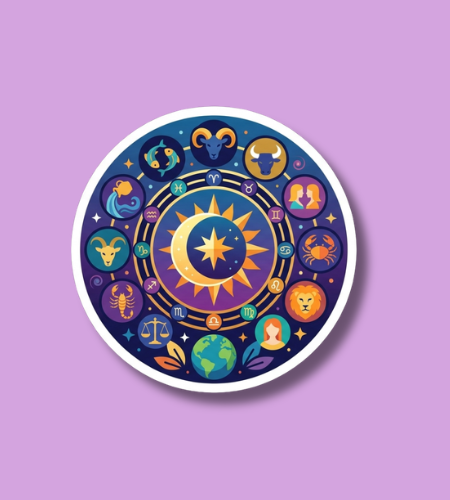
International Astrology Day is observed at the exact moment of the March Equinox, marking the beginning of the tropical zodiac’s new year as the sun enters Aries. In 2026, it falls on March 20. This observance celebrates one of the world’s oldest forms of celestial study, which seeks to understand the relationship between the movements of planetary bodies and human experience. For practitioners and enthusiasts, this day represents a spiritual and symbolic “New Year,” offering a moment to reset intentions and acknowledge the cosmic cycles that have influenced agriculture, navigation, and philosophy for millennia.
Table of Contents
History of International Astrology Day
The Association for Networked Astrology (AFAN) established this holiday in 1993 to foster a greater understanding of astrology and to promote networking among professionals in the field. The choice of the spring equinox was intentional, as this astronomical event has been recognized as a point of seasonal and celestial transition since the time of the ancient Babylonians and Greeks. Historically, the equinox was the “Zero Point” of the zodiac, where the ecliptic and the celestial equator intersect, defining the first degree of the sign of Aries.
While the modern holiday is relatively new, it honors a tradition that dates back several thousand years. Early civilizations in Mesopotamia, Egypt, and India used the positions of the stars and planets to track the seasons and predict the flooding of vital rivers. During the Renaissance, astrology and astronomy were often studied as twin sciences in major universities. International Astrology Day seeks to preserve this historical lineage while acknowledging the contemporary evolution of the practice into a tool for psychological insight and personal reflection.
Why is International Astrology Day important?
Astrology provides a unique lens through which people can explore their personality traits, motivations, and life patterns. By analyzing birth charts, individuals often find a framework for self-discovery that encourages introspection and empathy toward others. This day is important because it legitimizes the study of these symbolic systems, providing a platform for educators to clarify the differences between popular “horoscope” columns and the complex mathematical calculations involved in professional natal astrology.
The observance also emphasizes the connection between humanity and the larger universe. In a modern world often disconnected from natural rhythms, International Astrology Day encourages people to look at the sky and recognize the cycles of the planets as a reflection of the cycles of life. It fosters a sense of wonder and curiosity about the mechanics of the solar system, bridging the gap between ancient folklore and modern interest in the cosmos.
- It marks the start of the astrological year as the sun enters the first degree of Aries.
- The day promotes the study of historical astronomical and astrological texts.
- It encourages a holistic view of the relationship between the macrocosm and microcosm.
- Many use the day to promote ethical standards and professional certification in the field.
- It serves as a global networking event for researchers, historians, and practitioners.
How to Celebrate International Astrology Day
Many enthusiasts celebrate by attending workshops, webinars, or local “meetups” to discuss the transit of the planets for the upcoming year. For those who are new to the practice, it is a popular day to have a birth chart calculated for the first time, which requires the exact date, time, and location of one’s birth. This data is used to map the positions of the planets at the moment of birth, providing a personalized “snapshot” of the sky that practitioners use for interpretation.
On a more casual level, celebrating can involve simply observing the sunset on the equinox to see the sun’s alignment with the cardinal directions. Many people set “Aries New Moon” intentions around this time, focusing on themes of courage, leadership, and new beginnings. Social media is also a hub for celebration, with experts sharing insights into the “Great Year” or specific planetary alignments that define the current era, making the complex mathematics of the stars accessible to a broader audience.
- Calculate your natal chart to see where the planets were positioned at your birth.
- Read a book about the history of astrology in ancient Rome, Greece, or India.
- Set goals or intentions for the upcoming twelve months of the zodiac cycle.
- Visit an observatory or planetarium to see the stars through a telescope.
- Share your sun, moon, and rising signs with friends to spark a conversation.
International Astrology Day Dates Table
| Year | Date | Day |
|---|---|---|
| 2026 | March 1 | Sunday |
| 2027 | March 1 | Monday |
| 2028 | March 1 | Wednesday |
| 2029 | March 1 | Thursday |
| 2030 | March 1 | Friday |
Subscribe to our newsletter and never miss a holiday again!