
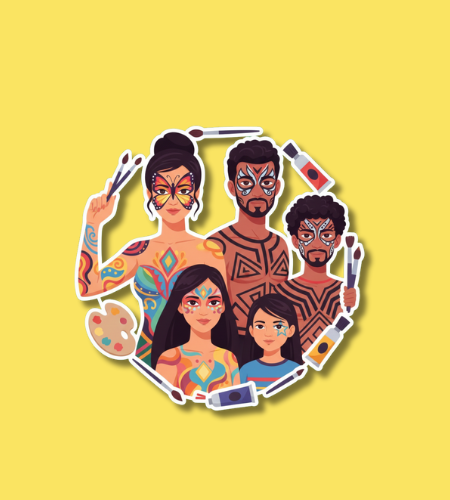
International Face and Body Art Day is observed on February 1. This day honors the creative practice of using the human form as a primary canvas for artistic expression. It encompasses a wide range of disciplines, including temporary face painting, elaborate full-body painting, traditional and modern tattoos, piercings, and permanent scarification. The observance highlights the dual nature of these arts as both a form of personal adornment and a powerful medium for storytelling, performance, and cultural identity.
Table of Contents
History of International Face and Body Art Day
The day was established in 2012 by face and body artist Katie Miyaki to create a formal occasion for honoring practitioners of skin-based arts. Miyaki’s goal was to bring together the global community of artists who work with the human body, moving these practices from the margins of the art world into a more recognized professional sphere. Since its inception, the day has grown from a grassroots initiative among a few professional painters into a worldwide event supported by international art guilds and conventions.
Historically, the roots of face and body art extend back to the Stone Age, with evidence of ochre and charcoal being used for tribal markings as early as 10,000 BCE. These early practices were rarely purely decorative; they served essential functions such as camouflage for hunting, signaling social status, or protecting the wearer during religious rituals. Modern body painting saw a significant revival in the 1960s and 1970s as artists began to use the human form to explore themes of freedom and the reappropriation of the body. International Face and Body Art Day serves as a modern bridge, connecting these ancient traditions with contemporary techniques like airbrushing and 3D optical illusions.
Why is International Face and Body Art Day important?
This day is important because it validates body art as a legitimate and high-level art form that requires immense technical skill and anatomical knowledge. Unlike traditional canvas painting, body art is inherently temporary and intimate, existing only as long as the paint remains on the skin or the person is present. This ephemeral nature forces an appreciation for the moment and the unique collaboration between the artist and the model. By bringing attention to this field, the day helps professionalize the industry, ensuring that artists are recognized for their craftsmanship in film, theater, and commercial advertising.
The observance also plays a key role in promoting body positivity and self-acceptance. Body painting, in particular, allows individuals to transform their physical appearance in ways that can be deeply empowering or therapeutic. It provides a platform to explore complex themes such as gender, personal identity, and the relationship between the mind and body. Furthermore, the day highlights the cultural significance of traditional markings, such as Māori tattoos or Indian Mehndi, fostering a greater understanding of how different societies use the skin to document their history and beliefs.
- It recognizes the diverse skills involved in tattooing, piercing, and painting.
- The day promotes the use of safe, non-toxic materials in body art.
- It helps remove the social stigma often associated with permanent body modifications.
- Awareness encourages the study of ancient tribal art and its modern evolution.
- It provides a dedicated time for artists to collaborate on large-scale creative projects.
How to Celebrate International Face and Body Art Day
To celebrate this day, you can explore the work of world-renowned body painters and tattooists through online galleries or art books. Many professional artists use February 1 to host live demonstrations or webinars, showcasing the “behind-the-scenes” process of transforming a model into a living sculpture. If you have ever considered getting a tattoo or a piercing, this day is a popular time to research reputable studios and artists whose style aligns with your personal vision. You can also participate by practicing your own face painting skills, using the day as an opportunity to experiment with new colors or prosthetic applications.
On a community level, you can observe the day by attending a body art fair or a local gallery exhibition that features photography of temporary art. Since body painting is often captured through high-quality photography, visiting these displays is a great way to see the intricate details of the work before the paint is washed away. Sharing images of your own favorite body art or tagging artists whose work you admire on social media helps increase their visibility and reach. Engaging with the “living canvas” movement encourages a broader appreciation for the ways we choose to decorate and define ourselves.
- Follow a live body painting demonstration on social media or in person.
- Visit a local tattoo shop to learn about different styles and safety protocols.
- Experiment with face painting or temporary henna designs at home.
- Share photos of your favorite body art pieces to support local artists.
- Research the history and meaning behind traditional cultural body markings.
International Face and Body Art Day Dates Table
| Year | Date | Day |
|---|---|---|
| 2026 | February 1 | Sunday |
| 2027 | February 1 | Monday |
| 2028 | February 1 | Tuesday |
| 2029 | February 1 | Thursday |
| 2030 | February 1 | Friday |
Subscribe to our newsletter and never miss a holiday again!