
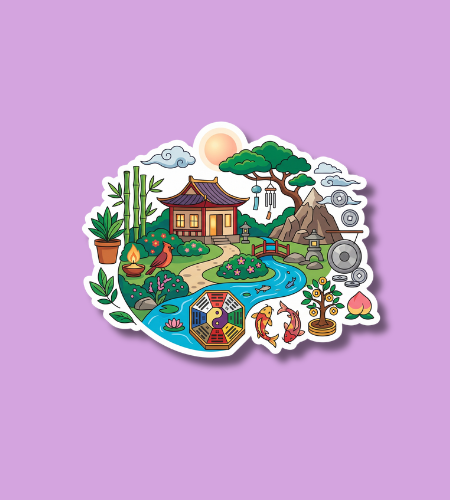
International Feng Shui Awareness Day is observed on April 8. This day is dedicated to promoting the ancient Chinese art and science of Feng Shui, which focuses on harmonizing individuals with their surrounding environment. By raising awareness of these principles, the observance encourages people to organize their living and working spaces in a way that balances energy, known as “Qi,” to improve health, happiness, and prosperity.
Read also about Chinese New Year
Table of Contents
History of International Feng Shui Awareness Day
The practice of Feng Shui dates back over 3,000 years to ancient China, where it was originally used to identify safe and auspicious locations for homes and burial sites. The term translates literally to “wind” and “water,” representing the invisible forces of nature that flow through the landscape. Early practitioners relied on the observation of landforms and the movement of stars to determine how a building’s orientation could either hinder or help the well-being of its occupants. Over centuries, these observations evolved into a complex system of internal design and urban planning.
The formalization of a specific awareness day in April is a modern initiative designed to demystify these ancient concepts for a Western audience. As global interest in holistic wellness and intentional living grew in the late 20th century, Feng Shui transitioned from a traditional folk practice to a mainstream interior design philosophy. Professional consultants and enthusiasts established this day to provide a global platform for sharing the “Five Elements” theory and the Bagua map. The date serves as an annual reminder that the physical layout of a home is deeply connected to the mental state of those who live within it.
Why is International Feng Shui Awareness Day important?
This day is important because it highlights the psychological impact of our physical surroundings. Cluttered or poorly arranged spaces can contribute to feelings of stress, stagnancy, and fatigue. Feng Shui provides a structured framework for decluttering and intentional placement, which can lead to increased productivity and a more peaceful domestic life. By understanding the flow of energy, individuals can make small, inexpensive changes to their decor—such as moving a desk or adding a plant—that significantly alter the “feel” of a room.
Beyond interior design, the observance promotes a deeper connection with the natural world. Feng Shui emphasizes the balance of the five elements: wood, fire, earth, metal, and water. Incorporating these elements into a home encourages a sense of environmental mindfulness and balance. It also advocates for the “Command Position,” a fundamental concept that places an individual in a spot of strength and visibility within a room. Celebrating this day helps people reclaim control over their environment, turning their homes into sanctuaries that support their personal and professional goals.
- It promotes the ancient philosophy of living in harmony with natural energy.
- The day encourages decluttering to remove “stagnant energy” from the home.
- It teaches the importance of the five elements in creating a balanced atmosphere.
- Practicing Feng Shui can improve focus and efficiency in home offices.
- The observance fosters a mindful approach to home decorating and architecture.
How to Observe International Feng Shui Awareness Day
The most practical way to observe this day is to apply the “Bagua map” to a single room in your home. This energy map divides a space into nine areas, each corresponding to a different life circumstance, such as wealth, relationships, or career. You can observe the day by identifying which area of your home feels “stuck” and performing a deep clean or rearranging the furniture in that specific zone. Opening windows to allow fresh air to circulate and cleaning the front door—the “mouth of Qi”—are also traditional ways to invite positive energy into a residence.
Educational engagement is another key aspect of the day. Many practitioners host online webinars or local workshops to teach the basics of the “Command Position,” which involves placing your bed or desk so that you can see the door without being directly in line with it. Sharing “before and after” photos of a reorganized space on social media can inspire others to try the practice. Adding a living plant to a room to represent the wood element or a small fountain for the water element are simple, symbolic actions that anyone can take to mark the occasion.
- Use a Bagua map to identify which area of your home represents your current goals.
- Place your desk or bed in the “Command Position” to increase a sense of security.
- Clear the clutter from your entryway to allow energy to flow freely into the house.
- Add a healthy green plant to your living space to introduce the wood element.
- Clean your windows to let in more natural light and improve the “vision” of your home.
International Feng Shui Awareness Day Dates Table
| Year | Date | Day |
|---|---|---|
| 2026 | April 8 | Wednesday |
| 2027 | April 8 | Thursday |
| 2028 | April 8 | Saturday |
| 2029 | April 8 | Sunday |
| 2030 | April 8 | Monday |
Subscribe to our newsletter and never miss a holiday again!