
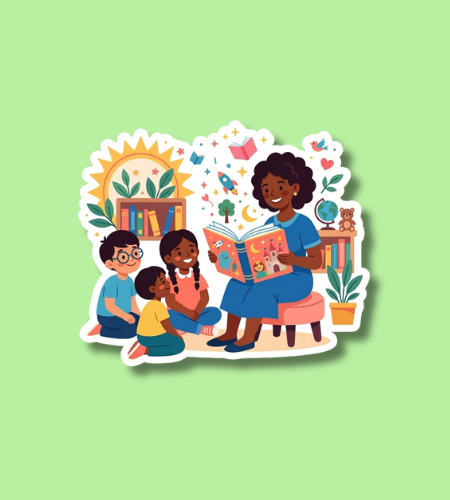
International Read To Me Day is observed annually on March 19 to encourage adults to read aloud to children and promote a lifelong love for literature. This day serves as a global reminder that reading aloud is one of the most effective ways to improve a child’s vocabulary, foster emotional bonding, and develop critical cognitive skills. By focusing on the “Read To Me” aspect, the observance empowers children to ask for stories and encourages adults to dedicate time to the simple yet transformative act of sharing a book together. 1
Read also about World Read Aloud Day
Table of Contents
History of International Read To Me Day
The Child Writes Fund established this holiday in 2014 to address the declining rates of shared reading in households and schools. Founded by Emma Mactaggart, an Australian author and educator, the initiative was born from the understanding that children who are read to regularly are significantly better prepared for school and have higher literacy outcomes throughout their lives. The day was specifically designed to be an “invitation” from children to the adults in their lives, reversing the traditional dynamic and making the child an active participant in their own literacy journey.
Since its inception, the day has grown into a worldwide campaign supported by authors, illustrators, and literacy organizations. It emphasizes that reading aloud should not stop once a child learns to read independently, as listening to complex narratives helps them understand sophisticated language and social structures. International Read To Me Day has been officially recognized by various governments and educational bodies, leading to a surge in library events, school reading marathons, and community-driven storytelling sessions across multiple continents.
Why is International Read To Me Day important?
Reading aloud provides a foundational building block for language acquisition that cannot be replicated by digital screens or solo reading. When an adult reads to a child, they introduce new words in context, helping to bridge the “word gap” that often exists between different socioeconomic groups. This interaction also stimulates the brain’s “reading network,” which is responsible for mental imagery and narrative comprehension. Beyond the educational benefits, the shared experience creates a safe, quiet space that strengthens the attachment between caregiver and child, providing emotional security through a consistent routine.
The day is also vital for its role in promoting cultural empathy and imagination. Stories allow children to explore worlds and perspectives far removed from their own, fostering a sense of curiosity and global citizenship. In an age dominated by short-form digital content, the focused attention required to listen to a full story helps develop a child’s concentration and listening stamina. By prioritizing oral storytelling, the holiday ensures that the tradition of passing down knowledge through spoken word remains a core part of modern family life.
- Hearing stories aloud significantly increases a child’s phonetic awareness and speech development.
- The practice exposes children to complex grammar and sentence structures before they can read them.
- Reading together provides a non-stressful way to discuss difficult or sensitive topics through characters.
- It helps children develop the “theory of mind,” the ability to understand others’ feelings and thoughts.
- Regular read-aloud sessions are linked to higher academic performance in all subjects, not just English.
How to Celebrate International Read To Me Day
The most direct way to celebrate is to sit down with a child and let them choose a book for you to read together. To make the experience more engaging, readers can use different voices for characters, ask questions about the plot, and encourage the child to predict what might happen next. This interactive approach, known as dialogic reading, transforms the session from a passive activity into an active learning experience. Many families also use the day to visit their local library to discover new titles or return to old favorites that have been read dozens of times.
Communities often celebrate by organizing “reading circles” in public parks or community centers where local leaders and volunteers read to groups of children. Schools can participate by hosting “guest reader” days where parents or community members visit classrooms to share their favorite childhood stories. For those without children in their immediate lives, the day is an excellent time to record an audiobook for a niece or nephew or to volunteer with a literacy program that supports underserved communities. The goal is to ensure that every child, regardless of their circumstances, has the opportunity to hear a story read with care and enthusiasm.
- Set aside at least twenty minutes specifically for a dedicated read-aloud session.
- Let the child pick the book, even if it is one you have already read many times.
- Use expressive tones and gestures to bring the characters and setting to life.
- Visit a bookstore or library to find a book that explores a culture different from your own.
- Record yourself reading a story to send to a child who lives far away.
International Read To Me Day Dates Table
| Year | Date | Day |
|---|---|---|
| 2026 | March 19 | Thursday |
| 2027 | March 19 | Friday |
| 2028 | March 19 | Sunday |
| 2029 | March 19 | Monday |
| 2030 | March 19 | Tuesday |
Subscribe to our newsletter and never miss a holiday again!