
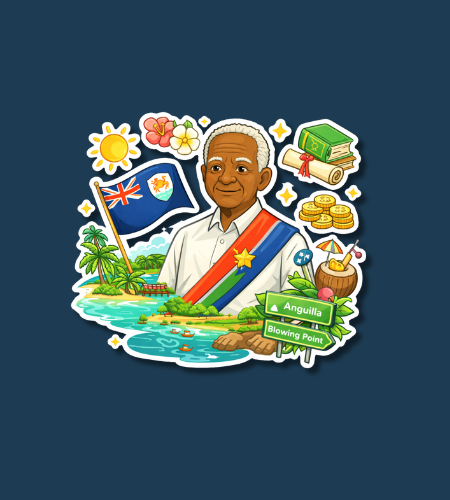
James Ronald Webster Day is observed annually on March 2. This public holiday in Anguilla commemorates the birth of James Ronald Webster, the man revered as the “Father of the Nation.” It is a day of deep national pride, dedicated to honoring Webster’s leadership during the Anguillan Revolution and his pivotal role in securing the island’s self-determination and eventual status as a British Overseas Territory.
Table of Contents
History of James Ronald Webster Day
Born on March 2, 1926, James Ronald Webster became the central figure of the Anguillan resistance in the late 1960s. At the time, Anguilla was part of the unified state of Saint Christopher-Nevis-Anguilla. The people of Anguilla felt neglected and oppressed by the central government based in Saint Kitts. Webster led the 1967 revolution, which saw the local population expel the Saint Kitts police force from the island. He served as the Chairman of the Anguilla Island Council and later as the island’s first Chief Minister, navigating the complex diplomatic transition that followed.
Webster’s leadership was characterized by a firm commitment to the island’s independence from Saint Kitts, even when it meant temporary conflict with British paratroopers in 1969. His perseverance led to the formal separation of Anguilla from the unified state in 1980, establishing its direct link to the United Kingdom. Because of his lifelong dedication to the island’s development and political identity, the government of Anguilla established his birthday as a permanent public holiday to ensure his legacy remains at the forefront of the national consciousness.
Why is James Ronald Webster Day important?
This holiday is vital for the preservation of Anguilla’s political and cultural history. Webster is credited with uniting a scattered population under a single vision of autonomy and dignity. For many Anguillans, the day represents the shift from a period of struggle and limited resources to a modern era of growth and self-governance. It serves as a reminder that the island’s current stability and prosperous tourism industry were built on the foundations of the political sacrifices made by Webster and his contemporaries.
The observance also plays a key role in national education. It provides a dedicated time for younger generations to learn about the 1967 revolution and the importance of civic duty. By celebrating Webster’s life, the community reinforces the values of courage, resilience, and unity. It is a day that bridges the gap between the revolutionary past and the future aspirations of the territory, ensuring that the spirit of self-reliance that Webster championed continues to guide the island’s leadership and citizens.
- Webster led the successful 1967 revolution to expel external police forces.
- He served as the primary negotiator with the British government for decades.
- The holiday recognizes Anguilla’s unique path to becoming a British Overseas Territory.
- It highlights the island’s transition from an impoverished colony to a self-governed state.
- Celebrating this day fosters a strong sense of national identity among Anguillans.
How to Observe James Ronald Webster Day
The day is marked by official state ceremonies and community gatherings throughout Anguilla. Many residents attend a special wreath-laying ceremony at his gravesite or participate in commemorative services held at the James Ronald Webster Park in The Valley. These events often include speeches from government officials, performances by local choirs, and reflections on the progress the nation has made since the 1960s. As it is a public holiday, most businesses and schools are closed, allowing families to gather for traditional island meals and social activities.
Beyond formal events, many people observe the day by visiting historical landmarks associated with the revolution. Engaging with elders who lived through the Webster era is a common way to pass down oral histories and personal anecdotes about his leadership style. Sporting events and boat races—Anguilla’s national sport—are often organized in his honor, combining the celebration of his legacy with the island’s vibrant cultural traditions. For those outside the island, the day is an opportunity to study Caribbean political history and the impact of grassroots movements on modern geopolitics.
- Attend the official commemorative ceremony at James Ronald Webster Park.
- Participate in or watch a traditional Anguillan boat race in the coastal waters.
- Listen to local radio broadcasts featuring interviews with revolutionary veterans.
- Visit the Heritage Collection Museum to view artifacts from the 1967 revolution.
- Spend time with family to discuss the history of Anguilla’s self-determination.
James Ronald Webster Day Dates Table
| Year | Date | Day |
|---|---|---|
| 2026 | March 2 | Monday |
| 2027 | March 2 | Tuesday |
| 2028 | March 2 | Thursday |
| 2029 | March 2 | Friday |
| 2030 | March 2 | Saturday |
Subscribe to our newsletter and never miss a holiday again!