
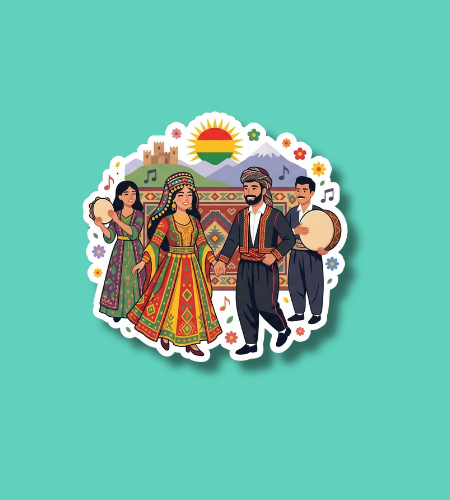
Kurdish Clothes Day is observed on March 10. This annual event, formally known as National Costume Day in the Kurdistan Region, celebrates the unique identity and cultural heritage of the Kurdish people through their traditional attire. It is a day when millions of Kurds, alongside other ethnic and religious groups living in the region, wear their customary suits and dresses to work, school, and public gatherings to showcase unity and pride.
Table of Contents
History of Kurdish Clothes Day
The official observance was introduced in 2010 by Safeen Dizayee, who was then serving as the Minister of Education for the Kurdistan Regional Government (KRG). Initially, the initiative was directed specifically at schools, encouraging students and teachers to wear traditional garments to counteract the influence of Western-style clothing and ensure that the younger generation remained connected to their roots. The first classroom celebrations took place in 2011, and the positive response quickly transformed the day into a region-wide cultural festival.
Over the last decade, the day has expanded beyond the education system to include government employees, private businesses, and Kurdish diaspora communities around the world. March was chosen for the celebration because it is a significant month in the Kurdish calendar, preceding the major national holiday of Newroz, the Kurdish New Year. While the day is not a public holiday where businesses close, it is a highly visible event that honors the history of various regional styles, such as Hawrami, Sorani, and Badini, which have been passed down for centuries.
Why is Kurdish Clothes Day important?
This day serves as a critical act of cultural preservation for a people who historically faced significant challenges to their identity. By wearing traditional garments, Kurds affirm their distinct heritage and celebrate the survival of their customs. The clothing itself is a visual map of the region’s geography and tribal history, with specific colors and stitching styles indicating different ancestral lands. For many, the day is a tribute to those who fought to protect Kurdish culture and a way to ensure that these traditions remain a living part of modern society.
Beyond its symbolic value, the day provides a significant boost to the local economy and traditional craftsmanship. The weeks leading up to March 10 are the busiest time of year for tailors and fabric merchants, who specialize in the complex construction of Kurdish suits and gowns. This seasonal demand helps sustain specialized skills like intricate embroidery and sash-tying, which might otherwise be lost. It also promotes inclusivity, as the KRG encourages all residents, including Arabs, Turkmens, and Assyrians, to wear their own national costumes on this date to celebrate the region’s diverse tapestry.
- Traditional men’s attire includes baggy trousers called sharwal and a matching jacket.
- Women’s dresses are known for vibrant colors and long, triangular sleeves called faqiana.
- The sash, or pishtend, is a long piece of cloth wrapped several times around the waist.
- Regional styles like the felted wool Faranji vest are designed to regulate body temperature.
- Bright gold jewelry and beaded headpieces are essential components of the female costume.
How to Celebrate Kurdish Clothes Day
The most common way to participate is by wearing a complete set of traditional Kurdish clothing to all daily activities. Men often choose muted earth tones like brown or navy for their suits, while women typically wear gowns made from shimmering, brightly colored fabrics adorned with sequins or beads. In schools and universities, students often organize group folk dances, known as halparke, and sing traditional songs to celebrate their shared identity. It is a day characterized by high energy and a festive, communal atmosphere.
Social media plays a major role in modern celebrations, with people sharing photos of their outfits using the hashtag #KurdishClothesDay. Families often take professional portraits together to document their traditional finery and share their pride with the global Kurdish community. Many people also take the opportunity to visit historical sites or attend cultural exhibitions that showcase the evolution of Kurdish fashion over the centuries. Supporting local artisans by purchasing a new handmade accessory or piece of fabric is another popular way to mark the occasion.
- Wear your traditional Kurdish dress or suit to work or school.
- Learn about the specific history and meaning of the colors used in your regional style.
- Join in a local halparke dance to traditional music in a public square.
- Share a photo of your traditional attire on social media to show cultural pride.
- Visit a local tailor to learn about the different fabrics and stitching techniques used.
Kurdish Clothes Day Dates Table
| Year | Date | Day |
|---|---|---|
| 2026 | March 10 | Tuesday |
| 2027 | March 10 | Wednesday |
| 2028 | March 10 | Friday |
| 2029 | March 10 | Saturday |
| 2030 | March 10 | Sunday |
Subscribe to our newsletter and never miss a holiday again!