
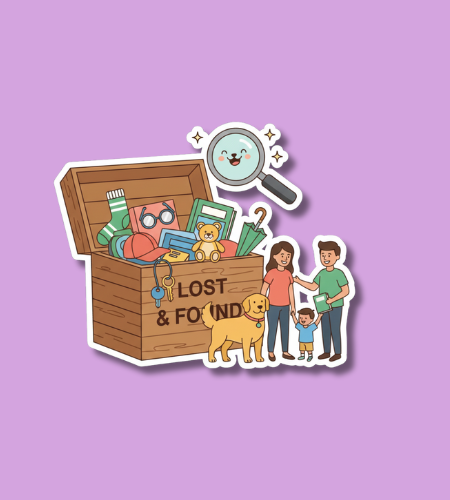
Lost and Found Day is observed annually on the second Friday in December. This day serves as a practical reminder for individuals to actively search for misplaced items and for organizations to clear out their unclaimed property bins before the year ends.
Table of Contents
History of Lost and Found Day
The modern observance of Lost and Found Day was established in 2012 by Lance Morgan. Morgan created the day to encourage people not to give up on the things they have misplaced, suggesting that renewed effort often leads to recovery. The timing in December is strategic, encouraging a clean slate and the return of items before the start of a new calendar year. It highlights the often-overlooked necessity of retracing one’s steps and the relief that comes with recovering a cherished possession.
The concept of a designated “Lost and Found” dates back much further than the holiday itself. Historical records indicate that a code for tracking lost property existed in Japan as early as 718 AD. In the Western world, the first modern Lost and Found office was established in Paris in 1805 by Napoleon Bonaparte. He ordered the police to create a central location to collect objects found on the streets of Paris. This system became the model for lost property offices in transit systems, museums, and schools worldwide.
Why is Lost and Found Day important?
This day emphasizes the value of persistence and organization. Losing a personal item, whether it is a set of keys, a wedding ring, or a favorite toy, can be a source of significant stress and financial loss. By dedicating a specific day to the search, it motivates people to look in places they might have ignored, such as coat pockets, under car seats, or in the back of closets. It shifts the mindset from resignation to action, proving that “lost” does not always mean “gone forever.”
Additionally, the holiday serves a functional role for businesses and institutions. Schools, gyms, and community centers often accumulate hundreds of unclaimed items throughout the year, from jackets to water bottles. This day acts as a deadline for these organizations to display lost goods for owners to claim, after which many donate the remaining items to charity. This cycle reduces waste, prevents the unnecessary purchase of replacement items, and supports local donation drives during winter.
- It encourages people to finally search for missing valuables.
- It helps schools and businesses clear out overflowing storage bins.
- It reduces consumer waste by recovering usable goods.
- It promotes the habit of labeling personal belongings.
- It supports charities through the donation of unclaimed items.
How to Observe Lost and Found Day
A practical way to observe this day is to conduct a thorough sweep of your home or vehicle. Check the “black holes” where items often disappear, such as the gap between sofa cushions, the space under the bed, or the glove compartment. If you have been missing something specific for months, use this day to physically visit the last place you remember having it. Many businesses keep lost items for a specific period before discarding them, and a visit on this day might coincide with their end-of-year cleanout.
On a community level, you can help others by turning in items you have found but haven’t known what to do with. If you found a stray set of keys or a wallet, take them to the nearest police station or customer service desk. For parents, this is an ideal time to visit the school’s lost and found pile to retrieve their children’s missing winter gear. You can also take preventative measures by labeling your current possessions with your name and phone number to ensure they find their way back to you in the future.
- Search difficult-to-reach spots in your car and home.
- Visit the lost and found department at your gym or workplace.
- Label your electronics and expensive coats with contact info.
- Turn in any items you found during the year to authorities.
- Donate unclaimed items from your own business to a shelter.
Lost and Found Day Dates Table
| Year | Date | Day |
|---|---|---|
| 2026 | December 11 | Friday |
| 2027 | December 10 | Friday |
| 2028 | December 8 | Friday |
| 2029 | December 14 | Friday |
| 2030 | December 13 | Friday |
Subscribe to our newsletter and never miss a holiday again!