
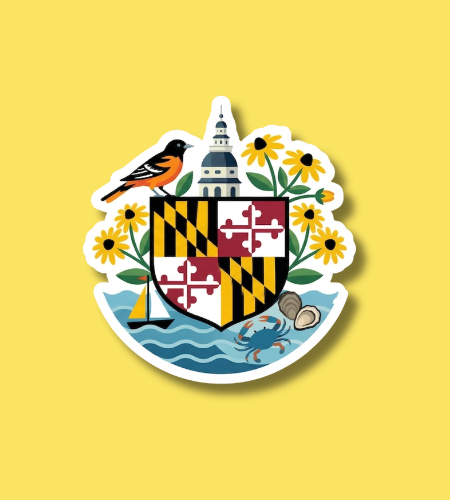
Maryland Day is observed on March 25. This legal state holiday commemorates the arrival of the first European settlers at St. Clement’s Island in 1634, marking the formal founding of the Maryland colony. The day serves as an annual tribute to the state’s heritage, its contributions to religious freedom in the New World, and the diverse history of the people who have shaped the region over nearly four centuries.
Table of Contents
History of Maryland Day
The origins of the holiday date back to November 22, 1633, when approximately 140 colonists set sail from the Isle of Wight in England aboard two ships, the Ark and the Dove. Led by Leonard Calvert, the younger brother of Cecilius Calvert, the second Lord Baltimore, the group sought to establish a proprietary colony where they could practice their faith freely. After a long and treacherous journey across the Atlantic that included stops in the Canary Islands and Barbados, the settlers finally reached the shores of the Potomac River. On March 25, 1634, they disembarked on St. Clement’s Island and celebrated a Mass of Thanksgiving to mark their safe arrival.
Formal observance of the day did not begin until 1903, when the Maryland State Board of Education designated March 25 as a day for students to study local history. The move was intended to foster a stronger sense of state identity and pride among the youth. The General Assembly followed suit in 1916 by officially authorizing Maryland Day as a legal state holiday. Since then, the celebration has expanded from a school-based activity into a statewide event involving historical societies, museums, and local governments.
Why is Maryland Day important?
Maryland Day is significant because it honors the state’s unique role as a pioneer of religious toleration in North America. The original charter granted to the Calverts allowed for a level of religious freedom that was uncommon in other English colonies at the time. This legacy was further solidified by the Maryland Toleration Act of 1649, which served as an early precursor to the First Amendment of the United States Constitution. The holiday provides an opportunity to reflect on these foundational principles and how they have evolved to include all residents.
The day also highlights the intersection of different cultures and the natural history of the Chesapeake Bay region. It acknowledges the interactions between the English settlers and the Indigenous peoples, specifically the Yaocomico and Piscataway tribes, who inhabited the land long before the European arrival. By exploring these complex historical narratives, Marylanders gain a more comprehensive understanding of their collective past. The observance encourages the preservation of historic sites and landmarks that define the “Old Line State.”
- It commemorates the official landing of the Ark and the Dove in 1634.
- The holiday promotes the study of Maryland’s colonial and maritime history.
- It recognizes the state’s early commitment to religious freedom and diversity.
- The day supports the preservation of heritage sites like St. Mary’s City.
- It celebrates the unique cultural identity of Maryland’s 23 counties.
How to Celebrate Maryland Day
Celebrations often center around historic St. Mary’s City and Annapolis, where museums and heritage sites open their doors for special programming. Many locations offer admission for free or a nominal fee of $1, allowing families to tour reconstructed colonial buildings, interact with historical interpreters, and see replicas of the original sailing vessels. Attending the official state ceremony at St. Clement’s Island Museum is a common tradition, often featuring a symbolic gift exchange and a wreath-laying ceremony.
For a more local experience, many residents participate in “Maryland Day Quests” or scavenger hunts designed to highlight regional landmarks. You can also celebrate by enjoying traditional Maryland cuisine, such as Smith Island cake or dishes featuring local blue crabs. Schools and libraries frequently host workshops where children can learn colonial crafts, such as candle making or weaving. Wearing the state colors—black, gold, red, and white—is a popular way for citizens to show their pride throughout the weekend.
- Visit a local history museum or state park for a guided tour.
- Attend a flag-raising ceremony in your local town square or city hall.
- Sample local Maryland delicacies like crabcakes or Maryland beaten biscuits.
- Explore an active archaeological site to learn about early colonial life.
- Share a photo of a state landmark on social media to promote heritage.
Maryland Day Dates Table
| Year | Date | Day |
|---|---|---|
| 2026 | March 25 | Wednesday |
| 2027 | March 25 | Thursday |
| 2028 | March 25 | Saturday |
| 2029 | March 25 | Sunday |
| 2030 | March 25 | Monday |
Subscribe to our newsletter and never miss a holiday again!