
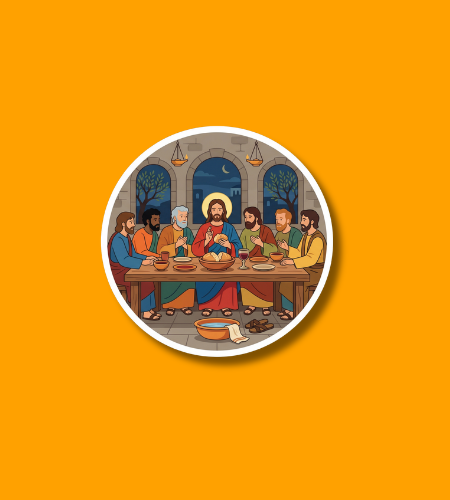
Maundy Thursday, also known as Holy Thursday, is a solemn Christian holy day observed on the Thursday before Easter to commemorate the Last Supper of Jesus Christ with his apostles. This significant liturgical event marks the beginning of the Paschal Triduum, the three-day period that concludes with Easter Sunday. In 2026, the observance falls on April 2, occurring on a Thursday. The day is characterized by rituals of humility and service, most notably the washing of feet and the institution of the Eucharist. Throughout the world, the faithful gather for evening services that transition from the communal meal of the Last Supper to the somber shadows of Gethsemane. It is a time of deep spiritual preparation, where the focus shifts from the public ministry of Jesus to the private, intimate moments of his final hours before the crucifixion.
Read also about Holy Monday, Holy Tuesday and Holy Wednesday
Table of Contents
History of Maundy Thursday
The historical roots of this day are found in the biblical accounts of the Passover meal Jesus shared with his disciples in Jerusalem. The name “Maundy” is derived from the Latin word mandatum, meaning “command.” This refers to the new commandment Jesus gave to his followers after washing their feet: “A new commandment I give to you, that you love one another; even as I have loved you, that you also love one another.” This act of foot washing was a radical subversion of social hierarchies, as Jesus, whom the disciples called Master, performed the task of the lowliest servant.
Over the centuries, the observance evolved into a complex series of liturgical traditions in the early Christian church. By the 4th century, the blessing of holy oils, known as the Chrism Mass, became a staple of the day, a tradition that continues in Catholic and Anglican cathedrals today. In medieval Europe, the “Royal Maundy” tradition began, where monarchs would wash the feet of the poor and distribute “Maundy money” in a public display of Christian humility. In many traditions, the evening service concludes with the “Stripping of the Altar,” where all decorations, linens, and candles are removed from the sanctuary to symbolize the desertion of the disciples and the nakedness of Christ before his captors.
Why is Maundy Thursday important?
This day is significant because it marks the formal institution of the Eucharist, or Holy Communion, which remains the central act of worship for the majority of Christian denominations. By sharing bread and wine and instructing his followers to “do this in remembrance of me,” Jesus established a perpetual ritual of spiritual nourishment and community. The day highlights the dual themes of sacrifice and service, reminding the faithful that leadership in the Christian tradition is fundamentally rooted in humility. It serves as a moral compass, urging individuals to look for ways to serve their neighbors and to prioritize the needs of the marginalized.
Furthermore, the observance provides a necessary emotional bridge between the triumph of Palm Sunday and the sorrow of Good Friday. It allows the community to reflect on the human elements of the Passion story, such as the intimacy of a shared meal and the pain of impending betrayal. The “Vigil of the Agony,” which often follows the evening service, encourages a period of silent watchfulness, mirroring the time Jesus spent praying in the Garden of Gethsemane. This period of reflection helps the faithful internalize the gravity of the events being commemorated, fostering a sense of solidarity with the suffering and a deeper appreciation for the message of unconditional love.
- It commemorates the first celebration of the Eucharist during the Last Supper.
- The day emphasizes the “new commandment” to love others through humble service.
- It marks the transition into the most sacred three days of the Christian year.
- The ritual of foot washing serves as a powerful symbol of equality and dignity.
- It provides a quiet space for prayerful vigil in anticipation of the Passion.
How to Celebrate Maundy Thursday
Observing Maundy Thursday typically involves attending a special evening church service known as the Mass of the Lord’s Supper. Many participants choose to have their feet washed by a member of the clergy or a fellow parishioner as an act of humility and renewal. Following the service, many churches remain open late for silent adoration or “Watching,” where people sit in quiet prayer to keep watch with Christ as he did in the Garden. In some cultures, there is a tradition of visiting seven different churches on this night to pray at the “Altar of Repose,” a practice known as the Seven Churches Visitation.
In a domestic setting, families often celebrate by sharing a simple, quiet dinner that features elements reminiscent of the Passover, such as unleavened bread or bitter herbs. This is a popular time for reading the Passion narratives from the Gospels of John or Matthew to better understand the timeline of the first Holy Week. Some people practice a partial fast or abstain from meat as a sign of penance and preparation for the following day. Whether through participating in a solemn liturgical procession or engaging in a private act of service for a neighbor, the goal is to embody the spirit of the mandatum—to love and serve others as a reflection of faith.
- Attend an evening church service featuring the ritual of foot washing.
- Spend fifteen minutes in silent meditation or “watchfulness” after sunset.
- Share a simple meal with family while reading the account of the Last Supper.
- Visit a local cathedral to witness the blessing of the holy oils.
- Perform a secret act of service for someone in your community.
Subscribe to our newsletter and never miss a holiday again!