
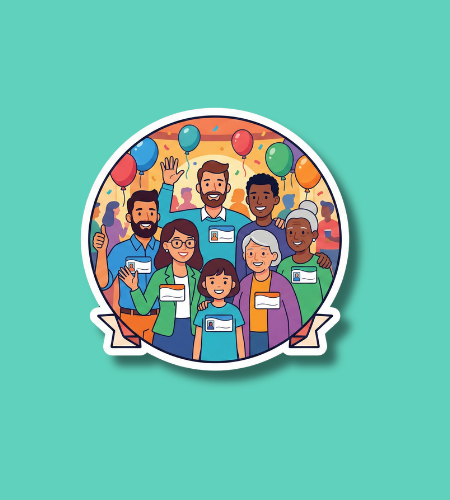
Nametag Day is observed on the Thursday of the first full week in March to encourage social interaction and break down the barriers of anonymity in daily life. In 2026, it falls on March 5. As part of Celebrate Your Name Week, this holiday promotes the simple act of wearing a visible name badge to foster a sense of community and make it easier for strangers, neighbors, and coworkers to connect with one another.
Read also about Discover What Your Name Means Day and Get a Different Name Day
Table of Contents
History of Nametag Day
The origins of Nametag Day date back to 1997 when it was established by American onomatology enthusiast Jerry Hill. Hill founded Celebrate Your Name Week after realizing that names are often the most personal part of an individual’s identity yet are frequently overlooked in modern, fast-paced society. He believed that if people were more readily identifiable by name, the world would become a friendlier and more connected place. By designating a specific day for wearing nametags, he provided a simple tool for people to step out of their shells and engage with those around them.
Since its inception, the holiday has grown from a small niche observation into a widely recognized event celebrated by schools, offices, and community groups. While the physical nametag has roots in military laundry labels and early 20th-century quality control badges, Hill transformed the item into a symbol of openness and hospitality. Today, the day serves as a reminder of the power of a first name to humanize urban environments and turn brief encounters into meaningful social exchanges.
Why is Nametag Day important?
Nametag Day is important because it serves as a powerful icebreaker in a world where many people live in proximity but remain strangers. By displaying a name, an individual signals an openness to conversation and effectively invites others to say hello. This small gesture can significantly reduce social anxiety for those who struggle to start conversations and helps build a stronger sense of local community. Knowing someone’s name is the first step toward building trust and establishing a rapport, whether in a high-rise office building or a neighborhood grocery store.
The holiday also highlights the psychological significance of names in personal identity and social validation. When a person is addressed by their name, they feel seen and respected as an individual rather than an anonymous face in a crowd. In professional settings, wearing a nametag can improve customer service and team cohesion by making everyone more approachable. Ultimately, the day encourages people to look up from their screens and acknowledge the actual humans passing by them every day, fostering a culture of friendliness and mutual recognition.
- Using names helps transform a group of strangers into a supportive community
- Wearing a tag eliminates the awkwardness of forgetting someone’s name during a meeting
- Identifying people by name promotes accountability and better communication in the workplace
- The day provides a low-pressure way for introverted individuals to meet new people
- Celebrating names reinforces the value of individual heritage and personal identity
How to Celebrate Nametag Day
The most direct way to participate is to wear a “Hello, My Name Is” sticker or a professional badge throughout the day. This applies not just at work, but also while running errands, visiting the library, or walking through the park. To make the day more interactive, some people choose to use a nickname or a name they have always liked to spark curiosity and conversation. The goal is to be approachable, so pairing the nametag with a friendly smile and a willingness to engage in small talk is essential for a successful observation.
Businesses and organizations can celebrate by providing customized tags for all employees and hosting a “get to know you” lunch or coffee break. Schools often use the day to help students learn more about their classmates’ backgrounds and the stories behind their names. On social media, participants share photos of their creative nametags using the holiday’s hashtag to connect with a global community of celebrants. Whether through a simple paper sticker or an elaborate custom badge, the focus remains on making a conscious effort to acknowledge others by name.
- Place a nametag on your right shoulder to make it easily visible during handshakes
- Ask three people you see regularly but don’t know well what their names are
- Create colorful or artistic nametags with your children to teach them about social skills
- Use a name tag as a conversation starter by adding a fun fact about yourself to the bottom
- Send a message to a friend or colleague telling them what you appreciate about their name
Nametag Day Dates Table
| Year | Date | Day |
|---|---|---|
| 2026 | March 1 | Sunday |
| 2027 | March 1 | Monday |
| 2028 | March 1 | Wednesday |
| 2029 | March 1 | Thursday |
| 2030 | March 1 | Friday |
Subscribe to our newsletter and never miss a holiday again!