
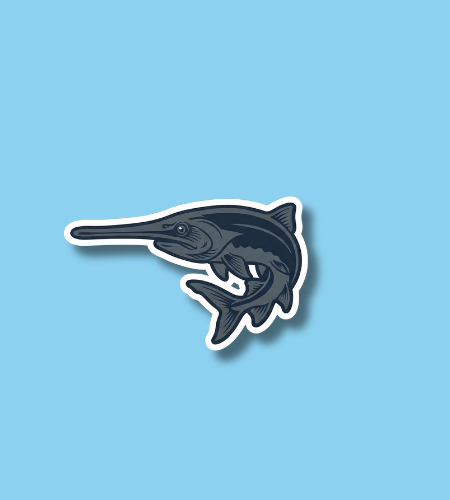
National American Paddlefish Day is observed on March 9. This day focuses on the conservation and biological significance of one of North America’s oldest freshwater fish species. Often called a “living fossil,” the American paddlefish has survived for over 300 million years, predating the dinosaurs, yet it currently faces modern threats from habitat loss and overfishing.
Read also about Hagfish Day
Table of Contents
History of National American Paddlefish Day
The Shreveport Aquarium in Louisiana founded this day in 2019 to coincide with the anniversary of the aquarium’s opening. The founders recognized that the American paddlefish was frequently overlooked in mainstream conservation discussions despite its critical role in river ecosystems. By establishing a dedicated day, they aimed to create a platform for education and to highlight specific restoration projects, such as the reintroduction of paddlefish into Caddo Lake, where the species had previously vanished due to dam construction.
Before the official designation, the American paddlefish seen its range significantly reduced from nearly every major river in the Central and Eastern United States to primarily the Mississippi and Missouri River basins. The extinction of its closest relative, the Chinese paddlefish, in the early 21st century added a sense of urgency to these efforts. National American Paddlefish Day has since grown into an annual event featuring festivals, scientific presentations, and community-led fish releases that help restock vulnerable populations.
Why is National American Paddlefish Day important?
The American paddlefish is a vital indicator species, meaning its health reflects the overall condition of the river systems it inhabits. Because these fish are filter feeders that rely on massive quantities of zooplankton, their presence ensures a balanced aquatic food web. They possess a unique anatomical feature called a rostrum—a long, paddle-shaped snout covered in thousands of electroreceptors. This specialized organ allows them to navigate murky waters and detect the tiny electric fields of their prey, making them a subject of intense interest for evolutionary biologists.
Protecting this species is essential for maintaining biodiversity in the Mississippi River drainage basin. Paddlefish are highly susceptible to changes in river flow and water temperature, which are often disrupted by large-scale dams and channelization. By bringing attention to these issues, the holiday encourages better water management practices and helps combat the illegal trade of paddlefish roe, which is frequently sought as a substitute for sturgeon caviar. Awareness raised on this day supports the legal protections necessary to keep this ancient lineage from following its Chinese relative into extinction.
- Paddlefish have inhabited Earth’s waters for over 300 million years.
- They use electroreceptors on their snouts to find food in dark water.
- These fish can grow up to seven feet long and weigh over 200 pounds.
- They are the only surviving member of the Polyodontidae family.
- Their presence indicates a healthy and productive freshwater ecosystem.
How to Observe National American Paddlefish Day
Observing this day often involves visiting local aquariums that participate in paddlefish rearing and release programs. Many facilities host “Paddlefish Festivals” where visitors can see the fish up close and learn about the specific challenges they face, such as invasive zebra mussels that compete for the same food sources. Supporting these institutions through admission or donations directly funds the research and equipment needed to track migratory patterns and restore spawning grounds.
On a local level, participating in river cleanups helps improve the water quality necessary for paddlefish survival. Reducing plastic waste is particularly important, as microplastics can interfere with the filter-feeding process of these large fish. Educators can share classroom resources that explain the difference between cartilaginous fish like paddlefish and bony fish, helping students understand different evolutionary paths. Sharing high-quality photos or infographics about the paddlefish’s unique appearance on social media also helps demystify this unusual creature for a broader audience.
- Attend a local aquarium event to see a live paddlefish demonstration.
- Join a community river cleanup to improve freshwater habitats.
- Learn to identify the difference between paddlefish and sturgeon.
- Avoid purchasing unregulated caviar to help discourage poaching.
- Share educational videos about how paddlefish filter their food.
National American Paddlefish Day Dates Table
| Year | Date | Day |
|---|---|---|
| 2026 | March 9 | Monday |
| 2027 | March 9 | Tuesday |
| 2028 | March 9 | Thursday |
| 2029 | March 9 | Friday |
| 2030 | March 9 | Saturday |
Subscribe to our newsletter and never miss a holiday again!