
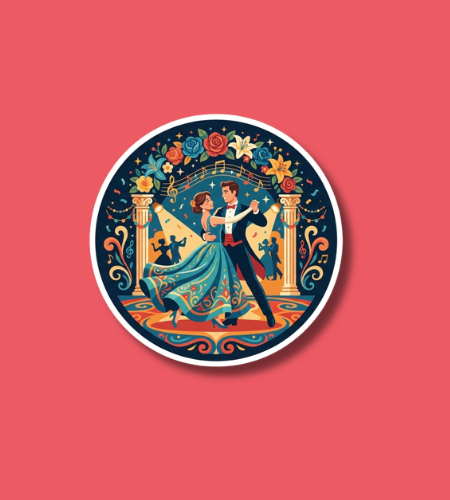
National Dance The Waltz Day is celebrated on March 4 to honor one of the most enduring and graceful forms of ballroom dance. This date provides an opportunity for enthusiasts and beginners alike to appreciate the unique three-quarter time signature and the fluid, rotating movements that define the waltz. The holiday encourages people to experience the physical and social benefits of partner dancing while recognizing the art form’s long journey from rural villages to the world’s most prestigious ballrooms.
Read also about International Dance Day
Table of Contents
History of National Dance The Waltz Day
The waltz originated in the 16th century as a rustic folk dance known as the Ländler in the rural regions of Austria and Bavaria. Unlike the formal court dances of the era, which often involved intricate group patterns and minimal physical contact, the waltz featured couples holding each other closely and spinning in continuous circles. This “closed position” was considered highly scandalous when the dance first reached urban centers like Vienna in the late 1700s. Moralists and religious leaders frequently condemned the dance as indecent, which paradoxically fueled its popularity among the younger generation.
By the early 19th century, the waltz had overcome its controversial reputation to become a staple of high society, largely due to the influence of the Congress of Vienna in 1814. It spread rapidly across Europe and reached the United States by the 1830s, where it was further popularized by the music of “Waltz King” Johann Strauss II. National Dance The Waltz Day was established in the modern era to preserve this history and to celebrate the “March Forth” pun of its date, urging people to move forward onto the dance floor. Today, the day honors both the fast-paced Viennese style and the slower, more deliberate International Standard and American styles.
Why is National Dance The Waltz Day important?
The waltz is often called the “backbone of ballroom” because it introduced the concept of the closed dance hold, which paved the way for many other modern partner dances. This holiday is important because it highlights the technical precision and physical coordination required to execute the dance’s signature “rise and fall” motion. Beyond the aesthetics, the waltz serves as a powerful medium for social connection, requiring a high level of trust and synchronization between partners to navigate a crowded floor.
Celebrating this day also brings attention to the cardiovascular and cognitive benefits of dancing. Learning the complex patterns and maintaining the 1-2-3 rhythm provides a mental workout that improves memory and spatial awareness. For many, the waltz remains a symbol of elegance used during major life milestones, such as the “first dance” at weddings. By dedicating a day to this specific dance, communities can keep the tradition alive, ensuring that the grace and discipline of the waltz continue to be taught to future generations.
- The waltz was the first dance where partners faced each other in a close embrace.
- It uses a distinct triple meter that creates a lilting, wave-like movement.
- Practicing the dance improves balance, posture, and core physical strength.
- The holiday helps preserve the musical legacy of classical composers like Strauss and Chopin.
- Ballroom dancing is a globally recognized sport with standardized competitive rules.
How to Celebrate National Dance The Waltz Day
The most authentic way to celebrate is by signing up for an introductory ballroom dance lesson at a local studio. Many instructors offer special sessions on this day specifically for those who have never tried the waltz before, focusing on the basic box step and proper frame. If you prefer a more social setting, look for “tea dances” or community ballroom events where you can practice your steps in a low-pressure environment. Bringing a partner or a friend makes the experience more engaging and helps build the communication skills essential to the dance.
If you are celebrating at home, you can observe the day by creating a playlist of famous waltzes, ranging from “The Blue Danube” to modern instrumental covers. Use the space in your living room to practice the gliding steps and rotations, focusing on smooth transitions rather than speed. Watching classic films that feature iconic ballroom scenes can also provide inspiration and a deeper look at the costume and style associated with the genre. Sharing a video of your progress or a favorite historical fact about the dance online helps spread the spirit of the holiday to others.
- Enroll in a beginner’s ballroom class to learn the fundamental box step.
- Listen to a collection of Viennese waltzes to master the triple-time rhythm.
- Wear formal attire and host a small dance gathering for friends.
- Watch a documentary or instructional video about the evolution of the waltz.
- Research the different regional styles, such as the French Valse Musette.
National Dance The Waltz Day Dates Table
| Year | Date | Day |
|---|---|---|
| 2026 | March 4 | Wednesday |
| 2027 | March 4 | Thursday |
| 2028 | March 4 | Saturday |
| 2029 | March 4 | Sunday |
| 2030 | March 4 | Monday |
Subscribe to our newsletter and never miss a holiday again!