
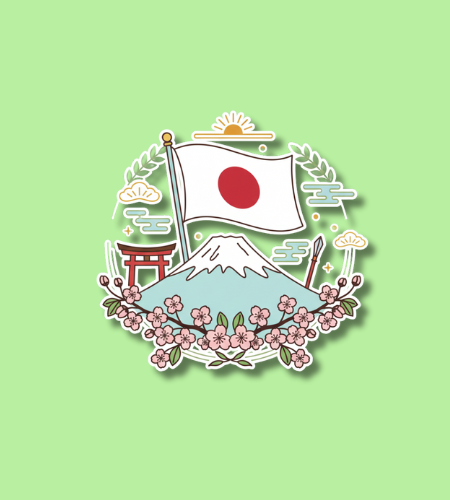
National Foundation Day in Japan is observed annually on February 11. Known in Japanese as Kenkoku Kinen no Hi, this public holiday is a day for citizens to reflect on the establishment of the nation and to foster a sense of appreciation for their country. It commemorates the legendary founding of Japan and the ascension of its first emperor.
Table of Contents
History of National Foundation Day in Japan
The holiday’s roots lie in the Nihon Shoki, an 8th-century chronicle that records the mythology and early history of Japan. According to this text, the first emperor, Emperor Jimmu, ascended the throne on the first day of the first month of the lunar calendar in 660 BCE. During the Meiji period, the government calculated this date to be February 11 on the Gregorian calendar. In 1873, the day was officially established as Kigensetsu, or Empire Day, to promote national unity and the prestige of the imperial line.
Following World War II, the holiday was abolished in 1948 by the Allied occupation authorities due to its close ties with state Shintoism and wartime nationalism. However, public sentiment favored its return, leading to years of political debate. In 1966, the government reinstated the observance under the more neutral name of National Foundation Day. The modern version focuses on the broader concept of national history and peace rather than the divine status of the emperor, first being celebrated in its current form in 1967.
Why is National Foundation Day in Japan important?
This day is important because it serves as a symbolic marker of Japan’s long continuity and cultural identity. It is one of the few national holidays that specifically encourages people to look back at the efforts of their ancestors and the historical development of the Japanese state. By recognizing the legendary date of the first emperor’s coronation, the holiday reinforces the unique heritage that has been passed down through generations, even as the country has transformed into a modern democratic society.
While the historical accuracy of the specific date is often debated, its cultural significance remains strong. It provides a rare moment for quiet reflection in a busy society, allowing citizens to think about their role in the nation’s future. The day promotes a sense of shared purpose and unity, helping to bridge the gap between ancient traditions and contemporary life. It is a time when the values of harmony and respect for history are brought to the forefront of the national consciousness.
- The holiday honors the enduring lineage of the Japanese imperial family.
- It provides a day of rest for students and workers across the country.
- Reflection on the past helps citizens appreciate modern peace and prosperity.
- The day serves to preserve the myths and chronicles of early Japanese history.
- It encourages a mindset of gratitude for the natural and cultural environment.
How to Celebrate National Foundation Day in Japan
Observing this day is typically a restrained and peaceful affair compared to other major Japanese festivals. Many people visit Shinto shrines, such as the Meiji Jingu in Tokyo or the Kashihara Jingu in Nara, where the Kenkoku-sai festival is held. These visits often involve watching traditional ceremonies or offering prayers for the continued well-being of the nation. It is also common to see the national flag, the Hinomaru, displayed outside public buildings, train stations, and private homes as a sign of respect.
For many families, the day is spent enjoying local community events or visiting museums to learn more about Japan’s ancient origins. Some cities host parades featuring floats or traditional performances, though these are more common in areas with deep historical ties to the legend of Emperor Jimmu. Because it is a public holiday, most shopping malls and restaurants remain open, making it a popular time for domestic travel or casual outings with friends and family members.
- Visit a historical shrine to observe traditional Shinto rites and rituals.
- Display the national flag at your home or place of business.
- Attend a public lecture or symposium on Japanese history and culture.
- Explore a local museum to view artifacts from the early eras of Japan.
- Take a walk in a public park to appreciate the country’s natural beauty.
National Foundation Day in Japan Dates Table
| Year | Date | Day |
|---|---|---|
| 2026 | February 11 | Wednesday |
| 2027 | February 11 | Thursday |
| 2028 | February 11 | Friday |
| 2029 | February 11 | Sunday |
| 2030 | February 11 | Monday |
Subscribe to our newsletter and never miss a holiday again!