
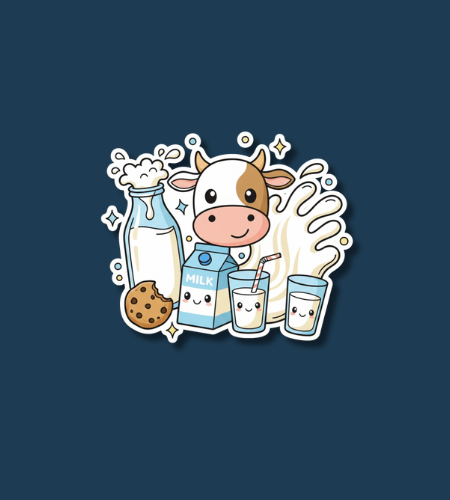
National Milk Day is observed annually on January 11. This date commemorates the anniversary of the first milk deliveries made in sterilized glass bottles in the United States. The day highlights the essential nutrients provided by dairy products and the rigorous safety standards that ensure fresh milk is available to families nationwide. World Milk Day is also celebrated on June 1.
Table of Contents
History of National Milk Day
The history of National Milk Day is tied to the evolution of food safety in the late 19th century. In 1878, Alexander Campbell of the New York Dairy Company stated that his company was the first to deliver milk in glass bottles sealed with waxed paper. Prior to this innovation, milk was typically ladled from large cans into a customer’s personal container, a practice that often led to contamination and the spread of foodborne illnesses. The introduction of glass bottles allowed for easier sterilization and more hygienic transportation from farms to urban centers.
Formal recognition for the day was sought in 1915 when the International Association of Milk Inspectors petitioned the United States Congress to establish an official observance. While the initial request did not immediately result in a permanent federal proclamation, the date of January 11 became widely accepted by the dairy industry and the public as the appropriate time to celebrate. Over the following decades, the holiday expanded from a trade-focused event to a broader celebration of agricultural productivity and public health education.
Why is National Milk Day important?
Milk is a primary source of thirteen essential nutrients, including calcium, vitamin D, and potassium, which are critical for bone health and muscle function. For many populations, dairy serves as the most accessible and affordable way to meet daily requirements for protein and B vitamins. This holiday emphasizes the nutritional density of milk, encouraging consumers to understand how dairy products support various stages of human development from infancy through adulthood.
The dairy industry also represents a significant portion of the American agricultural economy. Thousands of family-owned farms across the country rely on the consistent demand for milk to sustain their livelihoods and preserve rural landscapes. National Milk Day underscores the complex infrastructure required to move milk from the farm to the refrigerator within 48 hours. This includes specialized refrigerated transport, large-scale pasteurization facilities, and quality testing labs that work around the clock to maintain high standards.
- It recognizes the technological shift to safer glass bottle distribution.
- The holiday promotes awareness of essential vitamins and minerals in dairy.
- It supports the economic stability of local dairy farmers and rural workers.
- The day provides a platform for discussing modern pasteurization and safety.
- It highlights the historical transition from bulk sales to individual packaging.
How to Celebrate National Milk Day
Celebrating this holiday can involve exploring the variety of dairy products available, such as whole, skim, or lactose-free milks. Many people visit local creameries or dairy farms that offer public tours to see the milking process and learn about animal care standards. It is also an appropriate time to try making homemade dairy-based foods like fresh butter or yogurt to understand the chemistry involved in dairy processing.
Education plays a major role in the observance of this day. Schools and community centers often share information about the “farm-to-table” journey of milk, explaining how it is fortified and tested for purity. Individuals can participate by supporting local dairy cooperatives or trying regional milk products that are unique to their area. Sharing a meal that features milk as a core ingredient, such as a traditional chowder or milk-based dessert, allows for a practical appreciation of the ingredient’s culinary versatility.
- Visit a local dairy farm to see the milking and bottling process.
- Try a new type of milk such as organic or grass-fed varieties.
- Research the history of milk pasteurization and its impact on health.
- Support local dairy farmers by purchasing products from a cooperative.
- Prepare a recipe that uses milk as a primary ingredient for a meal.
National Milk Day Dates Table
| Year | Date | Day |
|---|---|---|
| 2026 | January 11 | Sunday |
| 2027 | January 11 | Monday |
| 2028 | January 11 | Tuesday |
| 2029 | January 11 | Thursday |
| 2030 | January 11 | Friday |
Subscribe to our newsletter and never miss a holiday again!