
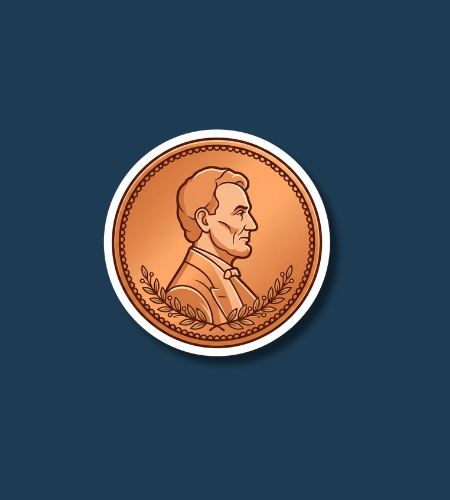
National One Cent Day is a celebratory tribute to the smallest denomination of United States currency, the penny, observed annually on April 1. This day honors the historical and cultural significance of the one-cent piece, which has been a staple of American commerce for over two centuries. While often overshadowed by the pranks of April Fools’ Day, this observance provides a moment to recognize the “mighty” impact of the humble copper-colored coin. From its origins in the early days of the Republic to its modern status as a symbol of luck and thrift, the penny remains the most widely circulated coin in the country. The day encourages citizens to appreciate the history behind the currency, participate in penny-related traditions, and reflect on the economic evolution that has seen the one-cent piece transition from a high-value unit of trade to a cherished collector’s item.
Table of Contents
History of National One Cent Day
The history of the American one-cent piece began shortly after the founding of the United States. In 1787, the first official cent, known as the “Fugio cent,” was designed by Benjamin Franklin and produced by a private mint. It featured the iconic phrases “Mind Your Business” and “We Are One,” symbolizing the unity and industrious spirit of the young nation. However, it was the Coinage Act of April 2, 1792, that formally established the United States Mint and authorized the production of the first federal one-cent coins. Because the Act was signed so close to the beginning of April, the first day of the month became the designated date to celebrate the cent’s legacy.
The appearance of the penny has undergone numerous transformations over the decades. The earliest “large cents” were nearly the size of a modern half-dollar and made of 100% copper. In the 1850s, the size was reduced to the familiar small diameter we use today to save on production costs. The most significant change occurred in 1909, the centennial of Abraham Lincoln’s birth, when his profile replaced the “Indian Head” design. This marked the first time a real person, rather than the allegorical figure of Liberty, appeared on a regular-issue American coin. Today, although the metal composition has shifted primarily to zinc with a copper coating, the penny remains a permanent fixture of the U.S. Mint’s production.
Why is National One Cent Day important?
This day is significant because it highlights the role of the penny as a foundational element of the American financial system and a mirror of the nation’s history. For generations, the one-cent piece was a symbol of “the common man,” representing the smallest unit of wealth that could still purchase goods or services. By celebrating this day, we acknowledge the penny’s contribution to teaching children the basics of math and money management. It serves as a reminder that small increments of value, when accumulated, lead to significant results, embodying the classic American virtue of frugality captured in the phrase, “a penny saved is a penny earned.”
Beyond its economic utility, the penny holds a deep place in American folklore and social tradition. Finding a “lucky penny” on the street or tossing one into a fountain to make a wish are shared cultural experiences that transcend age and background. The day also prompts important discussions about the future of currency in an increasingly digital world, including debates over the cost of minting the coin versus its face value. By focusing on the penny for one day, we honor the craftsmanship of the U.S. Mint and the enduring presence of Abraham Lincoln’s image, which continues to represent unity and perseverance to millions of people every time they check their spare change.
- It celebrates the first official currency authorized by the United States government.
- The day promotes financial literacy by encouraging people to save their spare change.
- It honors the legacy of Abraham Lincoln, who has appeared on the coin since 1909.
- The observance highlights the unique artistic designs found on historical “error” pennies.
- It preserves the cultural tradition of using pennies as symbols of good luck and wishes.
How to Celebrate National One Cent Day
Celebrating involves engaging with the physical currency in ways that are both fun and educational. Many people observe the day by starting a “penny jar” or taking their accumulated change to a local bank or coin kiosk to see how much their small savings have grown. It is a perfect time to look through your pockets or sofa cushions for “wheat pennies” or other rare vintages that might be worth more than a cent to collectors. Educators and parents often use the day to teach children about the different presidents on coins or to play simple counting games that make learning about money enjoyable.
On a more whimsical level, you can celebrate by participating in the tradition of leaving a “lucky penny” face-up on a sidewalk for a stranger to find. Tossing a penny into a local wishing well or fountain while making a hopeful wish for spring is another popular activity. Some enthusiasts visit numismatic museums or research the “Fugio” and “Indian Head” designs to deepen their understanding of American engraving history. Whether you are donating your spare cents to a charity or simply taking a moment to appreciate the copper shine of a new coin, the focus is on the value that even the smallest gesture—or the smallest coin—can bring to life.
- Search through your change to find a “lucky penny” from your birth year.
- Start a savings habit by putting every penny you receive into a designated jar.
- Clean and polish a few pennies to see the bright luster of the copper plating.
- Visit a local fountain or wishing well to make a traditional “penny wish.”
- Share a “penny for your thoughts” by engaging in a deep conversation with a friend.
National One Cent Day Dates Table
| Year | Date | Day |
|---|---|---|
| 2026 | April 1 | Wednesday |
| 2027 | April 1 | Thursday |
| 2028 | April 1 | Saturday |
| 2029 | April 1 | Sunday |
| 2030 | April 1 | Monday |
Subscribe to our newsletter and never miss a holiday again!