
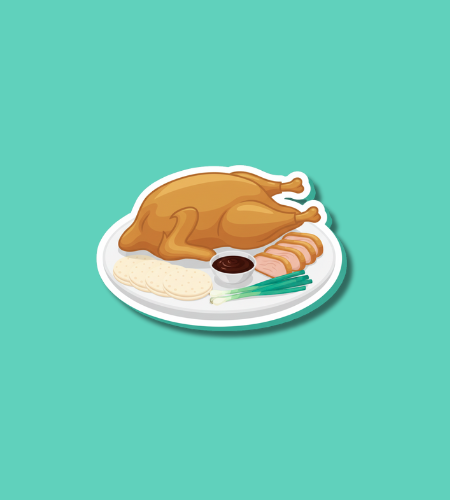
National Peking Duck Day is observed on January 18. This culinary holiday recognizes the official national dish of China, celebrated for its thin, crispy skin and tender meat. Historically, the dish was a staple of imperial menus and remains a symbol of sophisticated Chinese cooking techniques around the world.
Table of Contents
History of National Peking Duck Day
The origins of Peking duck date back to the Yuan Dynasty in the 13th century, where it was first documented in a cookbook by Hu Sihui, an imperial dietitian. During this era, the dish was reserved exclusively for the emperor and the royal court. By the time of the Ming Dynasty, the recipe was refined and became a central feature of imperial banquets in Nanjing. When the capital moved to Beijing in 1420, the dish gained its modern name and further cemented its status as a prestigious royal delicacy.
Public access to Peking duck grew in the 19th century with the opening of specialized restaurants like Quanjude in 1864. The founder, Yang Quanren, developed the “hung oven” technique, which allowed ducks to be roasted over an open flame for a more consistent, glazed finish. In the 20th century, the dish transitioned from an imperial secret to a global culinary icon. It played a unique role in international diplomacy, most notably when it was served to U.S. Secretary of State Henry Kissinger during his historic 1971 visit to China.
Why is National Peking Duck Day important?
This day highlights the meticulous craftsmanship required to prepare one of the world’s most technical dishes. Traditional preparation involves a multi-day process that includes pumping air under the skin to separate it from the fat, glazing the bird with maltose syrup, and air-drying it for several hours. This commitment to detail ensures a specific texture that cannot be achieved through standard roasting. The holiday serves as an appreciation for these ancient methods that continue to be passed down through generations of chefs.
The celebration also emphasizes the cultural heritage of Chinese cuisine and its influence on global food trends. Peking duck is more than a meal; it is a ritualized dining experience that involves specific carving techniques and precise accompaniments. By observing this day, food enthusiasts acknowledge the history of the Forbidden City and the evolution of Chinese dining traditions. It encourages a deeper understanding of how traditional recipes can become lasting symbols of a nation’s identity and hospitality.
- The holiday promotes the use of traditional cooking tools like the hung brick oven.
- It recognizes the specific breed of white-feathered Pekin ducks used for the recipe.
- The day encourages diners to learn about the specific three-part serving sequence.
- It celebrates the art of hand-carving the duck into uniform, bite-sized pieces.
- The observance supports local Chinese restaurants and authentic culinary businesses.
How to Celebrate National Peking Duck Day
The most direct way to observe this holiday is by visiting a restaurant that specializes in authentic roast duck. Many establishments offer the traditional “duck three ways” service, which begins with the crispy skin dipped in sugar, followed by the meat served with pancakes, and ending with a broth made from the carcass. If dining out, look for places that carve the bird tableside to fully appreciate the skill involved in the presentation.
For those who enjoy a kitchen challenge, attempting a home version of the recipe provides insight into the air-drying process. While a full imperial preparation is difficult in a standard kitchen, using a honey or maltose glaze and a roasting rack can yield a respectable result. Serving the duck with the traditional sides—thin spring onion brushes, sliced cucumbers, and sweet bean or hoisin sauce—completes the experience. Sharing the meal with others reflects the communal nature of Chinese banquets and the festive spirit of the holiday.
- Order a whole roast duck to share with a group of friends or family.
- Practice making thin Mandarin pancakes from scratch to wrap the duck meat.
- Use the leftover bones to simmer a rich and flavorful duck soup.
- Watch a documentary or video on the history of the Forbidden City’s royal kitchens.
- Try dipping the crispy skin in a small amount of white sugar for a traditional treat.
National Peking Duck Day Dates Table
| Year | Date | Day |
|---|---|---|
| 2026 | January 18 | Sunday |
| 2027 | January 18 | Monday |
| 2028 | January 18 | Tuesday |
| 2029 | January 18 | Thursday |
| 2030 | January 18 | Friday |
Subscribe to our newsletter and never miss a holiday again!