
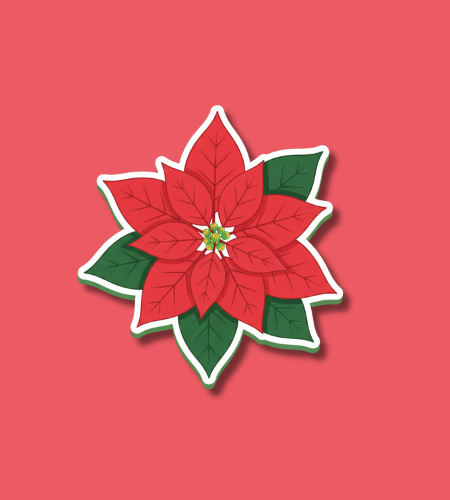
National Poinsettia Day is observed annually on December 12. This colorful holiday celebrates the vibrant red plant that has become the defining botanical symbol of the holiday season in North America.
Table of Contents
History of National Poinsettia Day
The date of this observance specifically marks the death anniversary of Joel Roberts Poinsett, who died on December 12, 1851. Poinsett was an American botanist and the first United States Minister to Mexico. During his diplomatic mission in the late 1820s, he became fascinated by a native Mexican shrub known as Cuetlaxochitl to the Aztecs and Flor de Nochebuena to the Spanish. In 1828, he sent cuttings of the plant back to his home in South Carolina and to botanists in Philadelphia, effectively introducing the species to the United States.
While Poinsett brought the plant north, it was the Ecke family of California who transformed it into a commercial staple. In the early 20th century, Paul Ecke developed grafting techniques that made the plants fuller and more durable for indoor display. In 2002, the United States House of Representatives passed a resolution officially designating December 12 as National Poinsettia Day. This legislation was created to honor Poinsett’s contributions and to recognize the importance of the poinsettia industry to the agricultural economy.
Why is National Poinsettia Day important?
This day highlights a fascinating botanical fact that many people overlook: the “flowers” of the poinsettia are actually modified leaves called bracts. The true flowers are the tiny, yellow, button-like structures called cyathia located in the center of the bract clusters. Celebrating this day provides an opportunity to appreciate the unique biology of the plant, including its photoperiodism—the requirement of long periods of darkness to trigger the color change from green to red, pink, or white.
Economically and culturally, the poinsettia is a heavyweight. It is the best-selling potted plant in the United States and Canada, contributing significantly to the floriculture market despite having a sales window of only about six weeks. The holiday honors this economic impact and the bridge the plant represents between Mexican heritage and American holiday traditions. It reminds us that our most cherished festive symbols often have international roots and complex histories involving exploration and science.
- It honors the legacy of botanist Joel Roberts Poinsett.
- It educates the public on the difference between bracts and flowers.
- It recognizes the massive economic contribution of poinsettia growers.
- It celebrates the plant’s origin in Mexican culture.
- It encourages proper care to extend the plant’s life beyond December.
The Poinsettia: The Christmas Flower
The Poinsettia has earned the title of “The Christmas Flower,” instantly recognizable by its vibrant crimson leaves that mirror the season’s palette. Native to Mexico, where it is known as Flor de Nochebuena (Flower of the Holy Night), its association with the holiday stems from a touching legend about a poor girl named Pepita. With no money for a gift for the baby Jesus, she gathered a humble bouquet of roadside weeds. As she placed them at the church altar, they miraculously transformed into brilliant red blooms. Today, the star-shaped leaf pattern is often said to symbolize the Star of Bethlehem, while the deep red color represents the blood of Christ, making it a powerful botanical symbol of the holiday.
Commercially, the poinsettia is a retail phenomenon, dominating the floral market for just six weeks of the year. It is the best-selling potted plant in the United States and Canada, with tens of millions sold annually between Thanksgiving and Christmas. Because they bloom naturally in winter, they have become the standard traditional gift for dinner hosts, colleagues, and friends.
While bright red remains the classic choice, modern cultivation has introduced pink, white, and marbled varieties to match any home decor. Bringing a poinsettia into a home is now as essential to the festive atmosphere as the tree itself, serving as a living reminder of life and vibrancy during the coldest days of the year.
How to Observe National Poinsettia Day
The most traditional way to observe this day is to purchase a poinsettia for your home or office. While the classic bright red is the most popular, nurseries now offer varieties in creamy white, speckled pink, and deep burgundy. When selecting a plant, look for one with little pollen showing on the yellow center flowers; this indicates the plant is fresh and will hold its color longer. It is also a popular gesture to gift a poinsettia to a neighbor, a nursing home resident, or a teacher to spread holiday cheer.
For those who already own a plant, use this day to learn about its specific care requirements. Poinsettias are tropical plants that dislike cold drafts and soggy roots. Place your plant in bright, indirect sunlight and only water it when the soil feels dry to the touch. If you are feeling ambitious, research the strict light-deprivation schedule required to get a poinsettia to re-bloom the following year, a challenge that many avid gardeners take up starting in October.
- Buy a fresh poinsettia from a local nursery.
- Gift a plant to a hospital, school, or nursing home.
- Visit a botanical garden to see large-scale poinsettia displays.
- Learn the proper watering schedule to prevent root rot.
- Read about the Aztec history of the Cuetlaxochitl.
National Poinsettia Day Dates Table
| Year | Date | Day |
|---|---|---|
| 2026 | December 12 | Saturday |
| 2027 | December 12 | Sunday |
| 2028 | December 12 | Tuesday |
| 2029 | December 12 | Wednesday |
| 2030 | December 12 | Thursday |
Subscribe to our newsletter and never miss a holiday again!