
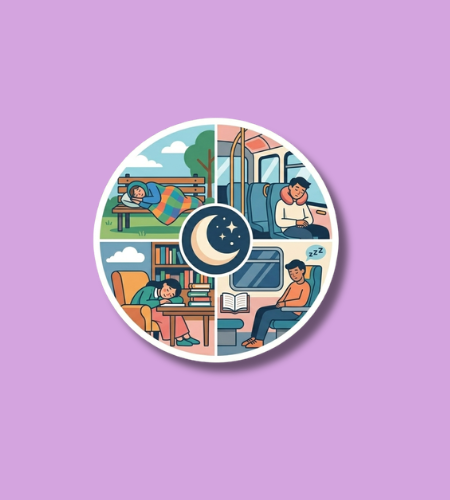
National Public Sleeping Day is observed annually on February 28. This holiday encourages people to embrace the health benefits of a midday nap, even if they are away from the comfort of their own beds. By normalizing napping in public spaces like parks, libraries, or transit, the day aims to reduce the social stigma often associated with daytime rest and to highlight the universal need for adequate sleep in a busy society.
Table of Contents
History of National Public Sleeping Day
The exact origins of this holiday are not formally documented, though it has been widely recognized by digital calendars and news organizations since the early 2010s. Unlike National Napping Day, which was specifically created in 1999 to address sleep deprivation following the start of Daylight Saving Time, National Public Sleeping Day focuses on the act of resting in the public eye. It emerged as a modern response to the “always-on” culture, where being constantly productive is often prioritized over physical and mental well-being.
Historically, the concept of sleeping in public is not new and is deeply ingrained in several world cultures. In Japan, the practice of “inemuri,” or napping while present, is often seen as a sign of diligence and hard work rather than laziness. Similarly, the Mediterranean “siesta” has long allowed for a break in the public and professional workday to account for midday heat and fatigue. This holiday draws on these traditions to advocate for a more flexible and rest-positive approach to daily life in the United States and beyond.
Why is National Public Sleeping Day important?
This day serves as a critical reminder of the biological necessity of sleep and the dangers of chronic sleep deprivation. Scientific studies consistently show that even a short nap can significantly improve cognitive function, memory consolidation, and alertness. By dedicating a day to public napping, the holiday brings these health benefits to the forefront of public conversation, encouraging individuals to listen to their bodies’ signals instead of pushing through exhaustion.
The holiday also addresses the social barriers that prevent people from resting when needed. In many urban environments, sleeping in public is viewed with suspicion or as a sign of a lack of ambition. National Public Sleeping Day challenges these perceptions by creating a shared, collective permission for everyone to take a “power nap” in a safe and visible way. This cultural shift helps foster a more empathetic society that values human health over constant activity.
- It highlights the scientific link between short naps and improved workplace productivity.
- The day promotes awareness about the global epidemic of sleep deprivation.
- It encourages cities to design more “rest-friendly” public spaces like benches and quiet zones.
- The holiday provides a lighthearted way to discuss serious issues like sleep apnea and narcolepsy.
- It validates the needs of commuters and travelers who rely on public rest to stay alert.
How to Observe National Public Sleeping Day
Observing this day is straightforward and requires only a safe public location and a willingness to let go of social inhibitions. Many participants choose a quiet corner of a local library, a sturdy park bench, or a comfortable seat on a train or bus to catch twenty minutes of sleep. To ensure a successful rest, it is helpful to bring along a travel pillow, a sleep mask, or a jacket that can serve as a makeshift blanket. Setting a vibrating alarm on a phone is a practical step to ensure the nap stays within the “power nap” range of ten to twenty minutes.
Safety and situational awareness are key components of observing the day effectively. It is best to nap in well-populated, familiar areas and to keep personal belongings secured or used as a pillow. Some communities organize “group naps” in public squares or student unions to create a sense of security and shared experience. For those unable to nap in public due to work constraints, the day can be observed by advocating for “nap pods” in the office or simply by taking a quiet break in a parked car during lunch.
- Find a safe, well-lit public park and enjoy a short snooze on a blanket.
- Use your commute on the bus or train to catch up on lost nighttime sleep.
- Pack a small kit with earplugs and a sleep mask to facilitate resting in noisy areas.
- Share a photo of your public napping spot on social media to normalize the practice.
- Research different nap types, such as the 90-minute full cycle, to find what works for you.
National Public Sleeping Day Dates Table
| Year | Date | Day |
|---|---|---|
| 2026 | February 28 | Saturday |
| 2027 | February 28 | Sunday |
| 2028 | February 28 | Monday |
| 2029 | February 28 | Wednesday |
| 2030 | February 28 | Thursday |
Subscribe to our newsletter and never miss a holiday again!