
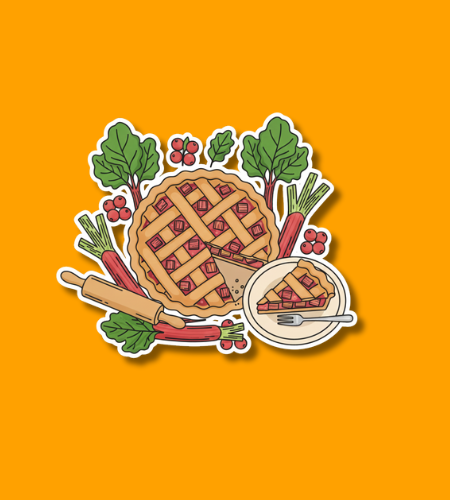
National Rhubarb Pie Day is observed on January 23. This food holiday celebrates the unique, tart flavor of the rhubarb plant when encased in a sweet pastry crust. Because rhubarb is a spring-harvested plant, the January date often encourages bakers to use frozen stores or hothouse-grown stalks to create a bright, tangy dessert during the winter months. It shares its date with National Pie Day, highlighting the rhubarb version as a standout variety within the broader category of fruit and vegetable pastries.
Table of Contents
History of National Rhubarb Pie Day
Rhubarb was first cultivated for its medicinal properties in ancient China and later introduced to Europe by explorers like Marco Polo. By the 1700s, it began appearing in English gardens, though it was initially used more for its roots than its stalks. Benjamin Franklin is credited with introducing the plant to North America in the 1770s by sending seeds from Scotland to botanist John Bartram in Pennsylvania. However, rhubarb did not become a popular culinary ingredient until the 19th century when the price of sugar dropped, making it easier to balance the intense natural tartness of the stalks.
The specific designation of January 23 as National Rhubarb Pie Day is linked to the creation of National Pie Day by Charlie Papazian in 1975. Papazian, a teacher and nuclear engineer, chose his own birthday to celebrate his favorite dessert. Over time, fans of the “pie plant”—a common nickname for rhubarb—carved out this specific niche to honor the vegetable’s culinary transition into a fruit-like dessert. In 1947, a New York court even legally designated rhubarb as a fruit for tax purposes, reflecting its primary use in American kitchens as a pie filling.
Why is National Rhubarb Pie Day important?
This day is significant because it highlights a plant that is often overlooked in modern supermarkets outside of its peak season. Rhubarb is one of the few perennial vegetables that effectively mimics a fruit when cooked, offering a sharp flavor profile that contrasts with the heavy, sweet desserts typically served in winter. The holiday serves as a reminder of traditional agricultural cycles and the historical methods of preserving the spring harvest for use throughout the year.
The observance also supports the baking industry and home culinary traditions. Rhubarb pie is deeply embedded in the regional cuisines of the northern United States, Canada, and the United Kingdom, where the plant thrives in cooler climates. Celebrating the day encourages the passing down of family recipes and promotes the use of simple, garden-grown ingredients. It provides an opportunity for bakers to experiment with the “straight” rhubarb pie, focusing on the pure flavor of the plant without the more common addition of strawberries.
- It preserves the cultural heritage of using the pie plant in traditional desserts.
- The holiday encourages the use of seasonal produce preserved through freezing or canning.
- It recognizes the unique botanical status of rhubarb as a vegetable used like a fruit.
- The day promotes local baking and the sharing of regional dessert specialties.
- It provides a festive contrast to standard winter flavors during the cold months.
How to Celebrate National Rhubarb Pie Day
The most direct way to observe the day is to bake a classic double-crust rhubarb pie. Since fresh field rhubarb is typically unavailable in January, many bakers use frozen stalks, which should be thawed and drained slightly to prevent the crust from becoming soggy. The filling usually requires a significant amount of sugar or honey along with a thickening agent like flour or cornstarch to manage the juices released during baking. Many enthusiasts prefer to keep the recipe simple, using only rhubarb and a hint of orange zest or cinnamon to let the tartness shine.
For those who do not bake, visiting a local bakery to request a slice is a popular alternative. Some communities in “rhubarb capitals” host small gatherings or bake-offs where different varieties of the pie are sampled and judged. It is also an appropriate time to plan for the upcoming spring by ordering rhubarb crowns to plant in the garden once the soil thaws. Sharing a photo of a successful bake on social media helps raise awareness for this specific food holiday and encourages others to try this distinctive flavor.
- Bake a traditional rhubarb pie using either hothouse-grown or frozen stalks.
- Host a small tasting event to compare different sweetener levels in the filling.
- Purchase a slice from a local independent bakery to support small businesses.
- Share a heritage family recipe with friends or neighbors to keep the tradition alive.
- Research different varieties of rhubarb to plant in your garden during the spring.
National Rhubarb Pie Day Dates Table
| Year | Date | Day |
|---|---|---|
| 2026 | January 23 | Friday |
| 2027 | January 23 | Saturday |
| 2028 | January 23 | Sunday |
| 2029 | January 23 | Tuesday |
| 2030 | January 23 | Wednesday |
Subscribe to our newsletter and never miss a holiday again!