
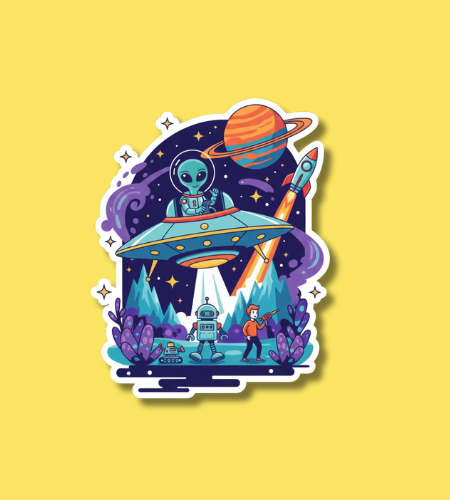
National Science Fiction Day is observed annually on January 2. This unofficial holiday honors the birthday of Isaac Asimov, one of the most influential writers in the history of the genre. Asimov was born in 1920 and became a cornerstone of modern science fiction through his “Foundation” and “Robot” series. The date serves as a rallying point for fans in the United States and across the globe to celebrate the literature of ideas.
Table of Contents
The history of the day began to take shape in the early 2010s. It was widely celebrated for the first time in 2012 as a way to acknowledge the massive impact science fiction has on culture and education. While the holiday is not a federally recognized event, it is officially listed in several notable calendars and has gained recognition from organizations like the Scholastic Corporation and the Hallmark Channel.
The choice of January 2 specifically commemorates Isaac Asimov, who alongside Arthur C. Clarke and Robert A. Heinlein, formed the “Big Three” of science fiction authors. Asimov is credited with coining the term “robotics” and introducing the “Three Laws of Robotics,” which have guided real-world ethical discussions in artificial intelligence for decades. His work bridged the gap between hard science and imaginative storytelling, making him a fitting figurehead for the celebration.
History of National Science Fiction Day
The celebration was established to highlight the genre’s ability to explore the unknown and push the limits of human imagination. It gained momentum through online communities and literary circles that wanted to dedicate a specific day to sci-fi creators. By choosing the birth anniversary of Isaac Asimov, the founders ensured the day would remain tied to the Golden Age of Science Fiction while looking forward to future developments in the genre.
Though its origins are relatively recent compared to other literary celebrations, the day has quickly grown into a mainstream event. It provides a platform for libraries, schools, and bookstores to showcase works that examine the relationship between humans and technology. The holiday has shifted from a niche fan gathering to a recognized moment for reflecting on how fictional concepts often transition into real-world scientific breakthroughs.
Why is National Science Fiction Day important?
Science fiction serves as a “literature of ideas” that allows society to test hypothetical scenarios involving technology, ethics, and exploration. Many modern devices, such as tablet computers, communications satellites, and smartphones, were first described in science fiction novels decades before they were invented. By celebrating this genre, people acknowledge the writers and filmmakers who have inspired generations of scientists, engineers, and astronauts.
The genre also addresses complex social issues by placing them in alien or futuristic settings. It provides a safe space to discuss morality, government, and the environment through the lens of the “what if” question. This helps readers and viewers develop critical thinking skills and a deeper understanding of the potential consequences of current technological trends.
- It encourages people to dream about the future of humanity.
- The day promotes literacy and interest in scientific fields.
- It honors authors who shaped modern pop culture.
- Fans find community and shared interests through the genre.
- The holiday highlights the connection between art and technology.
How to Celebrate National Science Fiction Day
Reading a classic science fiction novel or a new release is the most traditional way to observe the day. Many fans choose to revisit the works of pioneers like Jules Verne, Mary Shelley, or H.G. Wells to see how early visions of the future compare to reality. Sharing book recommendations on social media or starting a science fiction book club helps spread the enthusiasm for the genre to new readers.
Hosting a movie marathon is another popular way to spend the day. Fans often watch influential films like “2001: A Space Odyssey,” “Star Wars,” or “Blade Runner” to appreciate the visual and thematic evolution of sci-fi cinema. Some enthusiasts take the opportunity to visit planetariums, science museums, or technology exhibits to see the real-world science that supports their favorite fictional stories.
- Watch a classic science fiction movie with your family.
- Start reading a new book by a modern sci-fi author.
- Dress up as a favorite character from a science fiction series.
- Visit a local planetarium to learn about space exploration.
- Write a short story about life in the next century.
National Science Fiction Day Dates Table
| Year | Date | Day |
|---|---|---|
| 2026 | January 2 | Friday |
| 2027 | January 2 | Saturday |
| 2028 | January 2 | Sunday |
| 2029 | January 2 | Tuesday |
| 2030 | January 2 | Wednesday |
Subscribe to our newsletter and never miss a holiday again!