
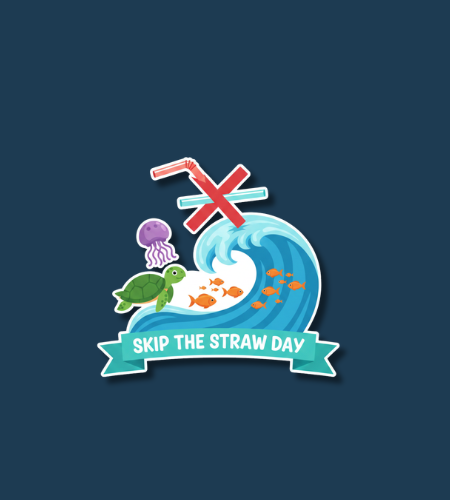
National Skip the Straw Day is observed on the fourth Friday in February. In 2026, it falls on February 27. This environmental awareness day encourages individuals to refuse single-use plastic straws to reduce the massive amount of plastic waste that enters landfills and oceans daily.
Table of Contents
History of National Skip the Straw Day
A group of middle school students known as the Coral Keepers from Whitehall, Michigan, founded this day in 2017. Under the guidance of their advisor, Susan Tate, the students created the initiative as part of the Lexus Eco Challenge, a national competition focused on environmental problem-solving. Their research into the impact of plastic on marine ecosystems led them to target the disposable straw as a preventable source of pollution.
The movement gained significant momentum following several viral videos that depicted the harmful effects of plastic debris on sea turtles and other marine life. Since its inception, the day has been officially recognized by the National Day Calendar and has sparked legislative discussions regarding plastic bans in various American cities. What began as a local school project has evolved into a nationwide campaign involving schools, restaurants, and environmental organizations.
Why is National Skip the Straw Day important?
Plastic straws are among the most common items found during beach cleanups and are particularly hazardous because they do not biodegrade. Instead, they break down into microplastics that can be ingested by fish and birds, eventually entering the human food chain. In the United States alone, an estimated 500 million straws are used every single day, most of which cannot be recycled due to their small size and lightweight material.
This day is important because it highlights how a minor adjustment in consumer habits can lead to a substantial reduction in plastic production. Many people use straws out of habit rather than necessity, making this an accessible entry point for environmental advocacy. By skipping the straw, individuals help prevent the entanglement of marine animals and reduce the demand for petroleum-based plastics that contribute to global waste.
- Americans use hundreds of millions of plastic straws every day.
- Most plastic straws take up to 200 years to break down.
- These items frequently end up in the five major oceanic gyres.
- Straws are often mistaken for food by sea turtles and seabirds.
- Reducing straw use decreases the overall demand for single-use plastics.
How to Observe National Skip the Straw Day
The simplest way to observe this day is to refuse a straw when ordering a beverage at a restaurant or drive-thru. You can practice “tipping the glass” to drink directly, which eliminates the need for a disposable tool entirely. If you prefer using a straw for comfort or medical reasons, you can switch to reusable alternatives made from stainless steel, bamboo, silicone, or glass.
Many advocates use the day to engage with local businesses by encouraging them to implement “straw on request” policies. This ensures that straws are only provided to those who specifically ask for them, significantly cutting down on unintentional waste. Sharing facts about the lifespan of plastic on social media or participating in a local park or beach cleanup helps amplify the message of the Coral Keepers and promotes long-term sustainability.
- Request your drink without a straw at restaurants and cafes.
- Carry a portable, reusable straw in your bag or car.
- Encourage local businesses to offer biodegradable paper alternatives.
- Volunteer for a local litter pickup in your neighborhood.
- Educate friends about the environmental impact of microplastics.
National Skip the Straw Day Dates Table
| Year | Date | Day |
|---|---|---|
| 2026 | February 27 | Friday |
| 2027 | February 26 | Friday |
| 2028 | February 25 | Friday |
| 2029 | February 23 | Friday |
| 2030 | February 22 | Friday |
Subscribe to our newsletter and never miss a holiday again!