



National Sorry Day
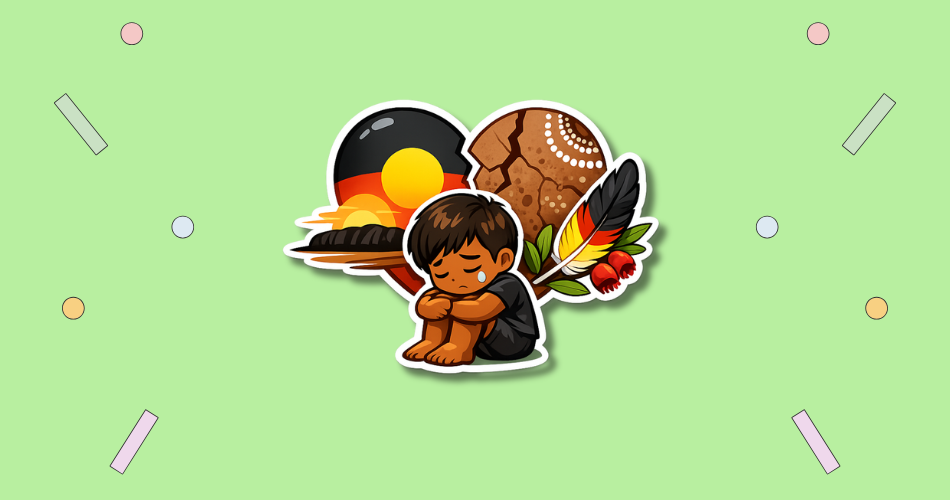
National Sorry Day is observed every year on May 26. In 2027, this date falls on a Wednesday. It is an Australian observance that remembers and acknowledges the Aboriginal and Torres Strait Islander children who were forcibly removed from their families, communities, cultures, and Country. These children are known as the Stolen Generations. The day is marked with reflection, truth-telling, respect for survivors, and a continuing commitment to healing and reconciliation. 1 2 3 4
Contents
See also: Hug an Australian Day, Australia Day
HT Meter
Does this day matter to you?
Say that it does, and say whether you will be marking it. Both are anonymous to nobody but kind to everybody.
This day matters to me
0 Be the first to say so
Quietly remembered
0 Nobody has said so yet
Notes of remembrance
Join those marking this day to share a word, a memory, or the reason it matters to you.
These notes are kept for the people marking this day. Say you will be marking it to read them and to leave your own.
You have already shared a note here recently.
No notes yet. Yours would be the first.
History of National Sorry Day
National Sorry Day grew out of the national reckoning that followed the Bringing Them Home report, which was tabled in the Australian Parliament on May 26, 1997. The report examined the laws, policies, and practices that led to the forced removal of Aboriginal and Torres Strait Islander children from their families. It made recommendations for acknowledgment, apology, healing, and practical support. The first National Sorry Day was held on May 26, 1998, one year after the report was presented.

National Apology Day
The observance is closely connected with the broader movement for reconciliation in Australia. Sorry Books, public gatherings, bridge walks, ceremonies, and community events helped many Australians express grief, support, and a desire for change. In 2008, the Australian Parliament delivered a formal National Apology to the Stolen Generations. National Sorry Day remains separate from that apology, but both are part of the same continuing history of acknowledgment, accountability, and healing.
Why is National Sorry Day important?
National Sorry Day is important because it keeps attention on a history that affected real families and continues to shape lives today. Forced removal separated children from parents, siblings, language, culture, and community, creating grief that often passed through generations. Remembering this history helps prevent it from being minimized or treated as distant. It also honors the strength of survivors who carried painful memories while working to rebuild family and cultural connections.
The day also matters because reconciliation requires more than symbolic words. Respectful acknowledgment can create space for learning, listening, and practical action in schools, workplaces, governments, and local communities. National Sorry Day asks Australians to face difficult truths without defensiveness and to recognize the dignity of Aboriginal and Torres Strait Islander peoples. It is a solemn observance, but it also points toward repair, responsibility, and better relationships.
- It honors Stolen Generations survivors and their families.
- It keeps the history of forced removals visible.
- It supports truth-telling in schools and communities.
- It connects remembrance with healing and justice.
- It strengthens the work of reconciliation across Australia.
How to Observe National Sorry Day
Make it yours
How would you like to spend National Sorry Day?
Tick what fits you, and we will put together ideas made for this day — not for any day.
Reconciliation Day
Attend a local ceremony, flag raising, community gathering, or truth-telling event if one is available. Schools, councils, museums, workplaces, and community organizations may hold talks, readings, reflection activities, or events led by Aboriginal and Torres Strait Islander speakers. Reading about the Bringing Them Home report and the Stolen Generations can also help build a more accurate understanding of the day. Listening respectfully is especially important when survivors, descendants, or Elders share personal or community experiences.
A thoughtful observance can also happen in quieter ways. Learn whose Country you live or work on, read materials created by Aboriginal and Torres Strait Islander organizations, or support groups focused on healing and family reconnection. Avoid treating the day as a general celebration or a symbolic gesture with no follow-through. The most respectful approach is to combine remembrance with continued learning, cultural respect, and support for actions that address the effects of past policies.
- Read about the Stolen Generations from reliable Australian sources.
- Attend a respectful local Sorry Day event.
- Fly or display the Aboriginal and Torres Strait Islander flags appropriately.
- Invite informed speakers for a school or workplace discussion.
- Support survivor-led healing and reconciliation initiatives.
National Sorry Day Dates
| Year | Date | Day of the week |
|---|---|---|
| 2026 | May 26 | Tuesday |
| 2027 next | May 26 | Wednesday |
| 2028 | May 26 | Friday |
| 2029 | May 26 | Saturday |
| 2030 | May 26 | Sunday |

- https://www.pmc.gov.au/honours-and-symbols/australian-national-symbols/australian-national-flag/flag-network/2026-06-03[↩]
- https://www.reconciliation.org.au/national-sorry-day-2020/[↩]
- https://aiatsis.gov.au/explore/stolen-generations[↩]
- https://www.nma.gov.au/defining-moments/resources/national-apology[↩]