
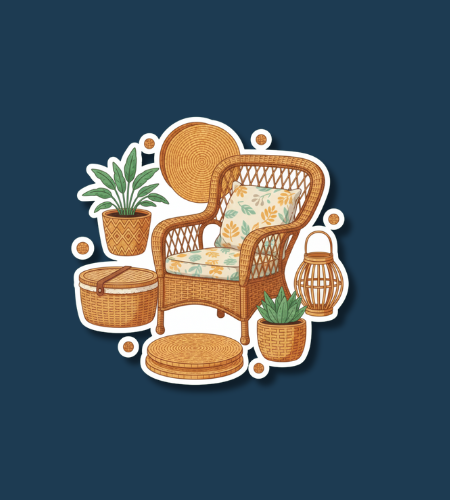
National Wicker Day is celebrated annually on February 4. This day honors the ancient craft of wicker weaving, a technique that uses flexible plant materials to create durable furniture, baskets, and decorative items.
Table of Contents
History of National Wicker Day
The technique of wicker weaving is one of the oldest furniture-making methods in human history. Archaeological evidence shows that ancient Egyptians used indigenous reeds and swamp grasses to weave chests, baskets, and chairs as far back as 3000 BCE. The practice spread through the Roman Empire and eventually across Europe, where it was valued for its lightweight yet sturdy nature. Wicker arrived in North America in 1620 aboard the Mayflower in the form of a baby cradle, marking the beginning of its long history in American households.
National Wicker Day was officially founded in 2020 by Bruce Thompson to recognize the artistry and utility of this woven craft. The 19th century was a particularly significant era for wicker in the United States, as Cyrus Wakefield began industrializing rattan production in the 1850s. During the Victorian era, wicker became immensely popular because people believed it was more “sanitary” than upholstered furniture, as it did not trap dust or odors. Today, the day celebrates both the traditional hand-weaving skills of artisans and the modern synthetic materials that have made wicker a staple of outdoor living.
Why is National Wicker Day important?
Wicker represents a unique intersection of functionality and aesthetic appeal that has survived for millennia. The process of weaving requires significant patience and precision, as materials like willow, rattan, and bamboo must be soaked to become pliable before being meticulously interlaced. This day highlights the skill of craftsmen who maintain these traditional methods in an age of mass-produced plastic goods, ensuring that the cultural heritage of basketry and furniture weaving remains intact.
Beyond its historical value, wicker is an environmentally conscious choice in home design. Natural wicker is biodegradable and often sourced from fast-growing, renewable plants that do not require clear-cutting forests. The durability of high-quality wicker means that these items can last for generations if properly maintained, reducing the need for frequent replacements. By celebrating this day, consumers are encouraged to appreciate the longevity and sustainable qualities of natural fibers and the intricate patterns that define this timeless style.
- Wicker refers to the weaving technique rather than a specific type of plant material.
- The craft supports sustainable agriculture by utilizing renewable resources like willow and reed.
- Hand-woven pieces possess unique character that cannot be perfectly replicated by machines.
- Wicker furniture is naturally ventilated, making it a preferred choice for warm climates.
- The observance helps preserve ancient artistic traditions that date back to the Pharaohs.
How to Celebrate National Wicker Day
One of the most effective ways to celebrate is by integrating wicker into your home organization or decor. Replacing plastic storage bins with woven baskets provides a more natural look while supporting traditional craftsmanship. If you already own wicker pieces, this day is an ideal time to perform routine maintenance, such as gently cleaning the weaves with a damp cloth or applying a light coat of furniture wax to prevent natural fibers from becoming brittle and cracking.
For those interested in the technical side of the craft, many local community centers offer introductory basket-weaving classes. Engaging in a simple DIY project, such as weaving a small coaster or a plant sleeve, provides a firsthand look at the physical effort required to create these items. You can also visit antique shops or furniture galleries to study different weaving patterns, such as the open latticework of Mission-style wicker or the elaborate scrolls typical of the Victorian era.
- Use wicker baskets to organize household items like laundry, toys, or magazines.
- Take a basic weaving workshop to learn the difference between warp and weft.
- Apply a protective sealant to outdoor wicker furniture to extend its lifespan.
- Support local artisans by purchasing handmade woven products at craft fairs.
- Share photos of your favorite wicker decor on social media to highlight its versatility.
National Wicker Day Dates Table
| Year | Date | Day |
|---|---|---|
| 2026 | February 4 | Wednesday |
| 2027 | February 4 | Thursday |
| 2028 | February 4 | Friday |
| 2029 | February 4 | Sunday |
| 2030 | February 4 | Monday |
Subscribe to our newsletter and never miss a holiday again!