
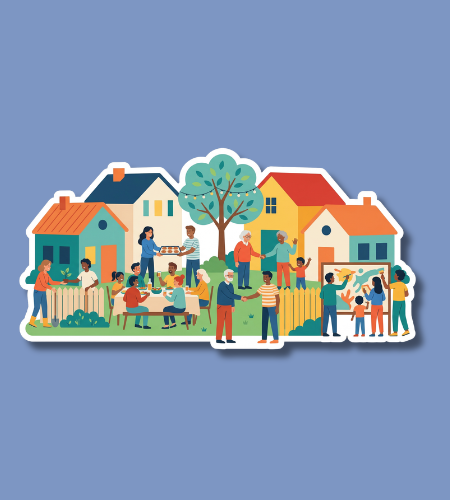
Neighbor Day is observed on the last Sunday in March. This annual day of action encourages individuals to reach out and connect with the people living in their local communities to foster a sense of belonging and mutual support. It serves as the primary celebration for the year-round “Neighbours Every Day” campaign, emphasizing that strong social connections are essential for mental well-being and community resilience. In 2026, it falls on March 29.
Read also about National Neighbor Day
Table of Contents
History of Neighbor Day
The holiday was founded in Melbourne, Australia, in March 2003 by Andrew Heslop, a community activist and social commentator. The inspiration for the day came from a tragic news story about Elsie Brown, an elderly woman whose remains were discovered in her home two years after she had passed away, unnoticed by her neighbors or the local community. Moved by this event, Heslop wrote a letter to the editor of The Age suggesting a national “check on your neighbour” day to prevent such social isolation from happening again. 1
In 2014, responsibility for managing and growing the observance was handed over to Relationships Australia, a non-profit organization focused on supporting healthy relationships. Under their custodianship, the day evolved from a simple reminder to check on the elderly into a broad celebration of community spirit. It has since gained international recognition, with various councils and organizations using the day to promote social inclusion and to address the growing “loneliness crisis” in modern urban and suburban environments.
Why is Neighbor Day important?
This day is significant because it actively combats social isolation, which has been linked to severe physical and mental health issues. Research indicates that loneliness can have a negative impact on health comparable to smoking fifteen cigarettes a day, increasing the risk of heart disease and stroke. By encouraging people to learn their neighbors’ names and exchange contact information, the holiday creates a vital safety net that is especially important for the elderly, single parents, and those living alone.
Beyond individual health, the observance builds more resilient and safer neighborhoods. When residents know and trust one another, they are more likely to look out for each other’s property and provide immediate assistance during emergencies like floods or fires. It breaks down cultural and generational barriers, allowing diverse groups of people to find common ground and share local resources. This grassroots connectivity transforms a collection of houses into a supportive community where everyone feels valued and included.
- It helps reduce the prevalence of chronic loneliness and social anxiety.
- The day strengthens local support networks for use during emergencies.
- It promotes a sense of safety and security within residential streets.
- The observance fosters tolerance and understanding across different cultures.
- It encourages the sharing of skills, tools, and local knowledge.
How to Celebrate Neighbor Day
Celebrating can be as simple as introducing yourself to a neighbor you have never spoken to before. Many people choose to drop off a “calling card” with their name and phone number, offering to help with small tasks like collecting mail or watering plants. If you want to engage a larger group, organizing a low-pressure social event like a “cuppa” on the driveway or a picnic in a local park is an effective way to bring people together without the stress of a formal party.
For those who prefer a more active approach, coordinating a community project can build lasting bonds. This might involve starting a street library, organizing a neighborhood clean-up, or collaborating on a verge garden. Digital tools like local social media groups can also be used to facilitate these connections, but the emphasis of the day remains on face-to-face interaction. The goal is to create “everyday” habits of kindness that continue long after the official Sunday celebration has ended.
- Host a simple front-yard barbecue or a morning tea for your street.
- Leave a friendly note in a neighbor’s mailbox to introduce yourself.
- Organize a “walking school bus” or a walking group for residents.
- Share surplus produce from your garden with those living nearby.
- Offer to help an elderly neighbor with their bins or yard work.
Neighbor Day Dates Table
| Year | Date | Day |
|---|---|---|
| 2026 | March 29 | Sunday |
| 2027 | March 28 | Sunday |
| 2028 | March 26 | Sunday |
| 2029 | March 25 | Sunday |
| 2030 | March 31 | Sunday |
Subscribe to our newsletter and never miss a holiday again!