
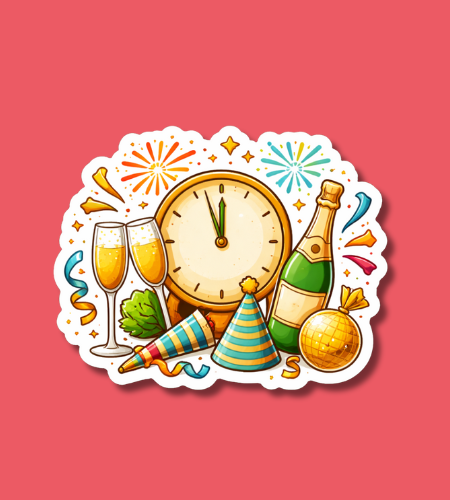
New Year’s Eve is observed annually on December 31. This global celebration marks the final day of the Gregorian calendar year and serves as a symbolic transition into the next twelve months.
Table of Contents
History of New Year’s Eve
The origins of celebrating the year’s end date back approximately 4,000 years to ancient Babylon. Their 11-day festival, known as Akitu, took place during the first new moon following the vernal equinox in late March, signifying the renewal of nature. In the Roman era, the calendar originally began in March, but Julius Caesar introduced the Julian calendar in 46 B.C., officially establishing January 1 as the start of the year. This date was chosen to honor Janus, the Roman god of beginnings, whose two faces allowed him to look back at the past and forward into the future.
As Christianity spread, medieval European leaders often moved New Year celebrations to dates with more religious significance, such as Christmas or Easter. It was not until 1582, when Pope Gregory XIII implemented the Gregorian calendar to correct inaccuracies in the solar cycle, that January 1 was restored as the standardized New Year’s Day for most of the Western world. Over time, New Year’s Eve evolved from a religious or agricultural milestone into a secular global event characterized by public gatherings and the counting down of the year’s final seconds.
Why is New Year’s Eve important?
This day represents a universal moment of reflection and collective hope. It provides a structured opportunity for individuals to audit their personal achievements and challenges from the previous year. By acknowledging the passage of time, people find the motivation to set new intentions and leave behind habits or circumstances that no longer serve them. This psychological reset is essential for maintaining a sense of progress and purpose in daily life.
Culturally, the holiday reinforces social bonds and communal identity through shared rituals. Large-scale events, such as fireworks displays in major world capitals, create a synchronized experience for millions of people across different time zones. The day also carries significant economic weight for the hospitality and retail industries, as it is one of the busiest nights of the year for restaurants, travel, and the sale of sparkling wines. This convergence of personal growth and global celebration makes the date a unique fixture on the international calendar.
- The transition to a new year encourages people to set positive goals for self-improvement
- Communal countdowns foster a sense of belonging and shared human experience
- People use the day to formally close old chapters and resolve long-standing debts
- The holiday supports global tourism and local hospitality businesses through festive events
- It serves as a time to express gratitude for the support of family and friends
How to Celebrate New Year’s Eve
One of the most iconic ways to celebrate is by watching a public countdown, such as the famous ball drop in New York City’s Times Square. This tradition, which began in 1907, involves a massive crystal-covered sphere descending a flagpole to signal the stroke of midnight. Many people host or attend dinner parties where “lucky” foods are served, such as black-eyed peas in the American South or twelve grapes in Spain—one for each chime of the clock. Singing “Auld Lang Syne,” a poem written by Robert Burns, remains the standard musical tribute to remembering old acquaintances and times gone by.
Practical ways to observe the day include creating a “gratitude jar” where family members write down their favorite memories from the past year to read aloud before midnight. Organizing a quiet night at home with board games or a movie marathon can be a meaningful alternative to large crowds. For those looking to start the year with a clean slate, “redding the house”—a deep cleaning of the living space—ensures that the new year begins in an environment of order and clarity.
- Gather with loved ones to share a festive meal featuring traditional regional dishes
- Write a list of personal goals and place them in a sealed envelope to open next year
- Participate in a local fireworks display or use safe noisemakers at midnight
- Toast with champagne or sparkling cider to celebrate the arrival of the new year
- Reach out to distant friends or family members to wish them well for the coming months
New Year’s Eve Dates Table
| Year | Date | Day |
|---|---|---|
| 2026 | December 31 | Thursday |
| 2027 | December 31 | Friday |
| 2028 | December 31 | Sunday |
| 2029 | December 31 | Monday |
| 2030 | December 31 | Tuesday |
Subscribe to our newsletter and never miss a holiday again!