
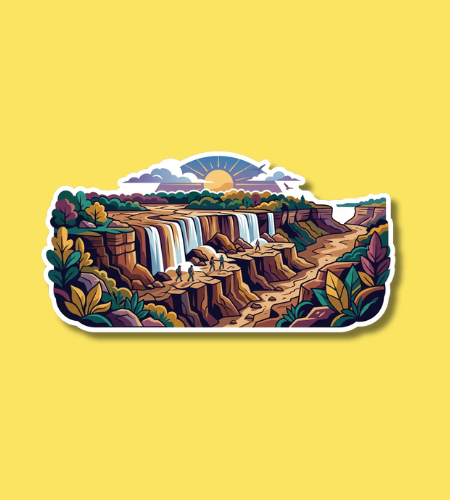
Niagara Falls Runs Dry Day is observed every year on March 29. This day commemorates a rare natural phenomenon that occurred in 1848 when the massive flow of water over the falls suddenly stopped for approximately thirty hours. To this day, it remains the only time in recorded history that the falls were silenced by purely natural causes. In 2026, the anniversary falls on Sunday, March 29, marking 178 years since residents and tourists alike were stunned by the sight of an exposed riverbed where thousands of tons of water usually crash down every second.
Read also about International Waterfall Day
Table of Contents
History of Niagara Falls Runs Dry Day
The event began in the late hours of March 28, 1848, following an exceptionally cold winter that had created thick ice on Lake Erie. A sudden warm spell followed by high winds from the southwest drove massive amounts of lake ice into the mouth of the Niagara River. The ice became so densely packed that it formed a natural dam between Buffalo, New York, and Fort Erie, Ontario. By midnight on March 29, the water level dropped so significantly that the roar of the falls faded into an eerie silence, and the riverbed began to dry out.
Local residents woke up on the morning of March 29 to find the waterfalls reduced to a mere trickle. Word spread quickly, and thousands of people flocked to the area to witness the “death” of the falls. Some feared it was a sign of the end of the world, while others took advantage of the dry land to walk across the riverbed, collect artifacts from the War of 1812, or even drive horse-drawn buggies across the rocky floor. The silence lasted until the afternoon of March 30, when the wind shifted, the ice dam broke, and the thundering wall of water finally returned to its natural course.
Why is Niagara Falls Runs Dry Day important?
This day is important because it serves as a powerful reminder of the unpredictable strength of nature and the environmental factors that shape our world. Niagara Falls is one of the most powerful natural wonders on Earth, and the fact that it could be “turned off” by a simple shift in wind and ice is a humbling historical fact. It highlights the geological history of the Great Lakes system and the specific conditions required to maintain the flow of over 3,000 tons of water per second.
The anniversary also preserves the folklore and human stories from that 1848 event. It documents a unique moment in history when people were able to explore the “bones” of the falls, discovering hidden treasures and geological formations usually buried under a torrent of water. By observing this day, we acknowledge the balance between the stability of our natural landmarks and the rare, transformative events that can temporarily alter them.
- The day marks the only natural total stoppage of the falls in recorded history.
- It highlights the role of Lake Erie’s ice cycles in the Niagara River’s health.
- Historians use the day to recall the strange items found on the dry riverbed.
- It emphasizes the vulnerability and majesty of North American natural wonders.
- The anniversary encourages a deeper understanding of local geology and hydrology.
How to Observe Niagara Falls Runs Dry Day
Observing this day involves reflecting on the sheer scale of the falls and the history of the 1848 ice dam. Many people visit the Niagara Falls State Park or the Canadian side to stand at the brink and imagine the silence that took over the gorge more than a century ago. You can visit local museums or historical societies to view sketches and read first-hand accounts of the “dry” period. It is also an excellent time to learn about the 1969 “dewatering” of the American Falls, which was a separate, man-made event for geological study.
If you cannot visit the falls in person, you can observe the day by researching the engineering feats now used to prevent such events from happening again, such as the ice boom installed in Lake Erie. Engaging with documentary footage or historical archives online provides a visual sense of what the dry rock face looks like without its liquid veil. Sharing these unique historical facts with others helps keep the memory of this “natural fluke” alive for future generations of travelers and history buffs.
- Stand at the Horseshoe or American Falls and try to imagine them silent.
- Read eyewitness accounts from 1848 to learn about the artifacts found.
- Study the 1964 Lake Erie ice boom designed to prevent future jams.
- Share photos of the 1969 man-made dewatering to compare with 1848.
- Visit a local library to find books on Niagara Falls’ geological history.
Niagara Falls Runs Dry Day Dates Table
| Year | Date | Day |
|---|---|---|
| 2026 | March 29 | Sunday |
| 2027 | March 29 | Monday |
| 2028 | March 29 | Wednesday |
| 2029 | March 29 | Thursday |
| 2030 | March 29 | Friday |
Subscribe to our newsletter and never miss a holiday again!