
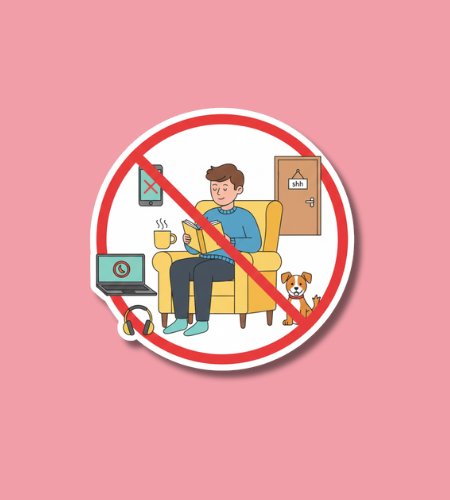
No Interruptions Day is observed annually on the last working day of the year, which is December 31. This day is dedicated to maximizing productivity by eliminating the constant distractions of modern technology and workplace interactions to finish the year with a clean slate.
Table of Contents
History of No Interruptions Day
While the exact creator of this unofficial holiday remains unknown, its foundations are rooted in 20th-century psychological research on productivity and concentration. In the 1920s, Russian psychologist Bluma Zeigarnik discovered that people remember unfinished tasks more vividly than completed ones, a phenomenon now known as the Zeigarnik effect. Later studies by researchers such as Paul Fitts and Richard Jones in the 1940s further highlighted how distractions and interruptions significantly increase error rates and mental fatigue in high-stakes environments.
The modern observance gained popularity as the digital age introduced an unprecedented volume of notifications, emails, and instant messages. Productivity experts established the day on December 31 to provide a final, quiet window for people to complete their year-end “to-do” lists without the typical noise of a busy office or home. By setting aside the last working day of the year for deep focus, the holiday helps individuals transition into the new year feeling organized rather than overwhelmed by lingering responsibilities.
Why is No Interruptions Day important?
Constant interruptions are one of the most significant barriers to achieving a state of “flow,” where a person is fully immersed and energized by their work. Research shows that it can take an average of 23 minutes for a person to fully regain their focus after being distracted by a single notification or a brief conversation. By dedicating an entire day to uninterrupted work, individuals can complete complex tasks that require deep concentration in a fraction of the time it would normally take during a standard, distracted workday.
This day also serves as a critical tool for mental health and stress reduction. The pressure of unfinished year-end projects can lead to anxiety and burnout as the new year approaches. Successfully clearing a backlog of emails, organizing files, and finalizing projects provides a measurable sense of accomplishment and closure. This clarity allows for a more relaxed and present experience during New Year’s Eve festivities, as the mind is no longer preoccupied with the “attention residue” of incomplete assignments.
- Eliminating distractions allows the brain to engage in complex problem-solving
- Deep focus sessions significantly reduce the number of errors made during detailed work
- Finishing pending tasks prevents the stress of a mounting workload in the new year
- The day promotes a culture of respecting others’ time and need for concentration
- A quiet environment fosters creativity and the development of innovative ideas
How to Observe No Interruptions Day
The most effective way to celebrate is by creating a literal “no-fly zone” for distractions. Begin the day by enabling “Do Not Disturb” modes on all digital devices and closing any unnecessary browser tabs or messaging applications. If you work in a shared office, place a polite sign on your door or desk explaining that you are taking part in No Interruptions Day and will respond to all inquiries the following day. This clear communication sets professional boundaries while protecting your time for high-priority projects.
At home, the day can be used to tackle personal admin tasks that have been ignored for months. This might involve organizing digital photos, unsubscribing from junk emails, or reconciling personal bank statements. To make the most of the quiet, plan your most difficult tasks for the morning when cognitive energy is highest. Whether you are at work or at home, the goal is to experience the rare luxury of a single, focused thought process from start to finish, ensuring you enter the upcoming year with total mental clarity.
- Set an out-of-office email auto-reply stating you are unavailable for the day
- Physically move to a quiet location like a library or a secluded room
- Prepare a prioritized list of tasks the night before to avoid morning indecision
- Inform family and colleagues of your focus period to minimize unexpected visits
- Use noise-canceling headphones to block out ambient environmental sounds
No Interruptions Day Dates Table
| Year | Date | Day |
|---|---|---|
| 2026 | December 31 | Thursday |
| 2027 | December 31 | Friday |
| 2028 | December 31 | Sunday |
| 2029 | December 31 | Monday |
| 2030 | December 31 | Tuesday |
Subscribe to our newsletter and never miss a holiday again!