
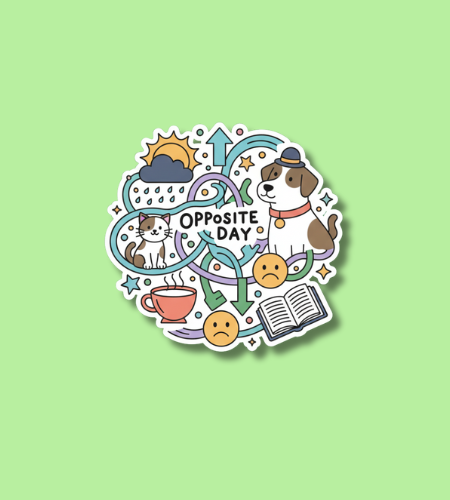
Opposite Day is a whimsical and unofficial holiday celebrated annually on January 25. The day encourages people to flip their typical routines, speak in antonyms, and embrace the absurdity of doing everything in reverse.
Table of Contents
History of Opposite Day
The exact origins of Opposite Day are unknown, as it is primarily a folk holiday that spread through school playgrounds during the 20th century. Some historians believe the concept may have been inspired by a playground game where children trick each other by reversing the answers to simple questions. Others point to literary influences, such as the “topsy-turvy” world found in Lewis Carroll’s 19th-century works like Alice in Wonderland.
A popular legend traces the day’s roots to 1928, when President Calvin Coolidge announced to the press, “I do not choose to run for President in 1928.” The unexpected statement caused widespread confusion, leading the public to debate whether he meant the opposite. Another reference occurs in 1959, when President Dwight D. Eisenhower reportedly declared an official Opposite Day at the request of his granddaughter. Regardless of its true beginning, the holiday gained significant modern popularity through pop culture, most notably appearing in a 1999 episode of SpongeBob SquarePants.
Why is Opposite Day important?
This day is significant because it provides a mental exercise in cognitive flexibility and linguistic play. Successfully navigating the day requires participants to think quickly and choose words that are the direct opposite of their true meaning. It is particularly valued in educational settings as a fun way for children to learn about antonyms and the nuances of irony and sarcasm. By turning social norms upside down, the holiday breaks the monotony of winter and encourages a lighthearted perspective on daily life.
The celebration also fosters social bonding through shared jokes and friendly pranks. Since the “rules” of the day can be confusing, it forces people to communicate more intentionally and pay closer attention to their peers. It creates a space for harmless rebellion against standard schedules and dress codes, allowing both children and adults to express a sense of humor. Ultimately, the day serves as a reminder not to take life too seriously and to find joy in the unexpected.
- It encourages creative thinking by forcing people to reverse their daily logic
- It helps children expand their vocabulary through the use of antonyms
- It provides a humorous break from the standard routines of January
- It promotes social interaction through shared games and mild pranks
- It highlights the influence of folklore and media on modern traditions
How to Celebrate Opposite Day
The most common way to celebrate is to replace “yes” with “no” and “hello” with “goodbye” throughout the day. To avoid genuine confusion, many participants start their conversations by announcing that it is Opposite Day before proceeding with their contrary statements. Another popular tradition is to have “breakfast for dinner” and “dinner for breakfast,” switching the typical timing of pancakes and savory meals. Some people even try to walk backward or perform small chores, like dishwashing, in the wrong order.
Dressing in opposites is another visual way to participate in the fun. This might involve wearing a shirt backward, putting socks on your hands, or wearing a winter coat indoors while keeping summer attire underneath. In schools or offices, people might switch roles for an hour or sit in their chairs backward to lean into the theme. The key to a successful celebration is ensuring that everyone involved is “in on the joke” so that the reverse logic leads to laughter rather than genuine frustration.
- Start your morning by saying “goodnight” to your family or roommates
- Wear your clothes inside out or backward for the entire day
- Serve a dessert like ice cream before your main lunch or dinner course
- Use your non-dominant hand for simple tasks like brushing your teeth
- Reply with the opposite of your true feeling when asked how you are
Opposite Day Dates Table
| Year | Date | Day |
|---|---|---|
| 2026 | January 25 | Sunday |
| 2027 | January 25 | Monday |
| 2028 | January 25 | Tuesday |
| 2029 | January 25 | Thursday |
| 2030 | January 25 | Friday |
Subscribe to our newsletter and never miss a holiday again!